
P3V
Project Pages
Read more
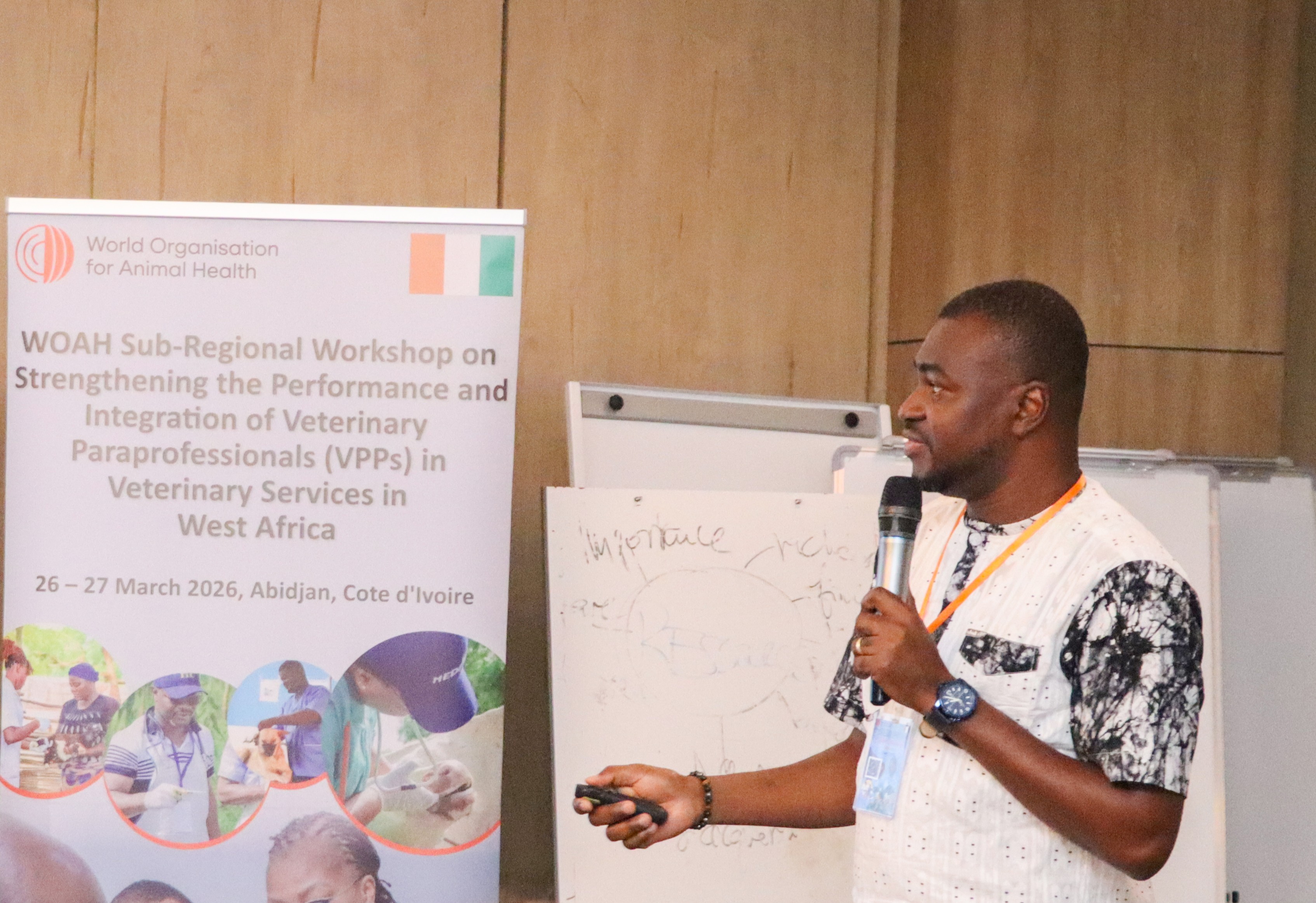
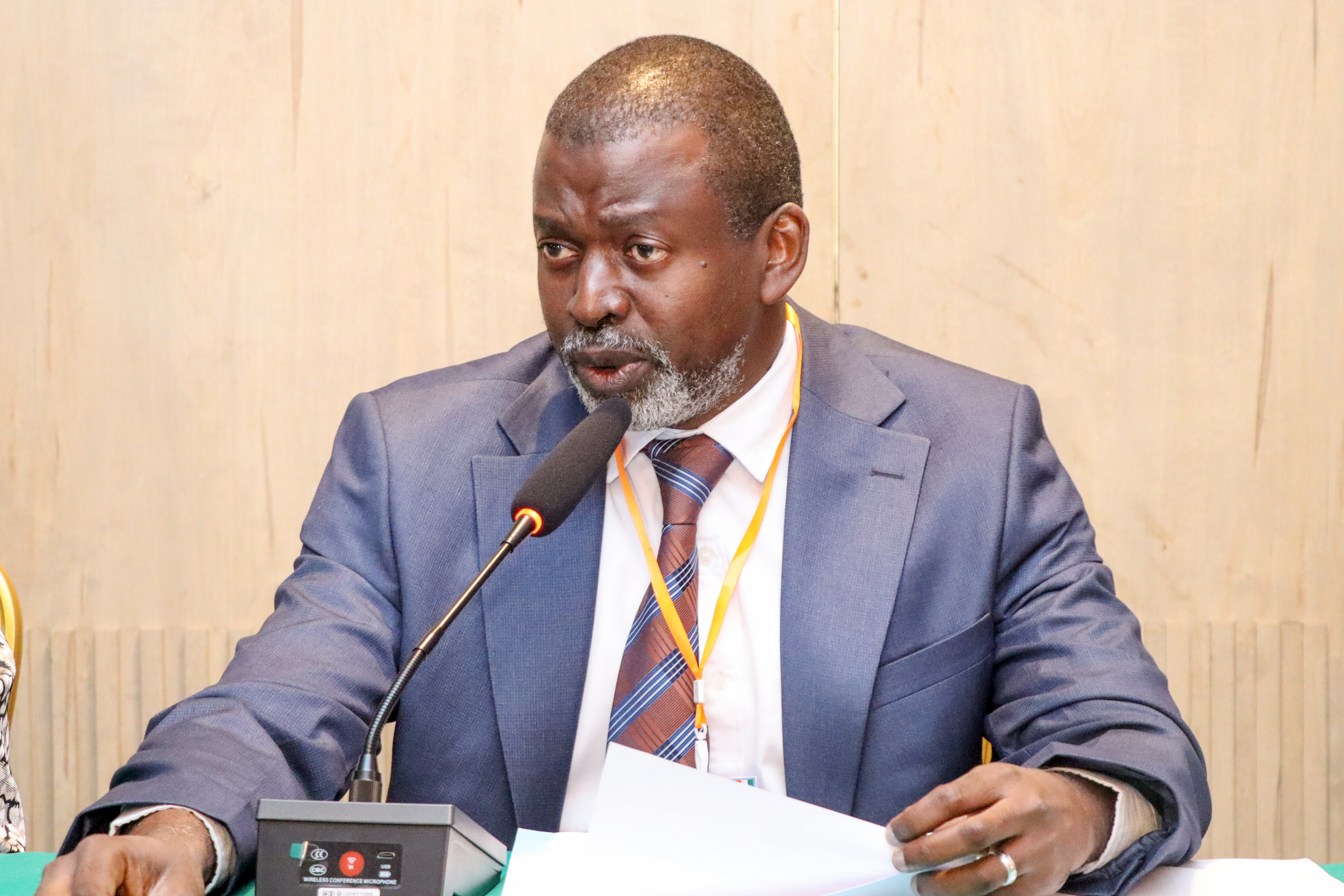
Dr Laibané Dieudonné Dahourou (FAO). Picture (c) Communication (woah) 2026.
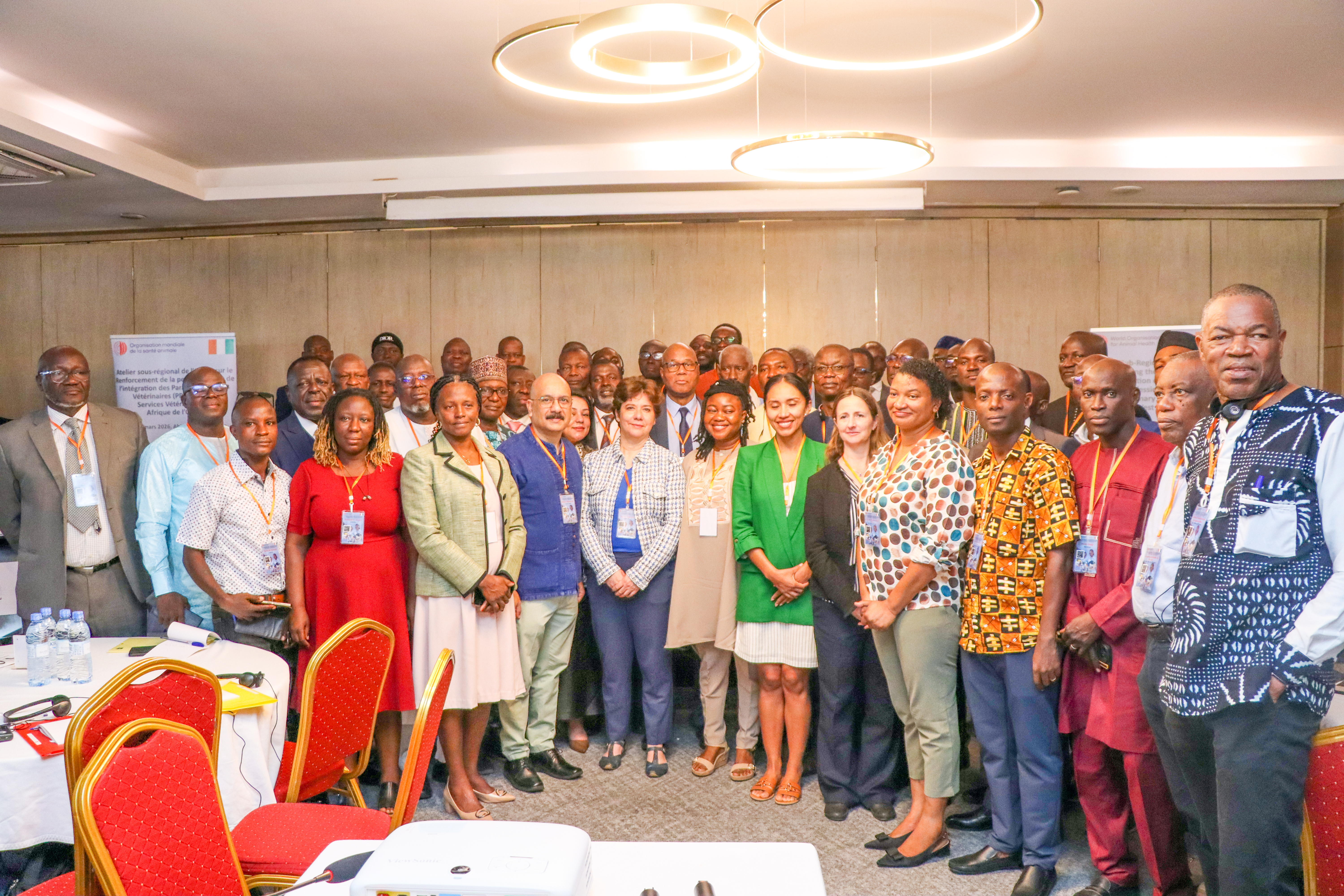
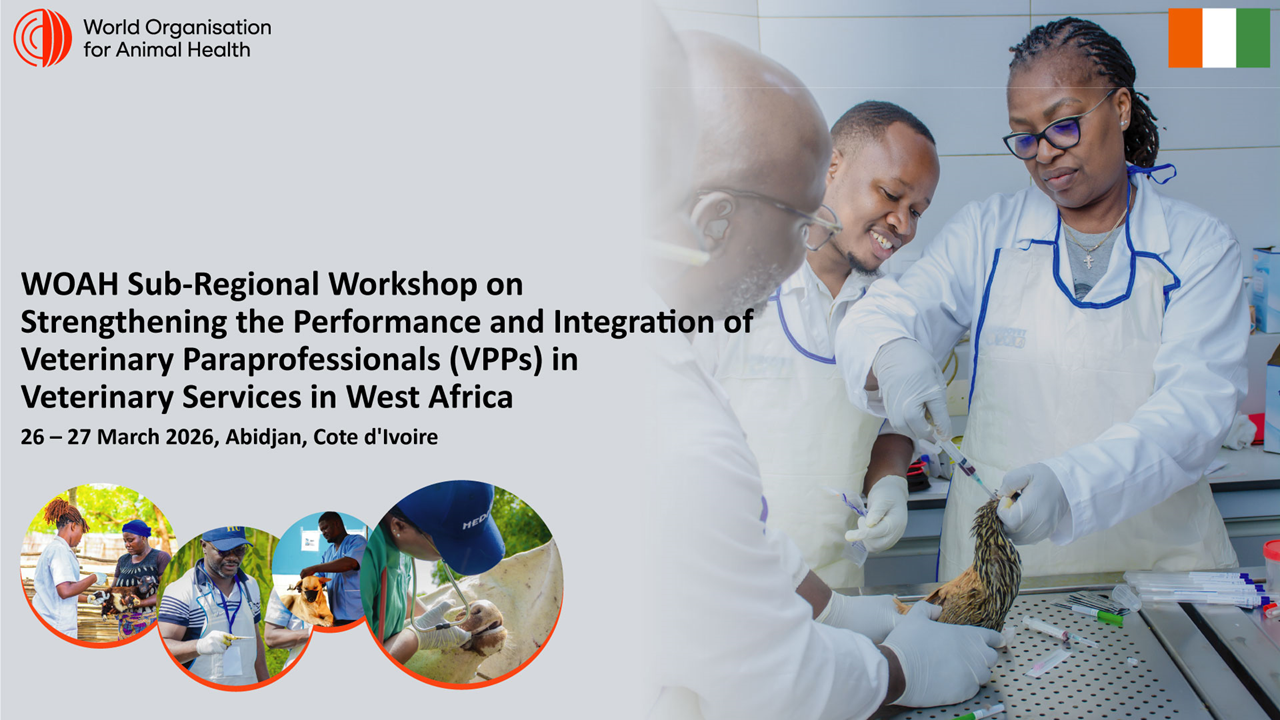
With financial support from the Defense Threat Reduction Agency of the United States Department of Defense (US-DTRA) under the project “Strengthening Veterinary Workforce Development through Regional Capacity Building”, the WOAH Sub-Regional awareness-raising workshop on improving the participation and performance of Veterinary Paraprofessionals (VPPs) was held in Abidjan, Côte d’Ivoire, from 26 to 27 March 2026.
The workshop is part of ongoing efforts to strengthen the veterinary workforce in West Africa, in response to persistent workforce shortages, uneven service coverage, and increasing demands related to animal health, food security, and the One Health approach.
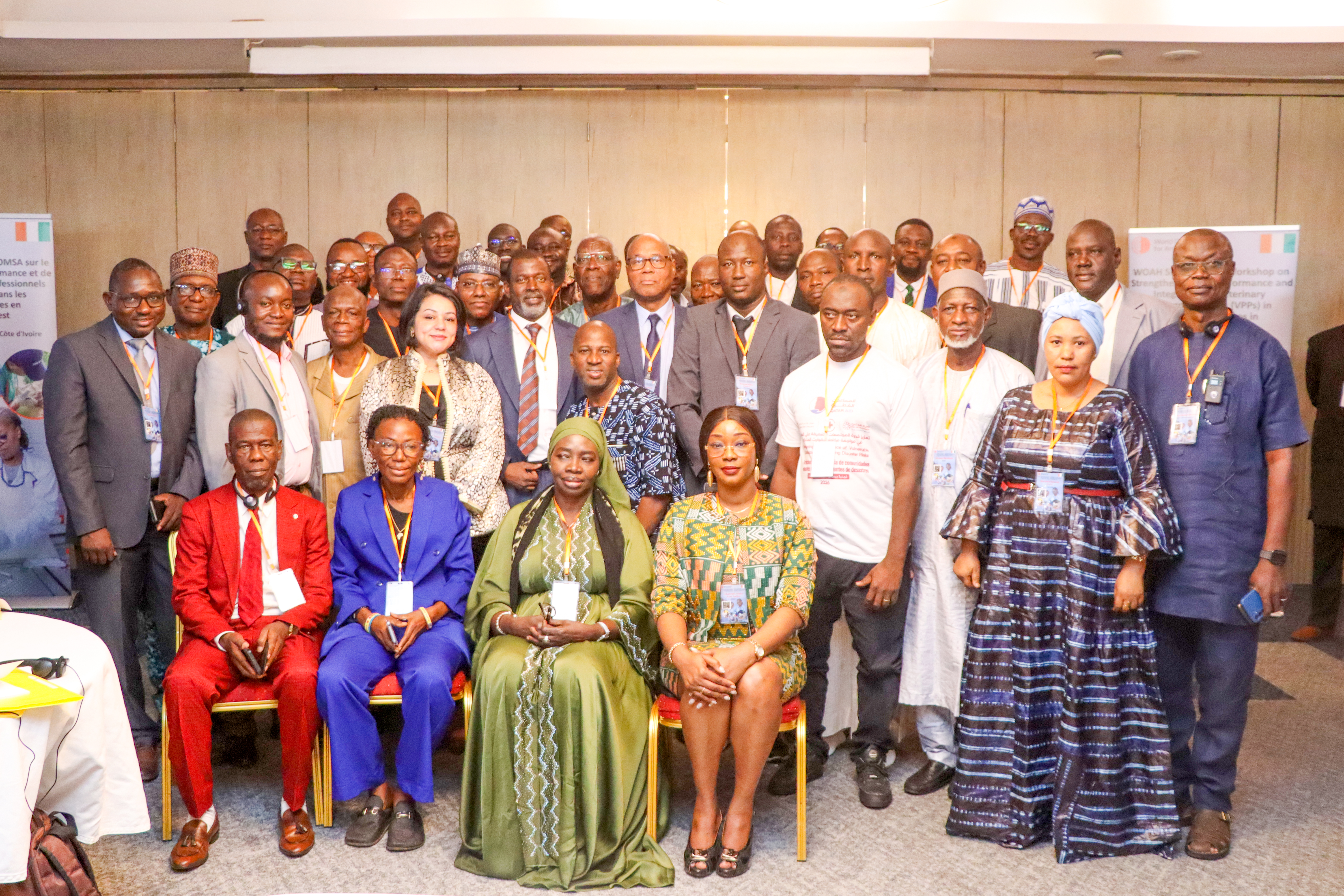
The workshop convened 102 participants, including representatives of 16 Members, technical partners, WOAH Staff, WOAH VPP experts and regional institutions such as VSF Switzerland in Togo, The Brooke West Africa, Africa Veterinary Technicians Association (AVTA), the Ecole Inter-États des Sciences et Médecine Vétérinaires de Dakar (EISMV), the Regional Animal Health Centre of ECOWAS, and West African Economic and Monetary Union (WAEMU), as well as a representative of the funding partner, the Defense Threat Reduction Agency (DTRA). Each country was represented by five participants designated by the WOAH Delegate: the Delegate or another representative of the Veterinary Services responsible for workforce planning and development, a representative of the Veterinary Statutory Body (VSB), a representative of another regulatory body responsible for VPP education where the VSB was not in charge, a representative of successful private entities promoting service delivery through veterinarian/VPP teams, and a representative of a national VPP association. This multi-stakeholder approach ensured that discussions were firmly grounded in the operational realities of each national context, while fostering rich and constructive exchanges.
Women represented only 17.6% of participants, highlighting the need to encourage stronger female participation in future initiatives.
The Objective was to support Members in identifying priority actions to better integrate and optimise VPPs within Veterinary Services through
strengthened education, regulation and workforce planning systems. The specific objectives were:
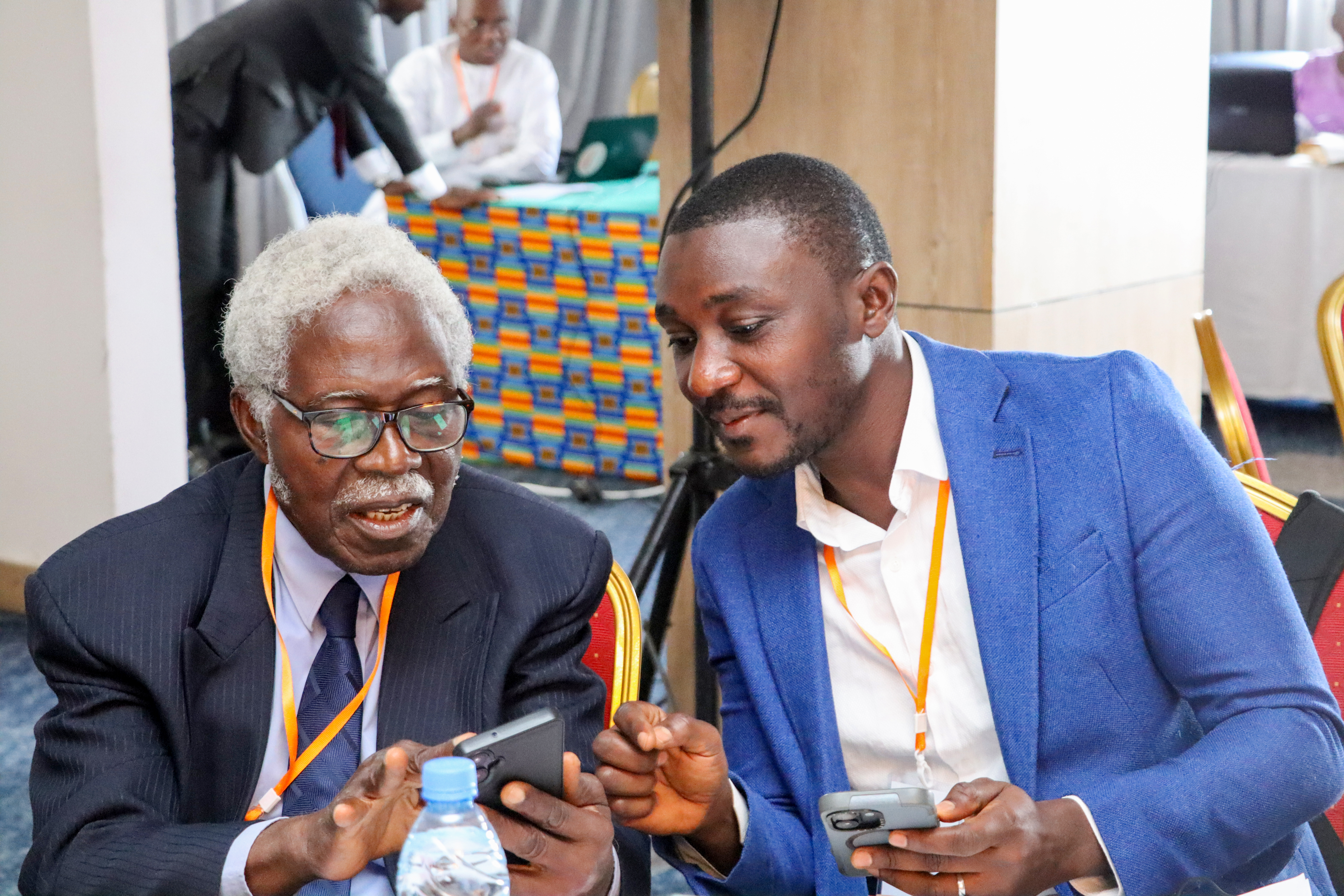
Demonstration of the use of the MUPSA application. Picture (c) Communication (woah) 2026.
The expected outcomes of the workshop were to enhance participants’ understanding of the enabling environment required for effective veterinary workforce development, including the complementary roles of veterinarians and VPPs. The workshop also aimed to provide insights into the current regional situation through shared data, country experiences, and actions undertaken in response to relevant PVS recommendations.
In addition, participants were expected to become familiar with WOAH’s tools and resources and their application in strengthening national systems. The workshop further sought to facilitate dialogue on opportunities for harmonising workforce development at the sub-regional level and to promote collaboration among Veterinary Services, training institutions and development partners. Finally, it aimed to support the identification of priority actions, key stakeholders and partnership opportunities to advance an integrated, One Health-oriented veterinary workforce in West Africa.
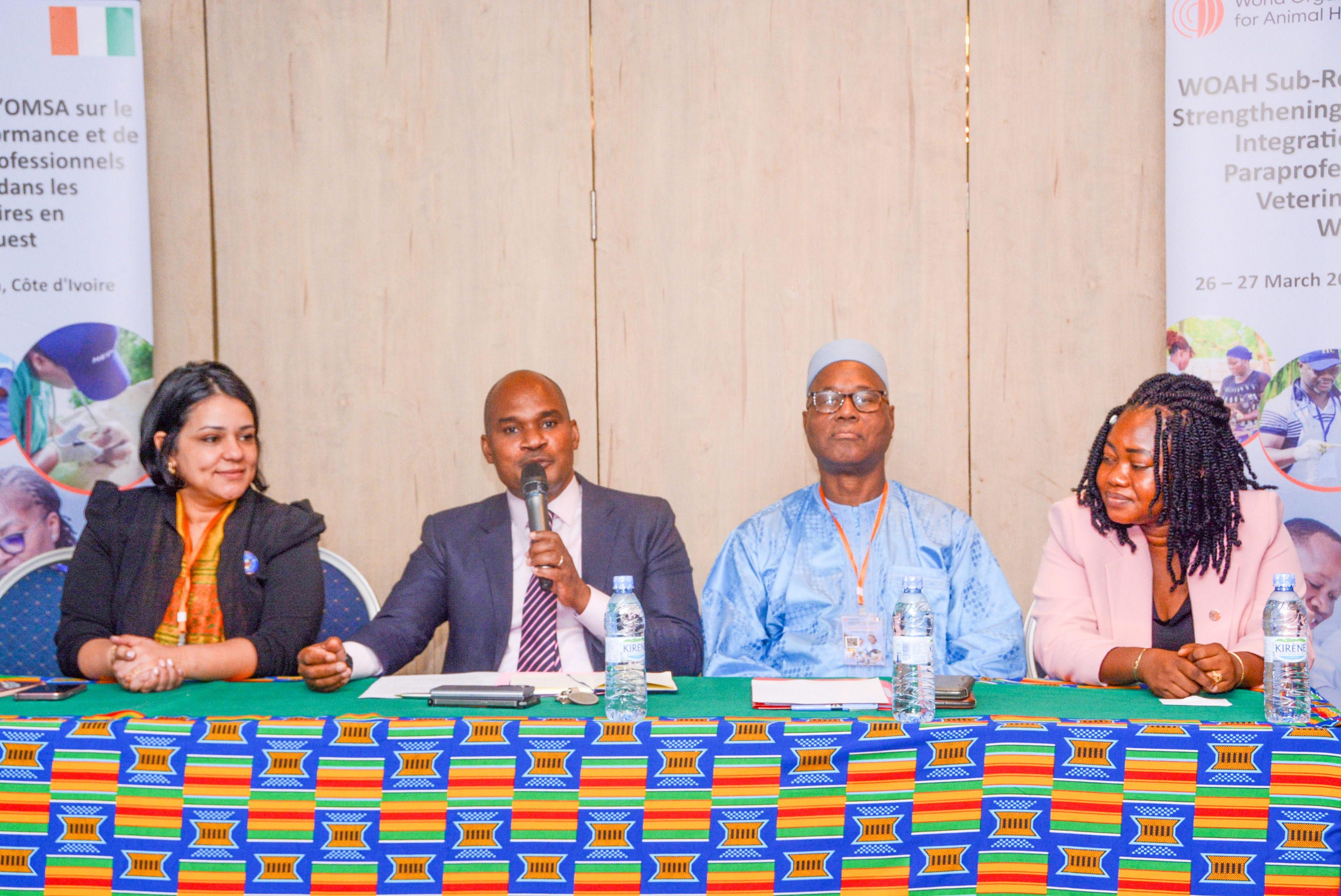
Closing ceremony — from left to right: Ms. Kenza Touach, representing the Defense Threat Reduction Agency (DTRA), Mr. Gouromenan Assoumany, Chief of Staff of the Ministry of Animal and Fisheries Resources, Dr. Karim Tounkara, WOAH Regional Representative for Africa, who led the WOAH Delegation, and Dr. Mariam Alhamdou, Regional Project Coordinator. Picture (c) Communication (woah) 2026.
The was designed as a two-day, structured and participatory learning programme, aligned with identified regional needs and informed by evidence from the WOAH Performance of Veterinary Services (PVS) Pathway and related analyses. The workshop was formally inaugurated in the presence of Dr Kallo Vessaly, WOAH Delegate for Côte d’Ivoire and Director of Veterinary Services of Côte d’Ivoire, and concluded with the participation of Mr Gouromenan Assoumany, Chief of Staff of the Ministry of Animal and Fisheries Resources. Ms Kenza Touach represented the Defense Threat Reduction Agency (DTRA) at both the opening and closing sessions, and Dr Karim Tounkara, WOAH Regional Representative for Africa, led the WOAH delegation.
The participatory methodology adopted, integrating plenary sessions, demonstrations of WOAH tools and methodologies, comprehensive presentations of Member VPP profiles, a World Café, group work, and interactive Mentimeter(TM) polling, strengthened collective ownership of key issues and facilitated the formulation of robust, high-quality recommendations.
Communication Officer from the Office of the Minister of Livestock, who facilitated the opening ceremony. Picture (c) Communication (woah) 2026.
The workshop programme was structured to progressively guide participants from awareness to analysis, and from analysis to action, ensuring coherence between learning objectives and expected outcomes. It was organised around three core phases:
Across all sessions, the programme maintained a strong focus on achieving the defined learning outcomes, including enhancing understanding of the enabling environment, analysing the regional situation, navigating WOAH tools, and identifying stakeholders and partnership pathways.
WOAH Sub-Regional Workshop on Strengthening the Performance and Integration of Veterinary Paraprofessionals (VPPs) in Veterinary Services in West Africa [Abidjan, Côte d’Ivoire 26-27 March 2026] Video (c) Communication (woah) 2026.
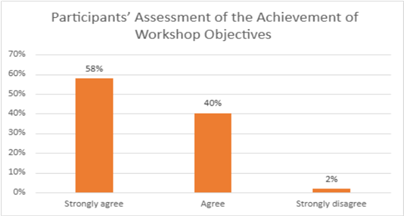
Participants' assessment of the level of achievement of the workshop's objectives.
Regarding the workshop objectives, 58% of respondents indicated that they were fully achieved (strongly agree), 40% stated that they were achieved as expected (agree), and 2% felt that they were not achieved (completely disagree).
The results indicate a clear strengthening of participants’ knowledge following the workshop. A large majority, 73.7%, reported a significant improvement, while 26.3% noted a moderate level of progress. These findings reflect an overall positive effect and confirm the relevance of the training approach.
A comparative analysis of knowledge levels before and after the workshop shows significant progress across all topics discussed. Participants’ familiarity with WOAH tools and guidelines increased markedly, rising from 39% to 56%.
Similarly, awareness of gender, disability, and social inclusion issues improved from 26% to 35%. In addition, understanding of veterinary human resource development increased from 65% to 72%. Taken together, these results demonstrate the effective achievement of the learning objectives and highlight the relevance of the methodological approach adopted, while underscoring the added value of the workshop in strengthening participants’ capacities.
Picture (c) Communication (woah) 2026.
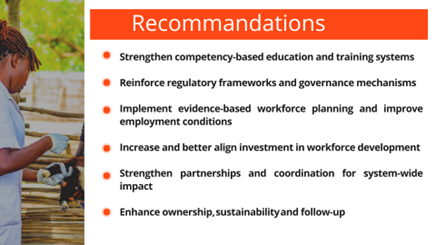
Based on the collective discussions and identified priorities, the following recommendations are proposed:
Recommendations (slide) P3V
Collectively, these actions provide a practical pathway for strengthening the participation and performance of VPPs as part of a coherent veterinary workforce system. Their implementation will contribute to more resilient, responsive and inclusive Veterinary Services, capable of addressing current and emerging animal health and One Health challenges in West Africa.
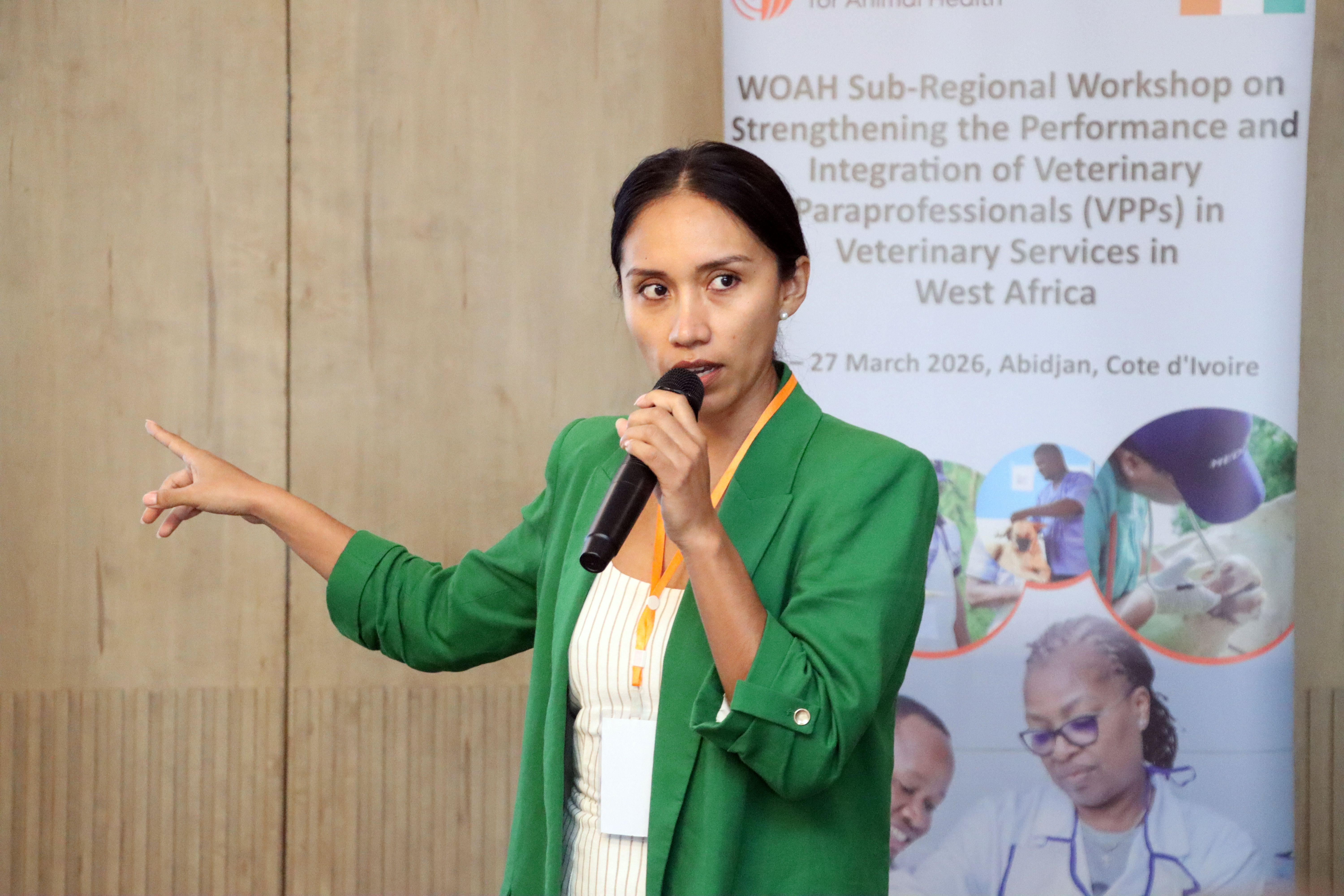
Dr Xyomara Chavez Pacheco, WOAH Capacity-building Department, presenting WOAH tools and methodologies for aligning VPP training curricula with WOAH standards and country needs. Picture (c) Communication (woah) 2026.
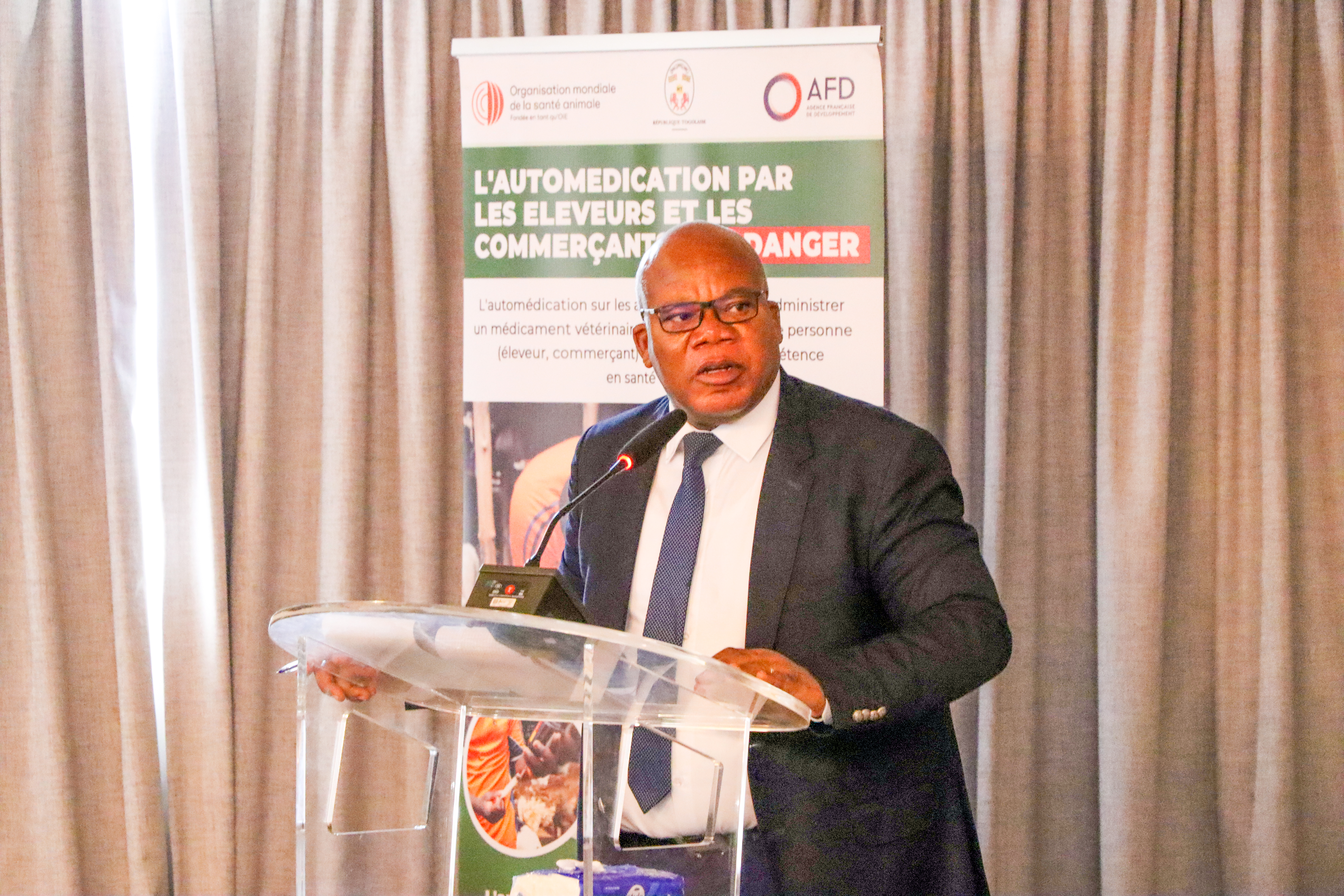
Dr. Kallo Vessaly (WOAH Delegate of Cote d'Ivoire) delivering a welcome address to the workshop participants. Picture (c) Communication (woah) 2026.
This project was sponsored by the United States Department of Defense, Defense Threat Reduction Agency (DTRA). WOAH mobilised additional support for participation of Burkina Faso, Guinea-Bissau and Mali). The content of the information does not necessarily reflect the position of or the policy of the Federal Government of the United States, and no official endorsement should be inferred. We would also like to acknowledge the United States DoD DTRA Cooperative Threat Reduction Program’s support of project HDTRA1-22-1-0043 – Strengthening Veterinary Workforce Development (WFD) through Regional Capacity Building.