Wildlife and livestock interactions can lead to bidirectional disease transmission. Many diseases affecting both livestock and wildlife populations are a severe threat to endangered wildlife species and indigenous livestock breeds. Wildlife diseases may therefore have a serious impact on animal – and public health and can adversely affect wildlife conservation. Disease surveillance in wildlife must be considered just as important as surveillance in domestic animals.
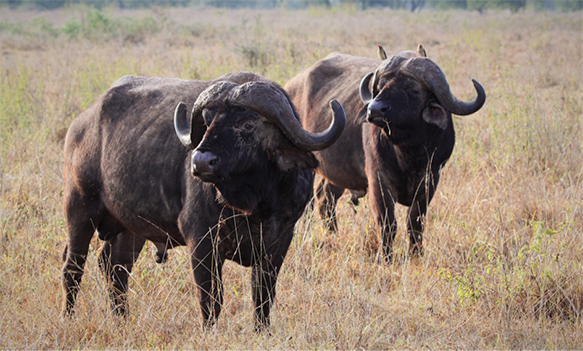
While larger animals such as buffaloes often draw more attention, as a reservoir for, i.e. Foot and Mouth Disease (FMD), the smallest animals are also critically important. For example, bees are the main pollinators of both wild and cultivated plants, providing a vital service to ecosystems and humanity.
Likewise, amphibians are very good indicators of aquatic ecosystems health, including farmed aquatic animals. Over the past decade, amphibian populations have been affected by the emerging infectious disease chytridiomycosis, causing mass mortality and significant population declines worldwide. Chytridiomycosis results from a sustained cutaneous infection by the fungus Batrachochytrium dendrobatidis, and listed wildlife disease.
Wildlife
Many of the chapters of the WOAH Terrestrial animal health code and the Aquatic animal health code deal with wildlife (in part or entirely). The standards are developed through a standard setting process that is transparent and based on sound science. Any proposed changes to the stancards are presented to the World Assembly of Delegates during the General Session in order to be discussed and validated.
WildEpi
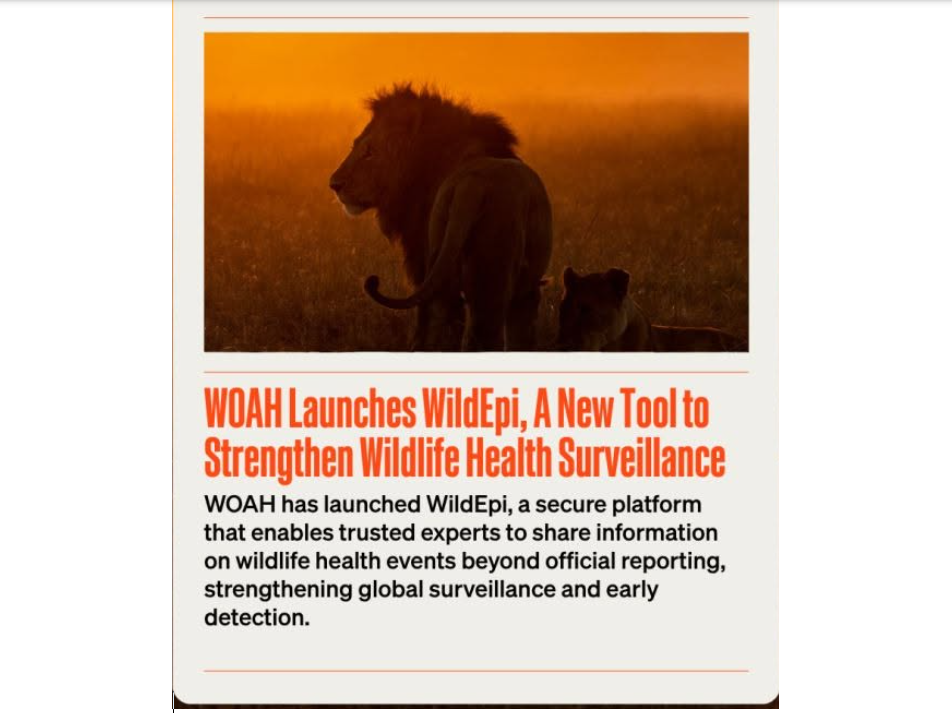
WildEpi is a secure, collaborative, real-time digital platform managed by WOAH. It is designed to capture non-official information on wildlife diseases that are not listed by WOAH (i.e. not included in chapter 1.3. of the WOAH Terrestrial and Aquatic Animal Health Codes and therefore not collected by WAHIS). WildEpi complements — but does not replace — official reporting mechanisms under WOAH and its official reporting platform, WAHIS. It ensures standardised collection of important wildlife health information. Indeed, any wild host species, vertebrate or invertebrate and any non-listed etiological agents can be reported in WildEpi, as there is no predefined disease list. By enabling the reporting of a broad range of wildlife health events not currently listed by WOAH, WildEpi contributes to early warning, and more comprehensive, timely and actionable wildlife health information for veterinary services around the globe.
Access WildEpi
The platform supports early detection, documentation, and analysis of wildlife health events globally. WildEpi has been developed to strengthen global wildlife health intelligence by facilitating the collection, sharing and analysis of wildlife disease information, support risk analysis, and foster a better understanding of disease dynamics at the human–animal–environment interface. It includes an AI tool for automatic identification of wildlife species, reports submission, consultation and mapping. It can be used through desktop and mobile applications. WildEpi also offers Delegates the possibility to request support for rapid risk assessment on specific situations for which WOAH would mobilise its relevant expert network. We believe that strengthening participation in WildEpi will help build a more connected and effective wildlife health reporting community, supporting both national and global preparedness and response.
Founded in 1994, the Working Group on wildlife informs and advises WOAH on all health problems relating to wild animals, whether in the wild or in captivity. It prepares recommendations and oversees numerous scientific publications on the surveillance and control of the most important specific wildlife diseases. The Working Group comprises world-leading scientific experts in their subject areas. Reports of its meetings are published online.
WOAH listed diseases affecting wildlife are reported thorough the World Animal Health Information System (WAHIS). In adddition, wild animal diseases that are not WOAH-listed are reported through WAHIS-Wild, relaunched in September 2023.
Although these diseases have not met WOAH’s criteria to be listed, the experts of the Working Group on wildlife diseases have selected them to be monitored, both because of their importance for wild animals and also for early warning purposes, in order to protect human and livestock health.
WAHIS-Wild is based on voluntary reports received by WOAH from Member. Voluntary reporting should not have a negative impact on livestock trade because occurrences of listed and non- listed diseases by WOAH in wildlife should not lead to trade measures being taken according to Terrestrial and Aquatic Animal Health Code. The fact that a country reports wildlife diseases should provide confidence that a country has effective surveillance and reporting systems in place, that the country is transparent; and that the whole ecosystem is considered important in the context of animal health.
WOAH is providing capacity building to enhance the members in dealing with wildlife diseases and its implications at the wildlife – livestock interface. The training cycles started in 2010 and are continous.
World Organisation for Animal Health is a member of the Collaborative Partnership on Sustainable Wildlife Management (CPW). The CPW is a voluntary partnership of 14 international organizations with mandates and programmes to promote the sustainable use and conservation of wildlife resources. The CPW provides a platform for addressing wildlife management issues that require national and supra-national responses and also works to promote and increase cooperation and coordination on sustainable wildlife management issues among its members and partners.
Buffalo