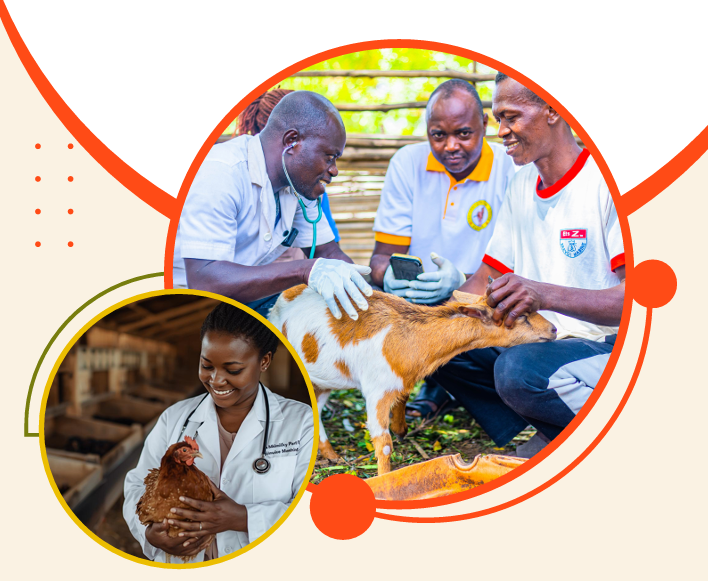
On the occasion of the 93rd General Session of the World Assembly of Delegates of the World Organisation for Animal Health (WOAH), the Professionalisation of Veterinary Para-Professionals (P3V) Project brought together policymakers, technical and financial partners, training institutions, professional organisations and field actors around a common ambition: to sustainably strengthen veterinary human resources in order to improve communities’ access to quality Veterinary Services.
Organized on 20 May 2026 in Paris, this Side Event highlighted the results obtained after 6 (six) years of implementation of the Project in Senegal, Togo and Benin. The participants discovered an integrated approach combining reform of regulatory frameworks, modernisation of training curricula, development of innovative educational tools, support for the professional integration of veterinary para-professionals (VPP) and strengthening of dialogue between all the stakeholders in the sector.
Beyond the sharing of achievements, this meeting was a strategic space for reflection on the future of veterinary human resources in Africa. The discussions highlighted that the professionalisation of VPPs is now an essential lever for improving the health coverage of territories, strengthening the surveillance of animal diseases, supporting the livelihoods of livestock farmers and contributing to the implementation of the One Health approach.
The Side Event also marked an important step in learning lessons from the Project’s achievements. The lessons learned from six years of experience, combined with the results of a transferability study conducted in seven French-speaking countries in West Africa, demonstrate that the model developed is not only effective, but also replicable, subject to adaptation to national contexts.
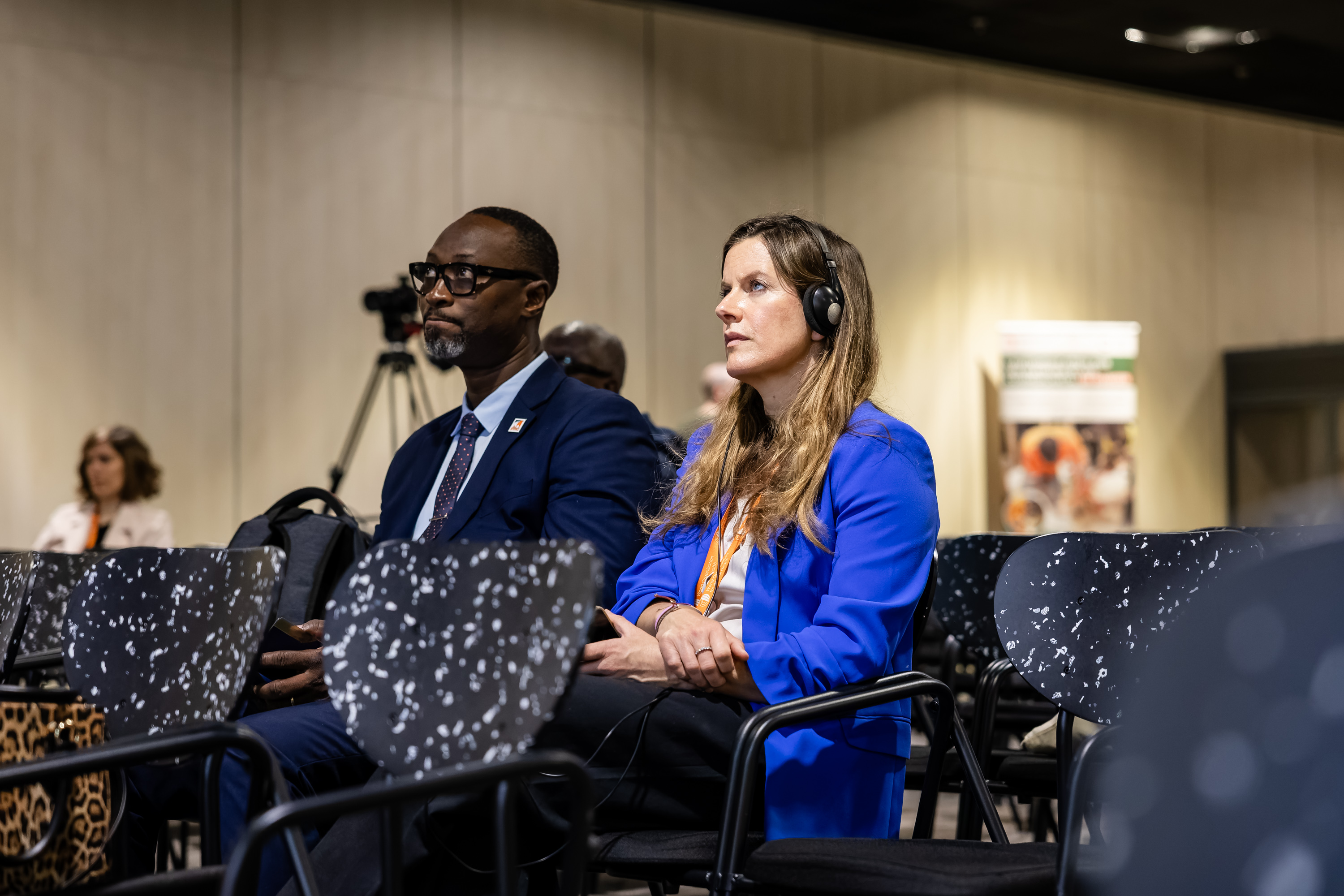
By bringing together more than a hundred participants from WOAH Members (countries and territories), international organisations, technical and financial partners as well as the public, private and academic sectors, this event confirmed the growing interest in the development of veterinary human resources as a strategic investment for more accessible, inclusive and resilient animal health systems.
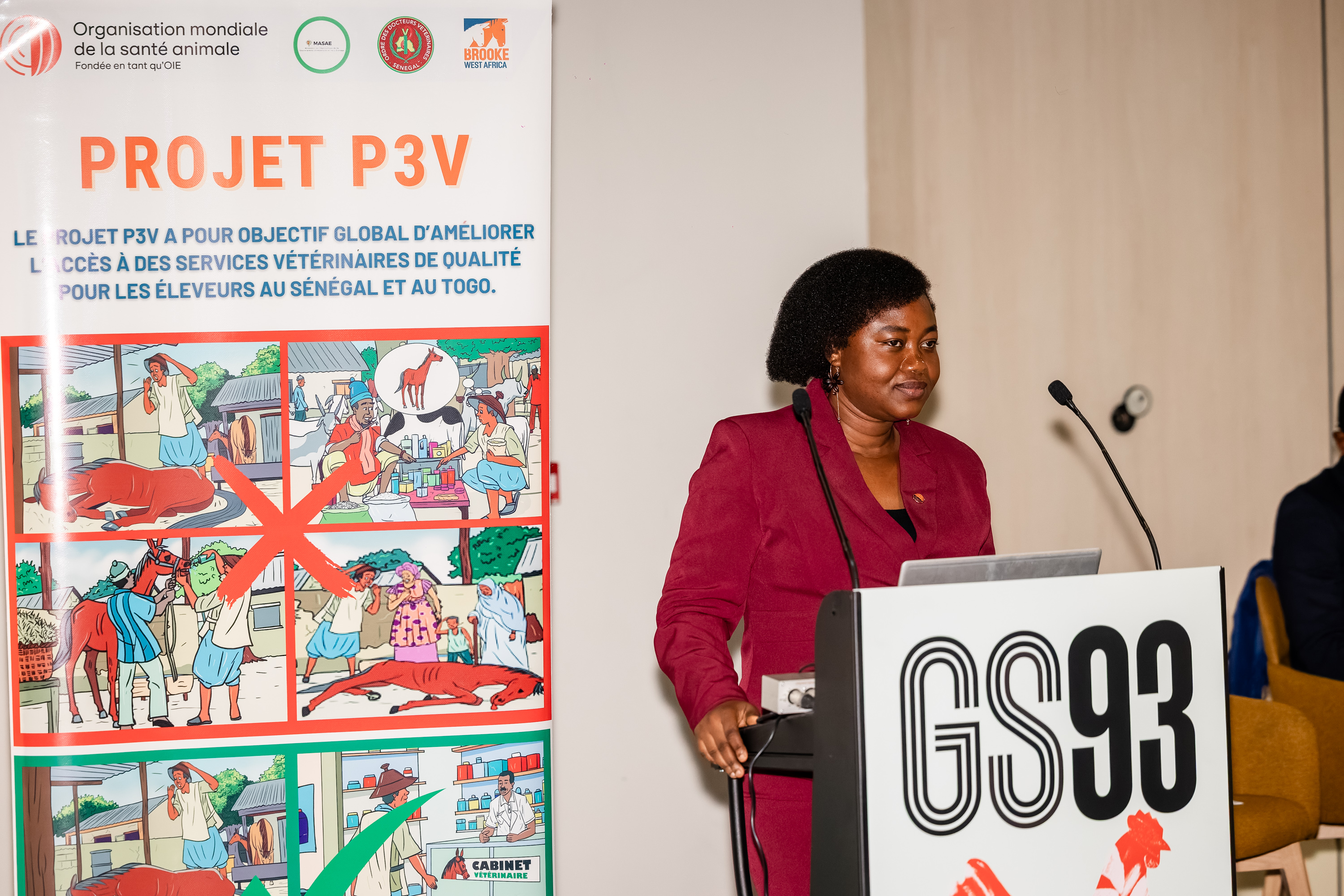
Dre. Mariam Alhamdou, Coordinatrice Régionale du Projet P3V. Photo (c) P3V Photo Library (omsa) 2026
Dr. Mariam Alhamdou, Regional Coordinator of the P3V project. Picture (c) P3V Photo Library (woah) 2026
Ensuring accessible and efficient veterinary services remains a major challenge in many West African countries. In rural areas, where a large part of livestock farming is concentrated, veterinary doctors are often few in number and mainly located in urban centres. Veterinary paraprofessionals (VPPs) are then the first, and sometimes the only, point of contact for farmers for the prevention, surveillance and management of animal diseases.
As key players in animal health systems, VLPs play a key role in early disease detection, vaccination campaigns, livestock awareness, food safety of animal origin and epidemiological surveillance. Their contribution is also essential to strengthening the resilience of communities to transboundary diseases and zoonotic diseases, from a One Health perspective.
Despite this strategic importance, VPPs continue to face several challenges that limit their full contribution to Veterinary Services. In many contexts, their legal status remains insufficiently defined, regulatory texts do not clearly specify their missions or the modalities of their supervision, while training systems do not always respond to changes in international standards or to the realities on the ground. In addition to these constraints, there are difficulties in professional integration and access to viable economic models, which weaken the sustainability of their activities.
It is to respond simultaneously to these different challenges that WOAH, with the financial support of the French Development Agency (Agence Française de Développement, AFD), launched in 2020 the Professionalisation of veterinary paraprofessionals (P3V) Project in Senegal, Togo and Benin.
From its conception, the Project has chosen a systemic approach. Rather than acting solely on training, it worked on the entire ecosystem in which VPPs operate. This integrated approach combines the strengthening of legislative and regulatory frameworks, the improvement of the quality of training, the production of educational resources, the development of support mechanisms for professional integration, the awareness of the various animal health professionals as well as the strengthening of the national governance of veterinary human resources.
Each intervention was built on the basis of an in-depth diagnosis carried out in the partner countries, making it possible to identify specific needs, institutional constraints and opportunities for reform. This participatory approach has brought together Veterinary Services, training institutions, professional organisations, NGO partners, public authorities and VPP associations in order to build solutions adapted to national realities.
After six years of implementation, this integrated strategy is now bearing fruit. The results presented at the Side Event show that investing simultaneously in regulation, training, professional integration and dialogue between stakeholders makes it possible to sustainably strengthen the skills of VPPs, improve their recognition and consolidate their contribution to the functioning of Veterinary Services.
During the Side Event, the P3V project team presented the main results achieved since its launch in 2020, illustrating how an integrated approach can contribute to sustainably strengthening Veterinary Services. As recalled by Dr. Mariam Alhamdou, Regional Coordinator of the P3V Project, the objective was not only to train more veterinary para-professionals, but to create a favourable environment allowing them to fully carry out their missions in the service of rural communities and to contribute sustainably to the performance of Veterinary Services.
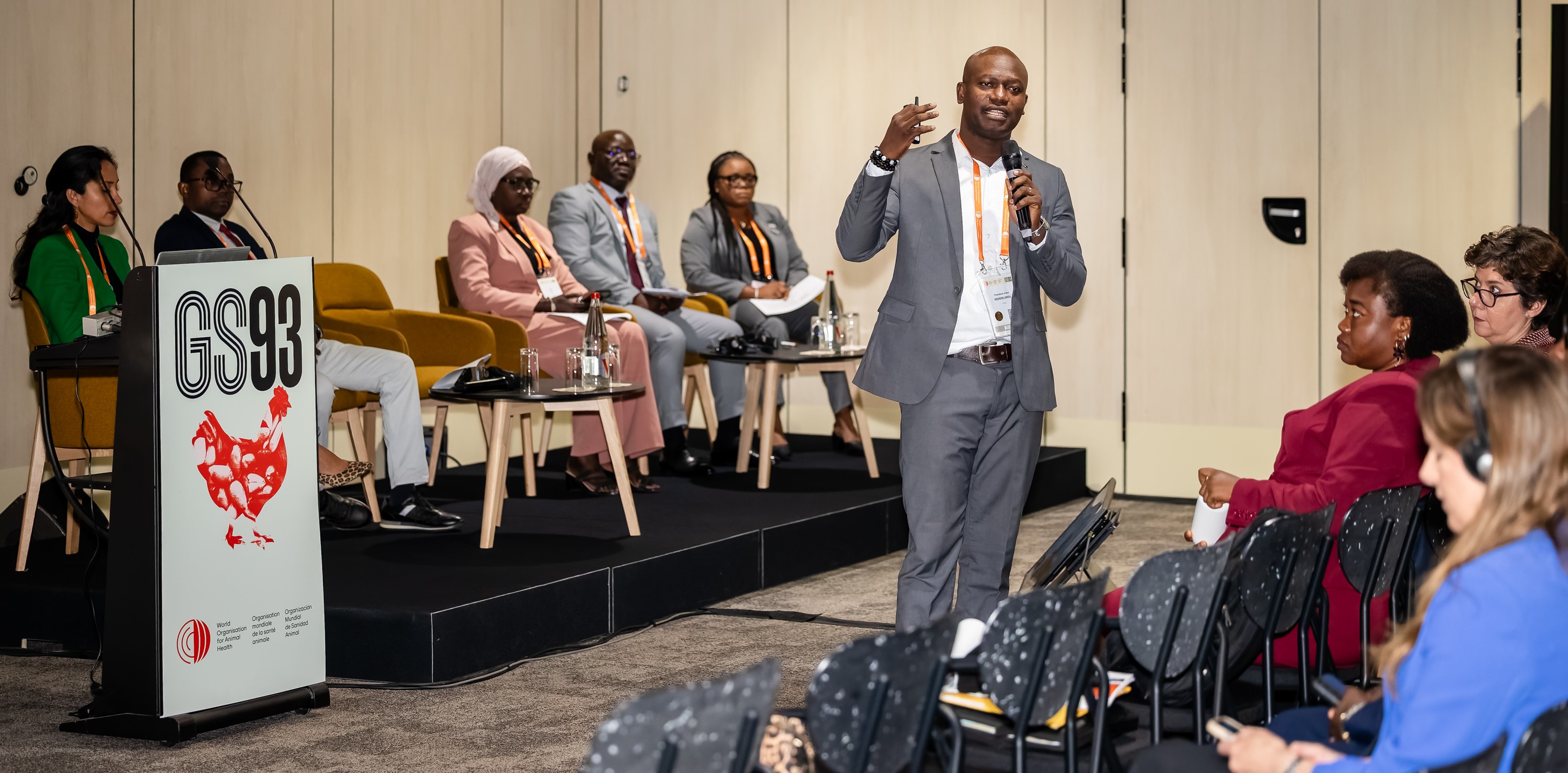
Dr Emmanuel Sarr (à gauche) et Dre Laura Skippen (à droite), The Brooke (ONG). Photo (c) P3V Photo Library (omsa) 2026.
One of the first steps of the Project was to carry out an in-depth diagnosis of veterinary demography, existing training schemes and legal frameworks governing the practice of VPPs in the three partner countries. These analyses have made it possible to identify the regulatory gaps limiting the recognition and practice of the profession. In response, the project supported the national authorities in the revision of legislative and regulatory texts, the development of national strategic plans and the development of mechanisms to promote a better integration of VPPs within the Veterinary Services.
Dr Emmanuel Sarr (left) and Dr Laura Skippen (right), The Brooke (NGO). Picture (c) P3V Photo Library (woah) 2026.
Beyond legal reforms, this approach has contributed to a strengthened dialogue between veterinary administrations, professional orders, training institutions and VPP associations, thus promoting a better understanding of the roles and responsibilities of each actor.
Capacity building was a second major pillar of the project. Based on the curriculum analysis tool developed by the WOAH in the framework of the PVS Pathway, the partner institutions carried out an in-depth revision of their training programmes to align them with international standards and the needs of the Veterinary Services. New modules have been integrated into the curricula, in particular on:
This modernisation has been accompanied by the production of innovative educational resources, the strengthening of the capacities of trainers as well as the provision of educational equipment and laboratory materials to schools, considerably improving the learning conditions of future VPPs.
The investments made have produced measurable results. To date:
These advances allow graduates to be better prepared for the realities of the field and the demands of modern Veterinary Services.
Training competent professionals is not enough if they do not find their place in the labour market. Aware of this challenge, the P3V Project has developed an important component dedicated to professional integration. In-depth studies have been carried out in Senegal and Togo in order to identify the main obstacles encountered by young graduates, to assess the economic profitability of local veterinary activities and to analyse the opportunities for setting up. On this basis, several innovative tools have been developed, including:
This work helps to strengthen the economic viability of VPP operations while promoting their retention in rural areas, where their presence is particularly essential.
The professionalisation of VPPs could not be fully effective without better recognition of their role by communities and other actors in the sector. The Project developed an ambitious communication strategy in partnership with grassroots organisations such as The Brooke and VSF Switzerland.
Through awareness-raising caravans, radio programs, communication campaigns and community actions, the populations were made aware of the respective missions of VPPs, veterinarians and livestock auxiliaries.
This approach has helped to reduce misunderstandings, to strengthen trust between the different actors and to improve the visibility of VPPs among breeders.
Finally, the speakers stressed that these results would not have been possible without participatory governance involving all stakeholders.
Steering committees, national coordination meetings, technical workshops and follow-up mechanisms have made it possible to continuously adjust project interventions, promote national ownership of reforms and ensure concerted decision-making.
This collaborative dynamic is now one of the main success factors of the P3V Project and one of the reasons why its model is now attracting growing interest well beyond the three beneficiary countries.
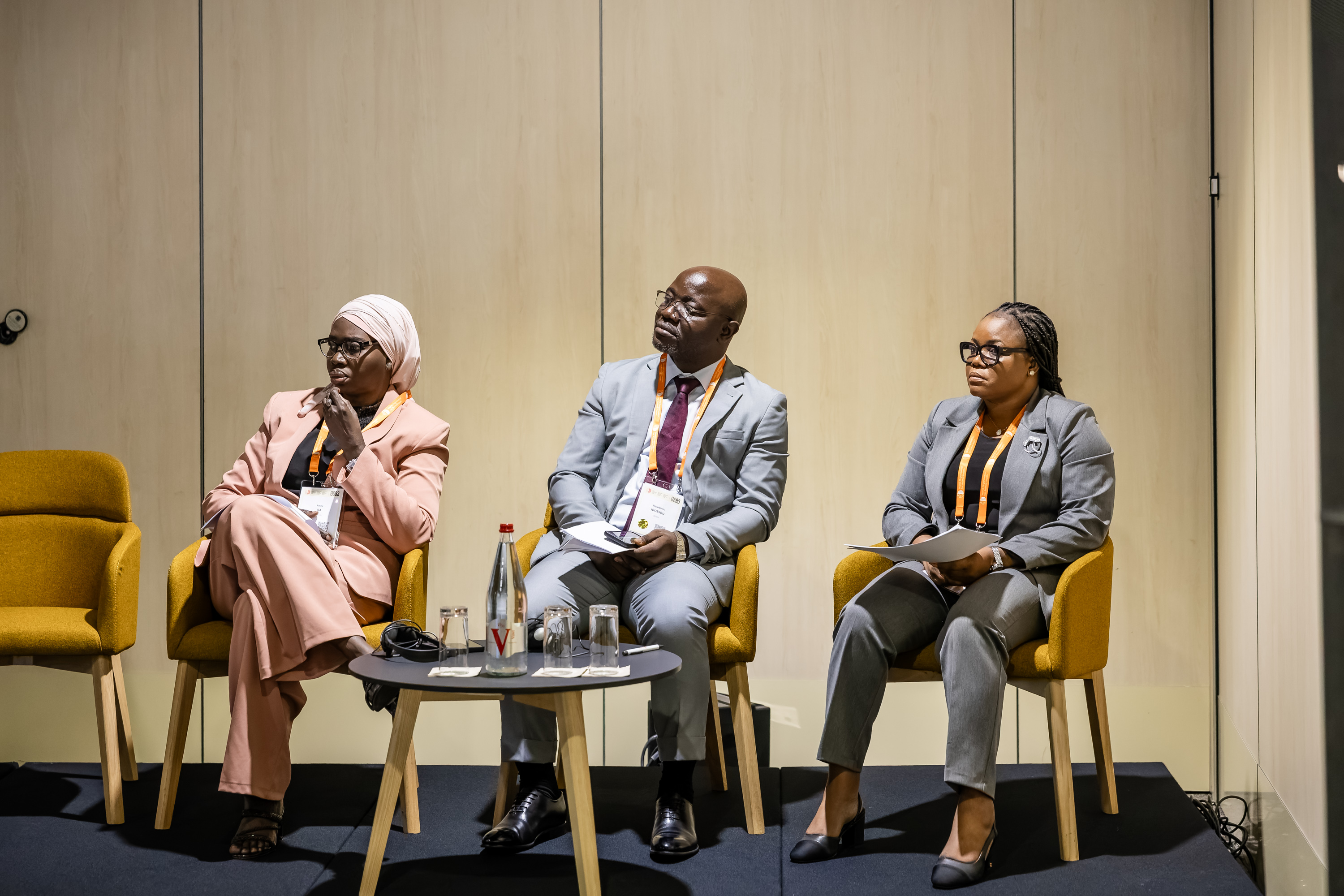
La Dre Fatou Ka (CNFTEIA, Sénégal), M. Idossou Bayedjinou (Association de PPVs au Bénin), Dre Yempabou Damitoti (Déléguée OMSA du Togo). Photo (c) Photo library P3V (omsa) 2026
FLTR : Dr Fatou Ka (CNFTEIA), Mr. Idossou Bayedjinou (VPP Association of Benin), Dr Yempabou Damitoti (WOAH Delegate of Togo). Picture (c) Photo library P3V (woah) 2026
Beyond the technical results, the Side Event was above all an opportunity to give a voice to the players who, for the past six years, have been carrying out reforms on the ground. Representatives of Veterinary Services, training institutions, professional organisations, NGO partners and WOAH experts shared their experiences and presented the commitments made to enshrine the project’s achievements in national policies in the long term.
The panel illustrated the diversity of the changes driven by the P3V project and confirmed that a sustainable professionalisation of veterinary para-professionals can only be achieved through a collective mobilization of all the actors of the veterinary ecosystem.
At the end of the first presentation, Dr Baba Soumaré, WOAH Deputy Director General for Global Frameworks and Capacity Building, praised the approach developed by the Project.
He stressed that the P3V is distinguished by a global vision that goes beyond the simple technical training of veterinary para-professionals by also integrating their professional integration, institutional recognition and economic viability.
Drawing on his experience in the field, he recalled that in many rural areas, VPPs are often the first point of access for livestock farmers to animal health services. Their professionalization thus represents a strategic investment to sustainably strengthen the Veterinary Services.
Dr Baba Soumaré, WOAH Deputy Director General for Global Frameworks and Capacity Building
Dr Yempabou Damitoti, WOAH Delegate for Togo, spoke about the process undertaken in her country to strengthen the legal framework applicable to VPPs. She explained that in a few years, Togo has gone from a situation characterized by the absence of a specific regulatory framework to the development of legislative texts validated at the national level and currently under review.
According to her, this evolution is based on several essential factors: a thorough initial diagnosis, the active participation of all stakeholders, continuous technical support from the WOAH and a strong political will of the national authorities. This experience demonstrates that an ambitious reform can be successfully carried out when the various actors share a common vision and work in a logic of co-construction.
Dr. Fatou Ka, representative of the National Training Center for Food Inspection Technicians (CNFTIA) in Senegal, presented the transformations made within her establishment thanks to the project. The revision of the curricula has made it possible to integrate themes that have become essential, such as biosecurity, antimicrobial resistance, the One Health approach, zoonoses and epidemiological surveillance.
In addition to the educational content, the project also strengthened the technical platforms of the partner institutions through the provision of laboratory equipment and modern teaching materials, thus offering learners better practical learning conditions. According to her, these developments now make it possible to train graduates who are more competent, more operational and better prepared for the realities of the job market.
Representing the National Association of Veterinary Paraprofessionals of Benin, Mr. Idossou Bayedjinou insisted on the need to continue the efforts made in favor of the employability of young graduates. He recalled that VPPs provide essential services to farmers on a daily basis, often in remote areas where no veterinarian is available.
For him, investing in their professionalization is a strategic choice to sustainably improve animal health, protect the livelihoods of rural communities and strengthen health security. On this occasion, he called for the continuation of partnerships between training institutions, veterinary services, professional associations and technical partners in order to ensure the sustainability of the support systems developed by the project.
Partner organizations also shared their implementation experience. Dr. Géraud Hellow, representative of VSF Switzerland in Togo, stressed that the awareness campaigns conducted with the communities have made it possible to raise awareness of the respective roles of veterinarians, veterinary para-professionals and other actors involved in animal health.
According to him, this better understanding gradually contributes to strengthening the confidence of farmers and promotes more effective collaboration between the various professionals. He also indicated that VSF Switzerland and Brooke are now continuing to integrate the tools and approaches developed by the project into their own interventions, illustrating the ability of the P3V model to be taken up and adapted by other organisations.
Closing the panel, Dr. Xyomara Chavez Pacheco, from the WOAH Capacity Building and Development Department, recalled that countries wishing to strengthen their veterinary human resources can benefit from the Organization’s support through the Targeted Support mechanisms. She encouraged interested members to draw on the tools, guidelines and experience gained from the P3V project to initiate or accelerate their own national reforms.
All the interventions highlighted a widely shared conviction: the achievements of the project now go beyond the borders of the three beneficiary countries. They are a source of inspiration for other WOAH Members wishing to sustainably strengthen their Veterinary Services through better professionalisation of veterinary para-professionals
One of the highlights of the Side Event was the presentation of the results of the P3V model transferability study. This study aimed to assess the extent to which the approaches, tools and mechanisms developed in Senegal, Togo and Benin could be adapted to other national contexts in Francophone Africa. Conducted in seven countries (Cameroon, Côte d’Ivoire, Guinea, Mali, Mauritania, Niger and Benin), the study was based on an in-depth literature review of regulatory frameworks, complemented by interviews with national veterinary authorities and key stakeholders in the sector.
The evaluation focused on four essential dimensions: the legal recognition of veterinary para-professionals, the definition of their missions and the modalities of their supervision, the quality of training systems and the mechanisms promoting their professional integration.
The results show that, despite different institutional contexts, the challenges faced by countries remain largely similar. Needs include clarifying regulatory frameworks, modernizing curricula, strengthening oversight mechanisms, and creating better employment opportunities for VPPs. The study also highlights that the model developed by the P3V project is flexible enough to be adapted to other national realities, provided that the institutional, regulatory and socio-economic specificities of each country are taken into account. This conclusion confirms that the tools produced over the past six years are now a real regional public good that can accompany further reforms to strengthen Veterinary Services.
At the end of the exchanges, several messages emerged with force. The first is that veterinary para-professionals should no longer be considered as peripheral actors in the animal health system. When properly trained, recognised and supervised, they are an indispensable link in the veterinary network, especially in rural areas where access to services remains limited.
The second lesson is that no sustainable reform can be based solely on skills development. The experiences of Senegal, Togo and Benin demonstrate the need to act simultaneously on regulatory frameworks, the quality of training, the prospects for professional integration, community awareness and dialogue between all the actors concerned.
Finally, the P3V project shows that strengthening veterinary human resources is a strategic investment. In addition to improving services to livestock farmers, it contributes to the strengthening of epidemiological surveillance, the prevention of animal diseases, food safety, the fight against antimicrobial resistance and the implementation of the One Health approach.
The closing of the Side Event was provided by Alexandre Bouchot, representative of the French Development Agency (AFD), financial partner of the project since its launch. In his speech, he praised the work accomplished by all the national teams, partners and beneficiaries, while stressing the quality of the results obtained through close collaboration between the various actors.
He also invited partner countries to continue the dynamics undertaken, to consolidate the reforms undertaken and to rely on the tools developed to sustainably integrate the achievements of the project into their public policies.
Although the financing of the P3V project is now coming to an end, the foundations are now solid to continue the transformations underway. The methodological tools exist, skills have been strengthened, partnerships have been established and the first results demonstrate the relevance of this approach.
The challenge now is to support the scale-up, to mobilise new technical and financial partners and to support countries that wish to adapt this model to their own context.
By bringing together policymakers, training institutions, professional organizations, technical partners and community representatives, the Paris Side Event demonstrated that a common vision is emerging: that of a more inclusive veterinary profession, in which veterinary para-professionals fully occupy their place alongside veterinarians to offer more accessible animal health services, more efficient and more resilient.
The six years of the P3V project therefore do not mark the culmination of an initiative, but the starting point of a new dynamic. A dynamic based on the experience acquired, driven by the commitment of countries and supported by a shared conviction: investing in veterinary human resources means investing in animal health, food security and the sustainable development of communities.