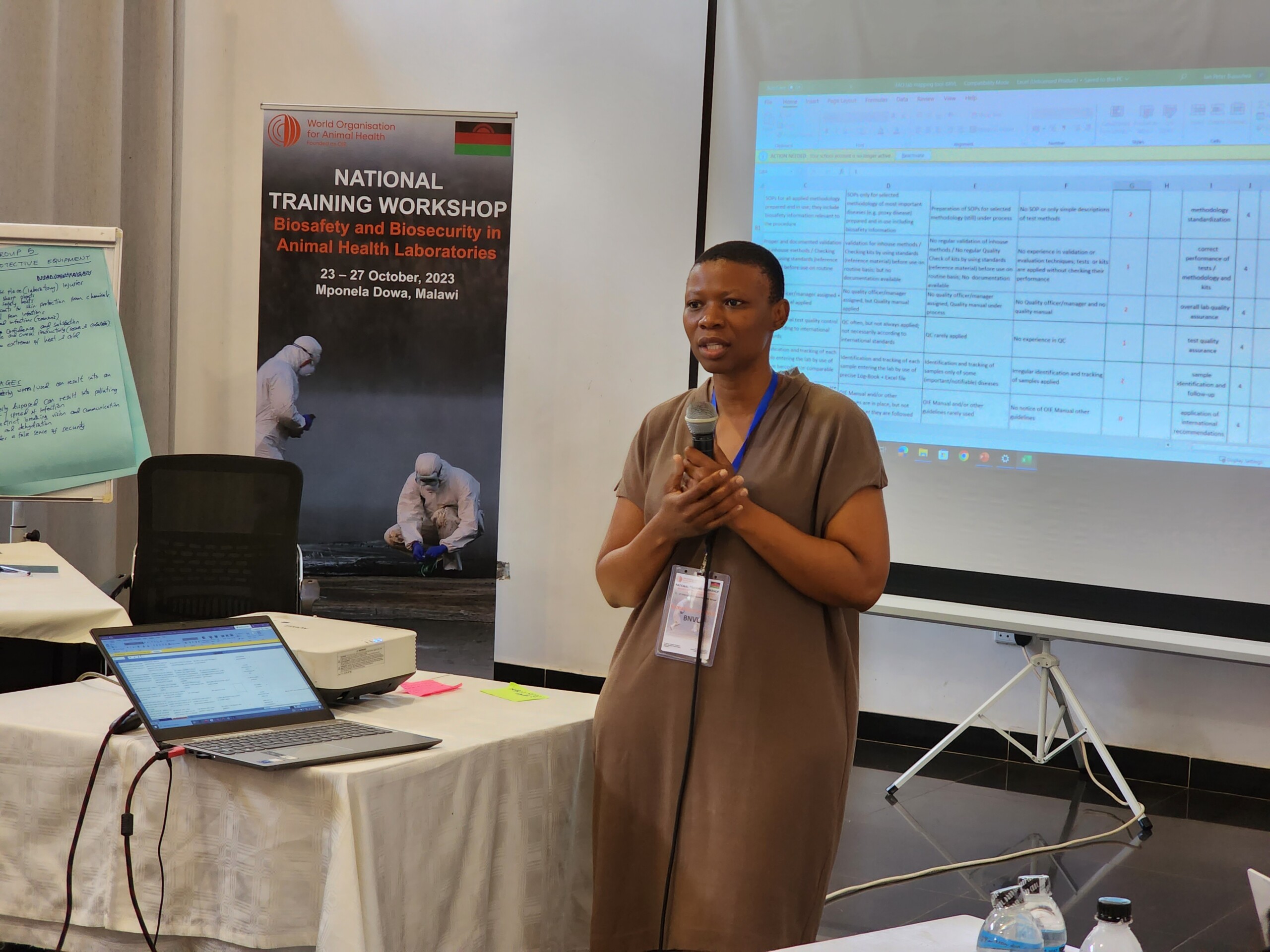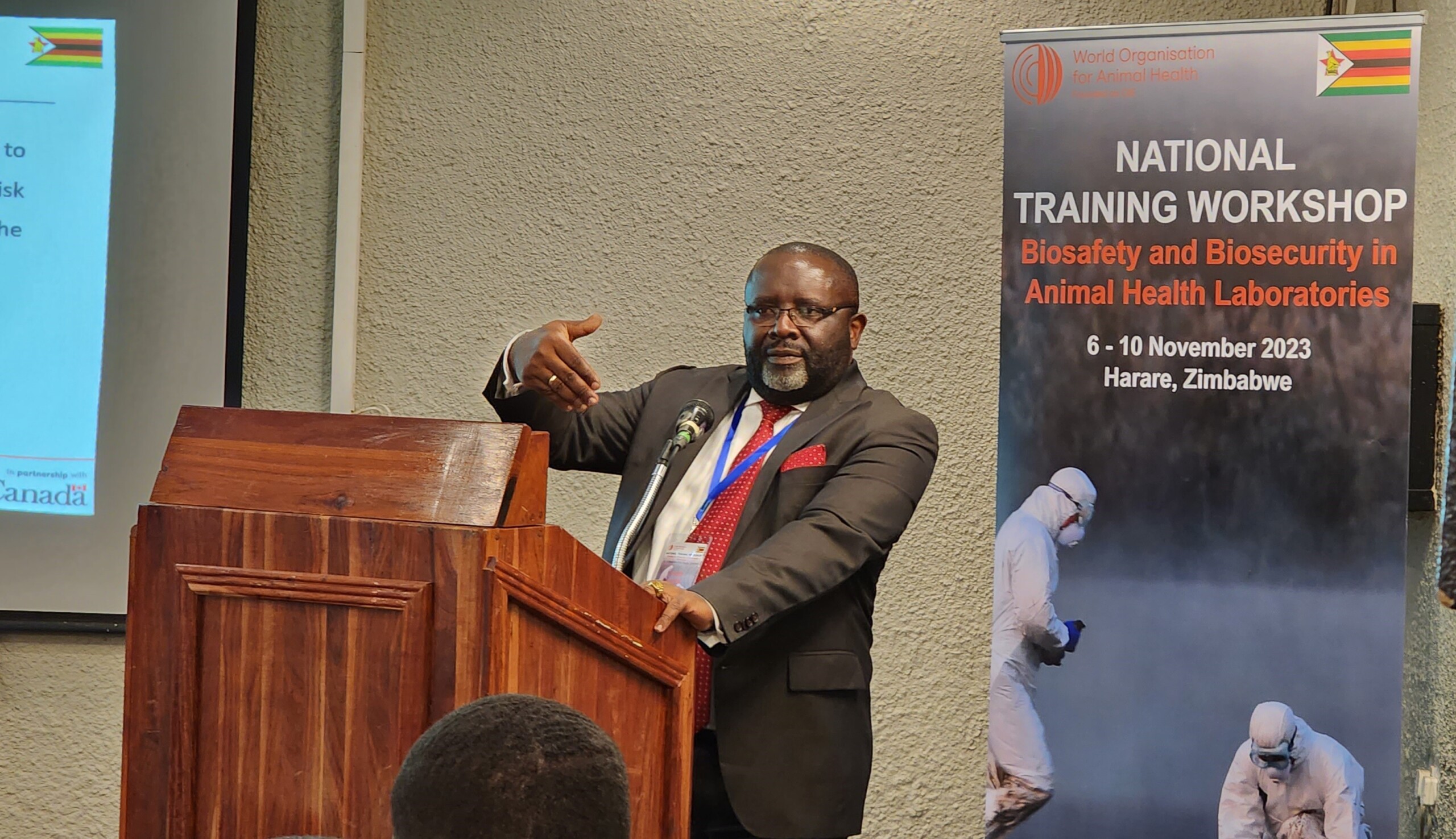


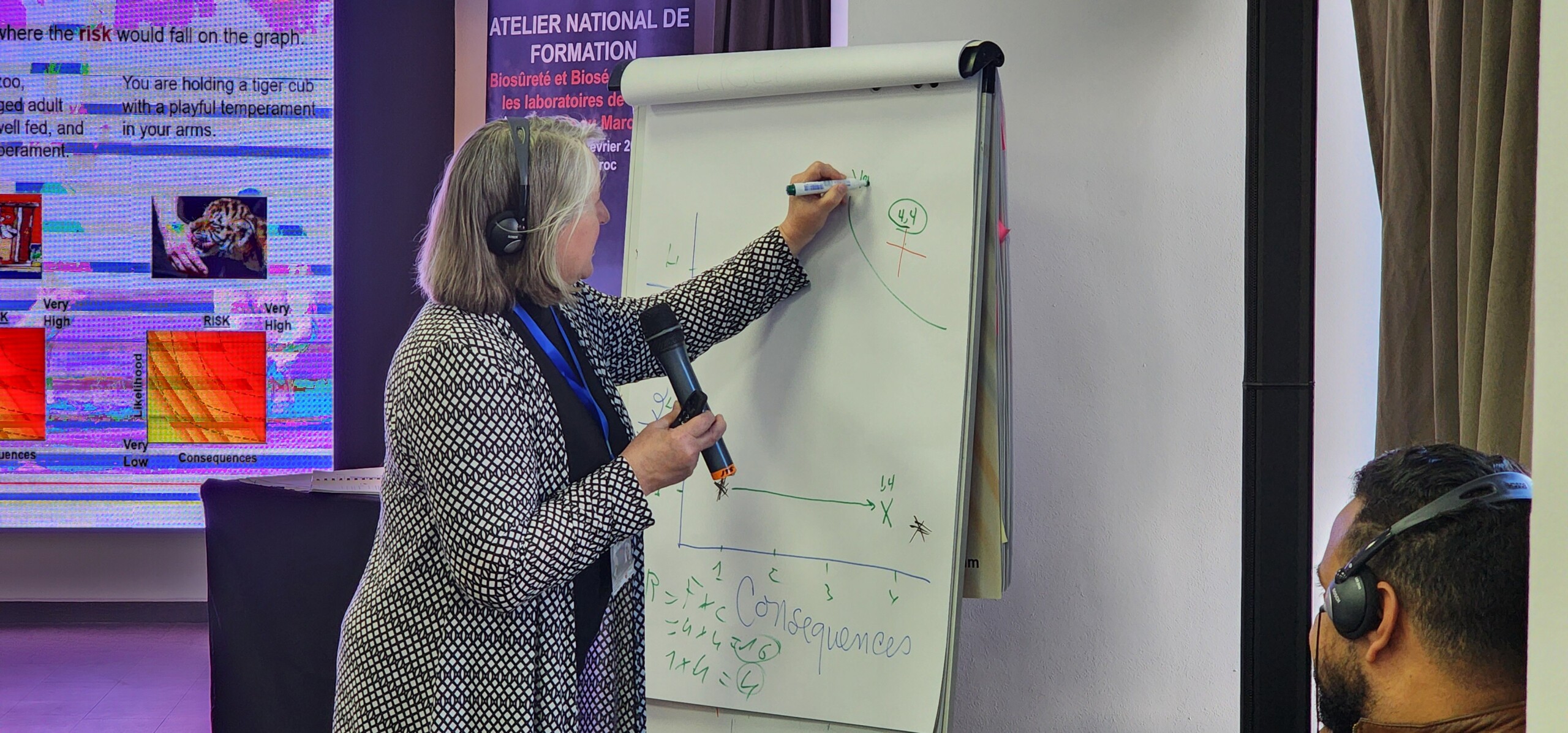
Morocco: WOAH Conducts Biosafety and Biosecurity Training for Enhanced Biorisk Management
February 27, 2024
Read more
Global Affairs Canada's Weapons Threat Reduction Programme
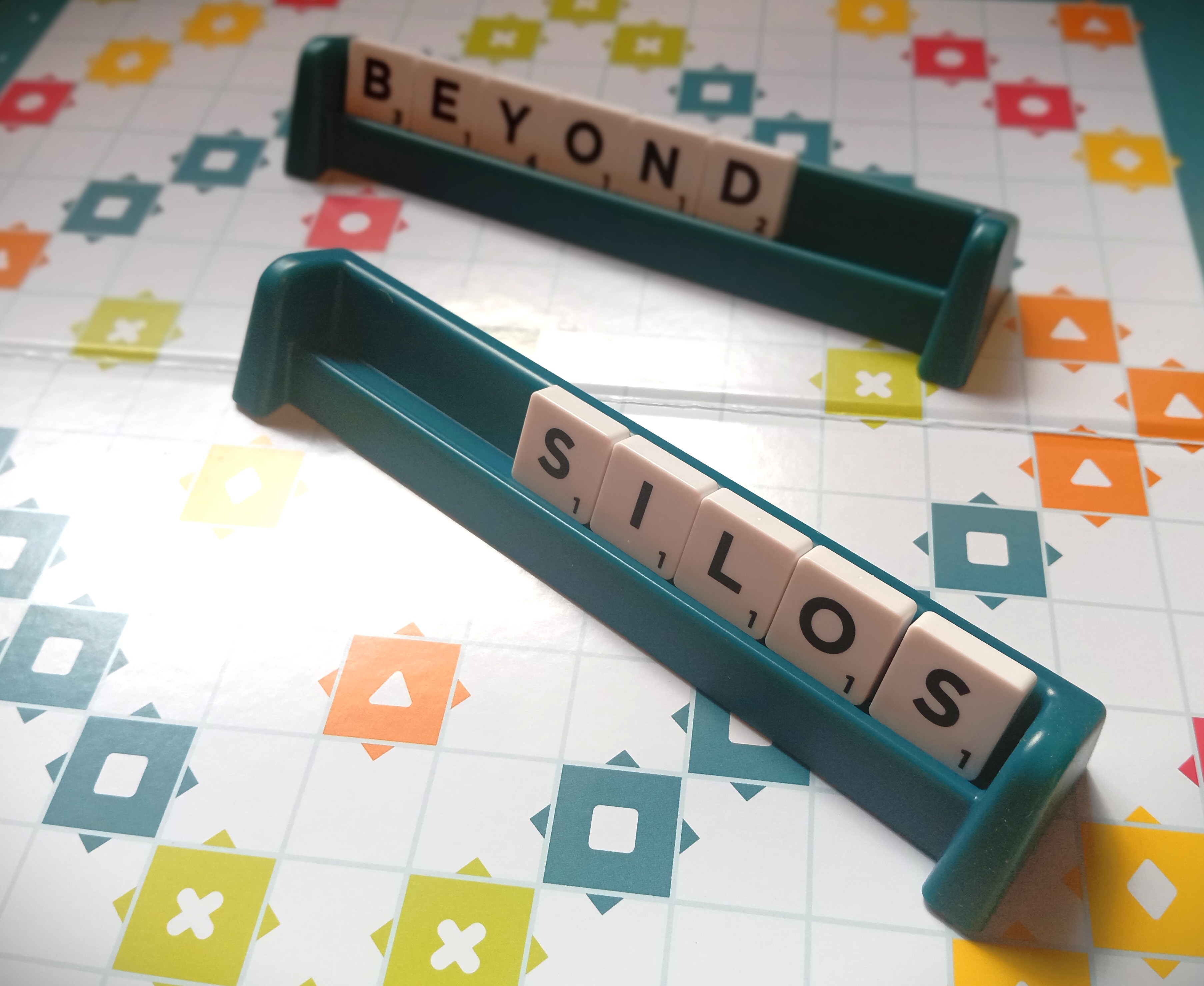
Biological risks are accelerating, from transboundary animal diseases to zoonotic spillovers, while prevention systems remain fragmented. Veterinary Services, often the first to detect unusual outbreaks, are still under‑recognized in national security frameworks—Beyond Silos addresses this gap by embedding animal health into security agendas, strengthening biosafety and biosecurity, and building trust across sectors.
By connecting Veterinary Services with public health, law enforcement, and private actors, the project enables earlier detection, faster response, and stronger resilience against biological threats. Ultimately, this is about more than protecting animals—it’s about safeguarding economies, stabilising food systems, and protecting communities worldwide.
Most pathogens used in bioweapons are animal pathogens, including zoonoses, due to their impact on health, economies, and food security. Veterinary Services, working with security and public health partners, play a vital role in mitigating threats from deliberate or accidental misuse. Positioned between livestock owners, consumers, and laboratories, they mobilise stakeholders to raise awareness and implement prevention and early detection policies. Yet their role in national security and non‑proliferation frameworks is often under‑recognised and underutilised. Risks are increasing due to synthetic biology advances, global instability, regulatory gaps, and weak investment in diagnostic laboratories, undermining early detection. Reduced international funding further heightens biological threats, underscoring the urgency for robust health‑security frameworks. Beyond Silos addresses these gaps, securing Veterinary Services’ role in protecting security and contributing to non‑proliferation.
This project builds on WOAH’s past decade of work with Global Affairs Canada:
These projects generated baseline data, piloted guidance, and strengthened networks, but revealed Veterinary Services were not fully engaged in national risk reduction and security mechanisms. Beyond Silos now seeks to mobilise Veterinary Services globally, embed animal health into security agendas, and strengthen biosafety and biosecurity. In Africa, it will advance the Signature Initiative to Mitigate Biological Threats in Africa (SIMBA); the Association for South-East Nations (ASEAN), it will support the Leaders’ Declaration, working with partners like the Africa Centres for Disease Control and Prevention (Africa-CDC), the ASEAN Secretariat, and the International Livestock Research Institute (ILRI). This initiative envisions Veterinary Services as central actors in multisectoral frameworks, ensuring earlier detection, faster response, and stronger resilience against biological threats.
Beyond Silos envisions Veterinary Services fully engaged in multisectoral efforts to safeguard security. As the only intergovernmental organisation representing national Veterinary Services, WOAH is uniquely positioned to mobilise them into threat‑reduction frameworks. The project dismantles barriers between health, law enforcement, and non‑proliferation sectors, enhancing rapid mitigation of threats from pathogen misuse or health‑security disruptions. Implemented globally, Beyond Silos focuses on Africa through SIMBA and in ASEAN through the Leaders’ Declaration on Biosafety and Biosecurity.
It integrates Veterinary Services into national and international security frameworks, strengthens prevention and preparedness, and builds resilience against deliberate release events. WOAH will partner with Africa CDC, ASEAN Secretariat, and ILRI—leveraging ILRI’s expertise, networks, and presence in LMICs to reinforce sustainable health‑security systems.
A transversal communications strategy will raise awareness, foster collaboration, and showcase outcomes, positioning WOAH as an agile security partner. Activities will enhance early detection, operationalise guidance, and facilitate intelligence sharing between WOAH, the World Health Organization (WHO), INTERPOL, and others. The project begins before FIRABioT concludes in 2026, complementing its delivery while addressing capacity gaps identified in earlier work. A 12‑month planning phase will map stakeholders, update tools, and coordinate with other initiatives, followed by 24 months of intensive delivery and a final year of consolidation with sustainability plans.
WOAH staff expertise will be central to implementation, improving efficiency and strengthening in‑house capacity. Support for BioPrevail will ensure continuity beyond 2026. A horizontal objective is to engage new sectors—including environmental and private partners expanding public‑private partnerships (PPP) and reinforcing global biothreat reduction.
1. Integrate Veterinary Services into Security Frameworks
Embed Veterinary Services as core actors in national and international health‑security and non‑proliferation systems, ensuring their role in prevention, preparedness, and response is fully recognized.
2. Strengthen Multisectoral Collaboration
Break down silos between veterinary, public health, law enforcement, and security sectors, while engaging new partners such as environmental and private actors to broaden resilience.
3. Build Regional Leadership and Capacity
Reinforce Africa’s role in SIMBA with Africa CDC and ILRI, mobilize Veterinary Services in ASEAN to support the Leaders’ Declaration, and enhance global capacity to respond to deliberate release events.
4. Ensure Sustainability and Innovation in Biosafety
Address laboratory gaps, support initiatives like BioPrevail, operationalize WOAH standards, and develop nationally adopted action plans to secure long‑term resilience.