
FLICKR
PHOTO ALBUM
Read more
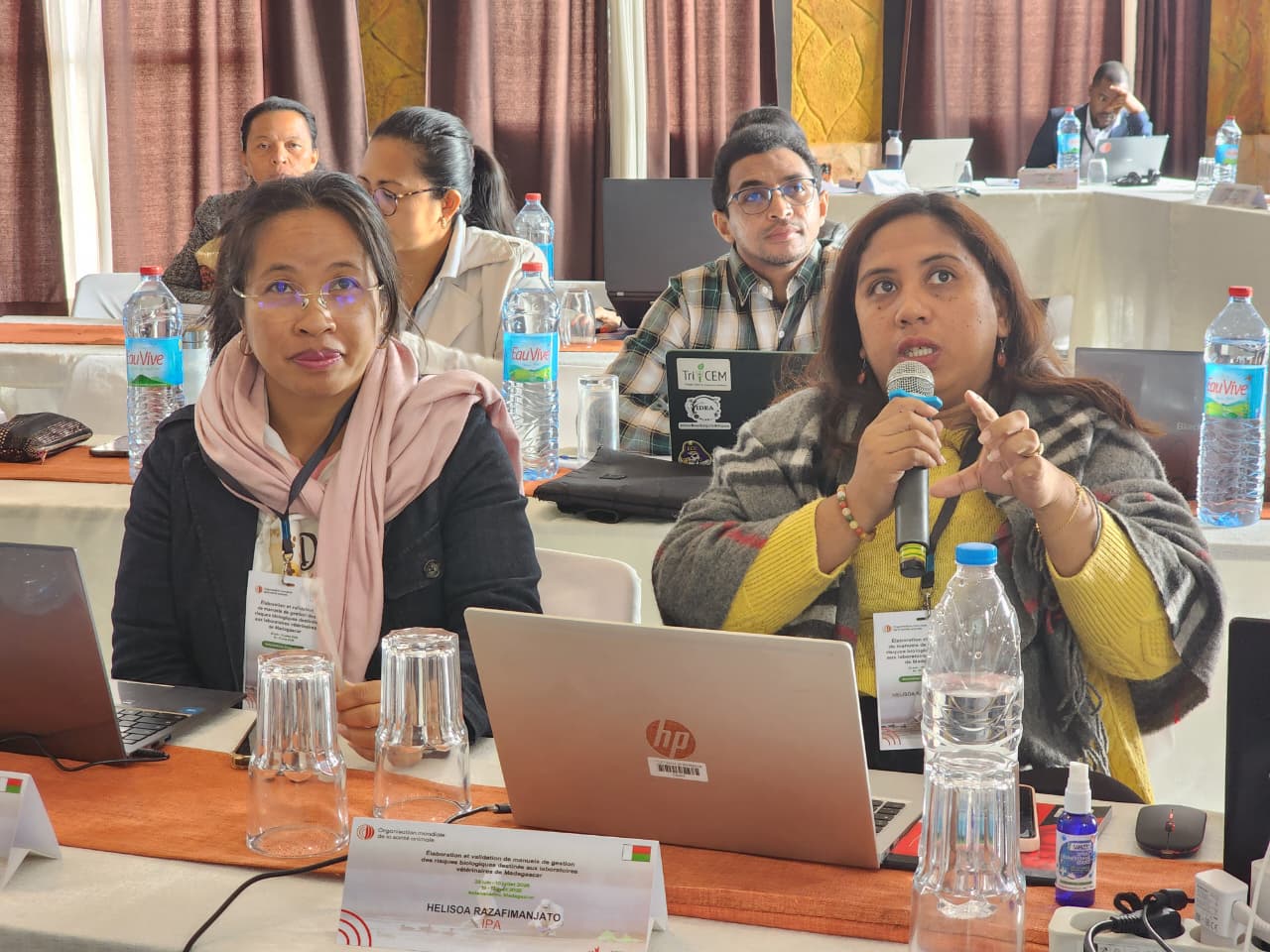
From 17 to 19 August 2026, Madagascar’s Directorate of Veterinary Services, with support from the World Organisation for Animal Health (WOAH), organised a validation workshop for the revised chapter on veterinary laboratories in the National Manual on Security, Biosafety and Biosecurity for Laboratories in Madagascar. The workshop, that was organised in Antananarivo as part of the Fortifying Institutional Resilience Against Biological Threats (FIRABioT) project, follows a comprehensive drafting process that included biological risk assessments of four veterinary laboratories in Antananarivo, and a drafting workshop held from 4 – 10 July 2026.
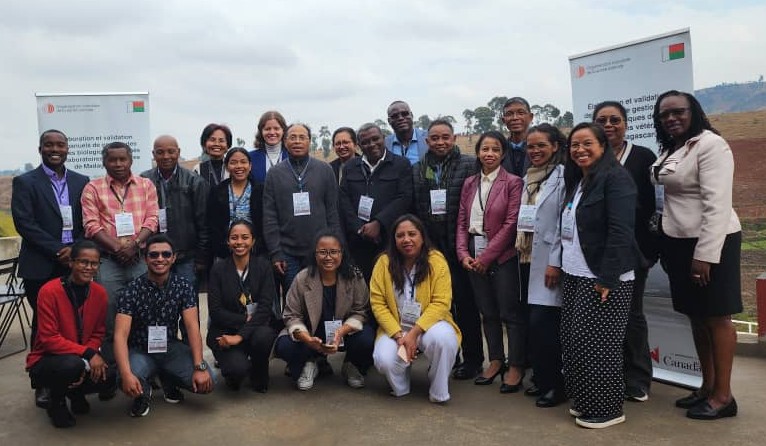
The validation workshop brought together representatives from veterinary laboratories, including the National Veterinary Diagnostic Laboratory (LNDV), the Department of Animal Science, Veterinary Medicine and Aquaculture Research (DRZVP) of the National Centre for Applied Research in Rural Development (FOFIFA), the Malagasy Institute of Veterinary Vaccines (IMVAVET), Mahaliana Labs, and the Department of Veterinary Sciences and Medicine (DESMV) at the University of Antananarivo. Experts from the aquatic animal health, public health, environmental and research sectors also participated.
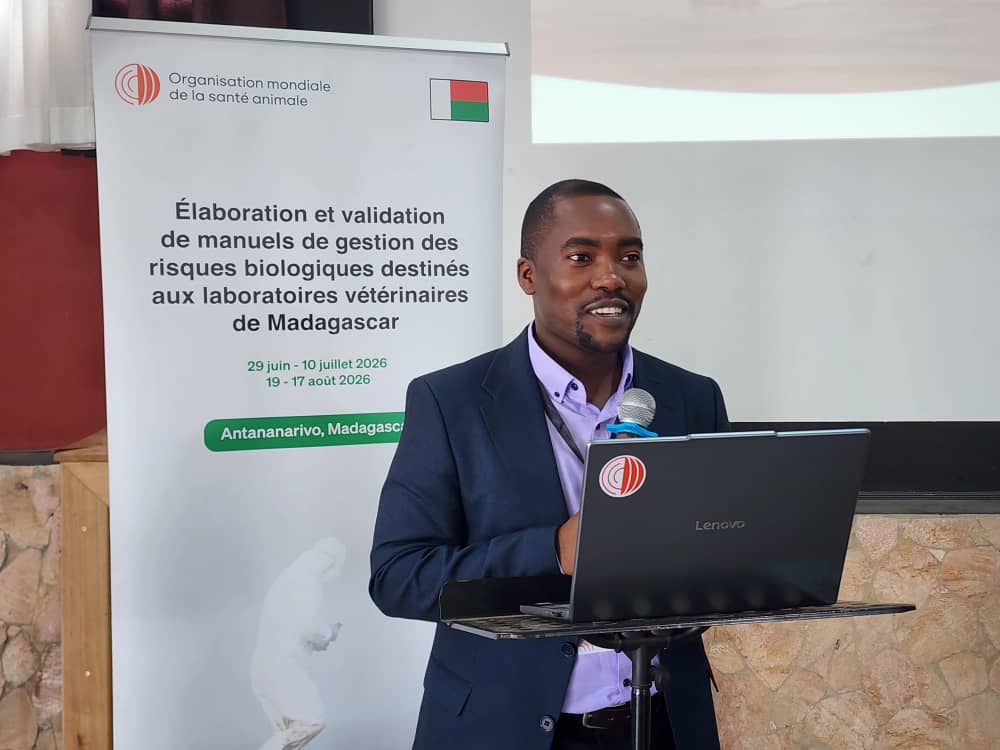
Mr. Ian Peter Busuulwa, FIRABioT Project Officer, delivering opening remarks on behalf of Dr. Moetapele Letshwenyo, WOAH Sub-Regional Representative for Southern Africa. Picture © E. Wijers (woah) 2026.
The workshop was officially opened by Dr Tantely Randriamparany, Director of the LNDV, on behalf of Dr Zo Harimamy Andrianasandratra, WOAH Delegate for Madagascar and Director of Veterinary Services (DVS). Dr Randriamparany thanked WOAH and Integrated Quality Laboratory Services (IQLS), the technical partner for this activity, for their support and highlighted the importance of developing a national manual to address Madagascar’s biological risk management challenges. Opening remarks on behalf of Dr Moetapele Letshwenyo, WOAH Sub-Regional Representative for Southern Africa, were delivered by Ian Peter Busuulwa, FIRABioT Project Officer.
Prior to the validation workshop, the revised chapter was circulated to relevant national stakeholders and international biological risk management experts for review. Their feedback was consolidated and incorporated into the document by an editorial team comprising national biosafety and biosecurity experts and workshop facilitators.
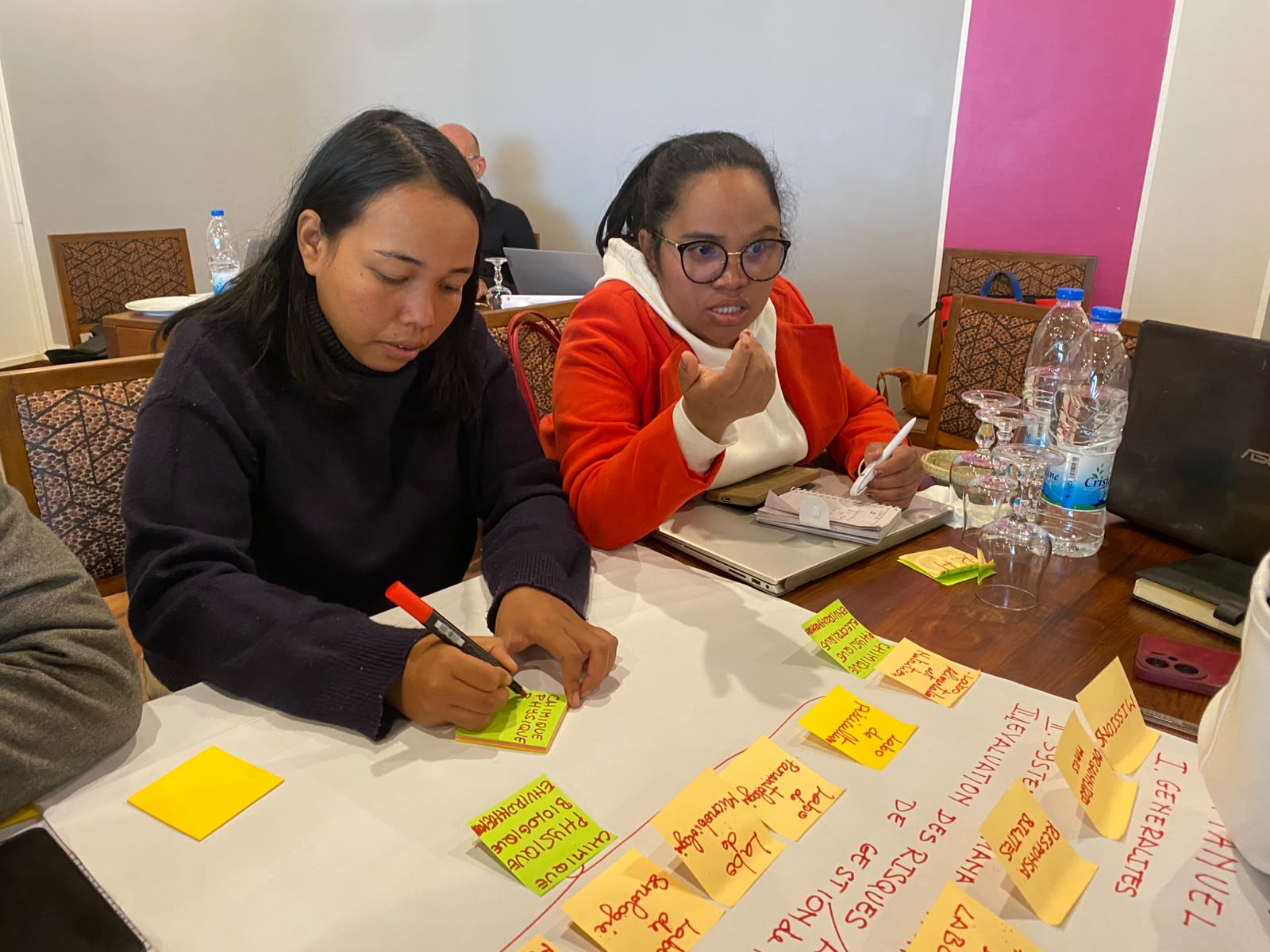
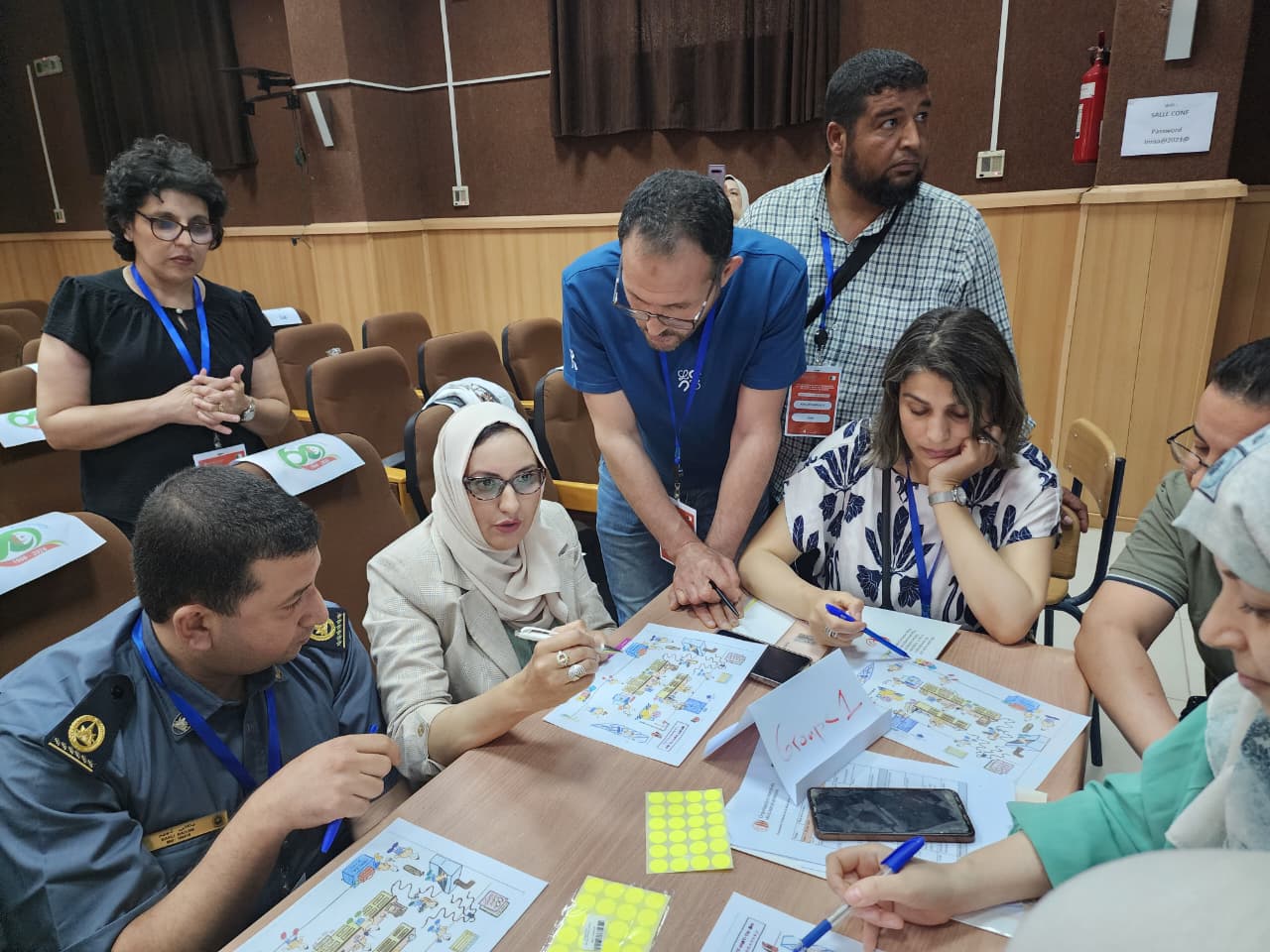
During the three-day validation workshop, participants worked in thematic groups to review the revised draft and present their proposed amendments in plenary sessions. The discussions were moderated by Dr Abdoulaye Nikiema, Director of IQLS Africa, and Dr Nirharosoa Randriamora, FIRABioT Activity Focal Point for Madagascar. On the third day, the updated manual was unanimously validated by the participants.
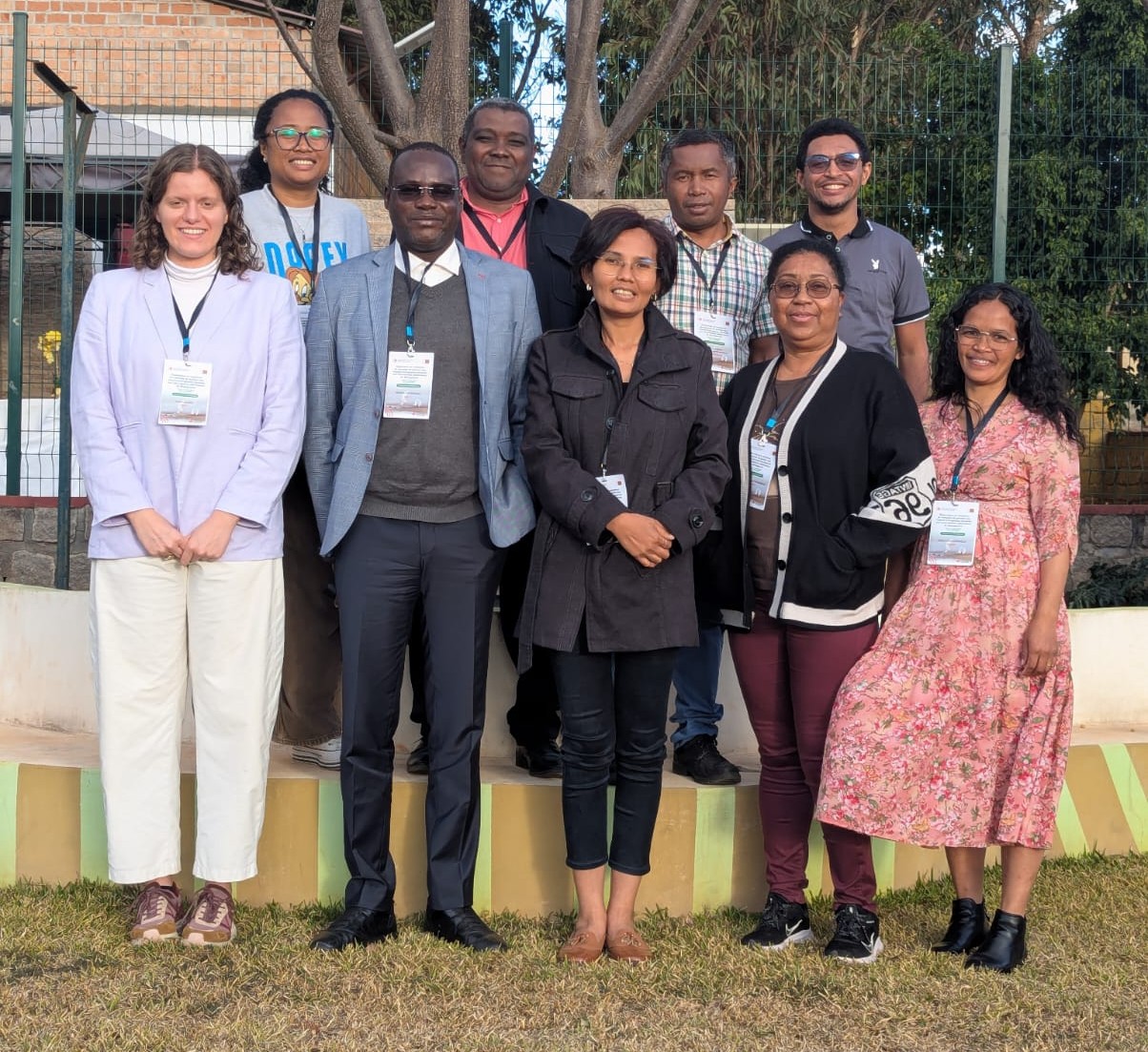
Group picture of the editorial team. Fltr: Emma Wijers, FIRABioT Consultant; Dr. Mirantsoa Rokotomalala, LNDV; Dr. Abdoulaye Nikiema, Director IQLS Africa; Dr. Bettelhein Ramahefasoa, DVS and former WOAH Delegate for Madagascar; Dr. Nirharosoa Randriamora, Activity Focal Point and LNDV; Dr. Jean Philibert Rakotondrainiarivelo, DRZVP; Francine Mavo Razanabao, IMVAVET; Santatra Randrianarisoa, Mahaliana Labs; Dr. Ngola Ravaoarivelo, DESMV. Picture © E. Wijers (woah) 2026.
Going forward, the national manual will be officially launched by the Veterinary Services and relevant stakeholders of Madagascar. Based on the national manual, veterinary laboratories will develop laboratory-specific manuals to strengthen biosafety and biosecurity practices at the institutional level and increase the country’s capacity to prevent and respond to biological threats.
The validation of the biological risk management manual for veterinary laboratories is part of Madagascar’s activities as a beneficiary of the Fortifying Institutional Resilience against Biological Threats (FIRABioT) project. This project is funded by Global Affairs Canada’s Weapons Threat Reduction Programme in support of the Global Partnership’s Signature Initiative to Mitigate Biological Threats in Africa.