

P3V

P3V: The integration of veterinary paraprofessionals (VPP) into the workforce in Africa: a review of the current situation and tools proposed by the Project

Header

In many African countries, including Senegal and Togo, the transition from academic life to professional life remains a major challenge for veterinary paraprofessionals (VPPs).

Despite specialised training and proven skills, a significant proportion of graduates struggle to find stable employment. To gain a better understanding of this situation, the P3V Project has launched two complementary studies on the employment prospects of graduates and the financial viability of animal health facilities in Togo and Senegal.

These studies, conducted by teams of consultants, collected the necessary data and proposed a support framework and effective, sustainable economic models to facilitate the integration of VPP graduates.

Key findings

Professional insertion is a challenge for young graduates

The results of the studies revealed that employment is a challenge for young graduates, with significant disparities between Togo and Senegal. In Togo, only 52.6% of graduates from the VPP programme are at work, with a marked gender disparity: 36.4% of women compared with 58.9% of men. The average time taken to secure stable employment is 10 months, with women taking longer (12.8 months) than men (9.2 months). In Senegal, the situation is slightly better: 65% of VPP graduates are employed, mainly in the formal private sector (58.8%). These figures highlight the need to strengthen links between training institutions and employers, as well as to develop appropriate support mechanisms to facilitate the integration of VPP graduates.

Existing support mechanisms

The studies identified existing mechanisms before proposing ways to improve support for young graduates. In Togo, three key achievements were identified:

  • the priority given to employment in national policies,
  • the establishment of an institutional framework for labour market management,
  • the implementation of projects and programmes to support entry into the labour market.

In Senegal, specific bodies such as the Livestock Support Fund (Fonds d’Appui à la Stabulation, FONSTAB) support the modernisation of the livestock sector. However, this fund remains focused on actors already in operation and has no direct link with training bodies for small-scale livestock farmers.

Profitability of animal health care facilities

Alongside the study on integration, a profitability analysis of animal health businesses was carried out. The results are encouraging:

  • In Togo, veterinary practices generate an average annual profit of over 5 million CFA francs (EUR 7,600), with a return of 132 CFA francs for every 100 CFA francs invested. Wholesalers, importers and distributors of veterinary medicines also show significant profitability, with an average return of 114 CFA francs for every 100 CFA francs invested.
  • In Senegal, private veterinary practices perform even better, with a return of 193 CFA francs for every 100 CFA francs invested. Healthcare facilities owned by VPPs stand out in particular, generating an average of 321 CFA francs for every 100 CFA francs invested.

Employment prospects cannot be separated from the economic viability of the facilities that employ graduates. This is why economic models have been proposed to ensure the sustainability of animal health facilities.

Proposing an integrated support scheme

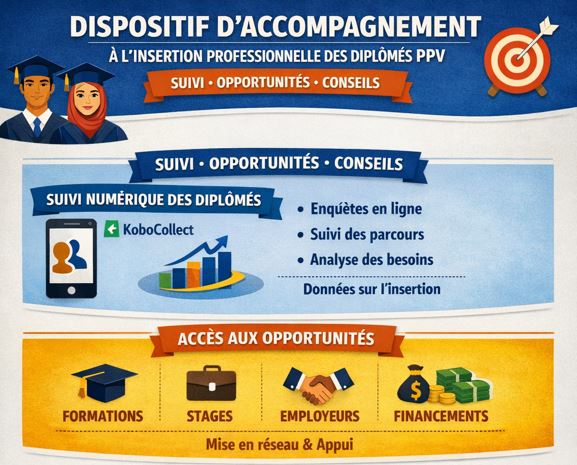
A support scheme for professional integration that incorporates cost-effectiveness considerations has been proposed and is based on two key components:

  • Monitoring and supporting graduates: the implementation of digital tools (such as Kobocollect) to track career paths and identify graduates’ specific needs.
  • Supporting access to opportunities and funding: connecting training institutions, VPP associations, employers and funding bodies to create an employment-friendly ecosystem.

The digitisation of this proposed scheme into an integrated digital platform will enable personalised monitoring, enhanced coordination and continuous evaluation of the actions taken to support graduates’ professional integration.

All the resources generated are now available on the WOAH portal (Tools and resources) for all stakeholders wishing to provide long-term support for the professional integration of VPPs in French-speaking Africa, thereby enhancing the resilience of veterinary systems in rural areas. These resources include:

  • Integration tools: a sensitisation article for the broader prublic, a policy brief for decision-makers and a document describing the integration support scheme for Togo and Senegal.
  • The cost-effectiveness of animal health activities: a sensitisation article and the economic models proposed for Togo and Senegal.

Download all the documents (in French)

Policy brief à l’attention des décideurs Sénégal

PDF - 667.28KB

Article de vulgarisation IP Sénégal

PDF - 1.55MB

Policy brief à l’attention des décideurs Togo

PDF - 358.03KB

Article de vulgarisation IP Togo

PDF - 1.61MB

I

Article de vulgarisation RE Togo

PDF - 901.51KB

Article de vulgarisation Sénégal

PDF - 756.33KB

I

Modeles economique Sénégal

PDF - 2.41MB

Modèles economiques Togo

PDF - 1.62MB

Acknowledgements

Funding : Agence Française de Developpement (French Development Agency)

Acknowledgements

Technical partners : FAR Network and EISMV

More information

P3V

Project Pages

Read more
P3V

Tools and Resources

Read more
Forme
Share this post