to review progress in rabies control, strengthen intersectoral collaboration, and enhance the capacity of veterinary personnel to support the country’s rabies elimination efforts.
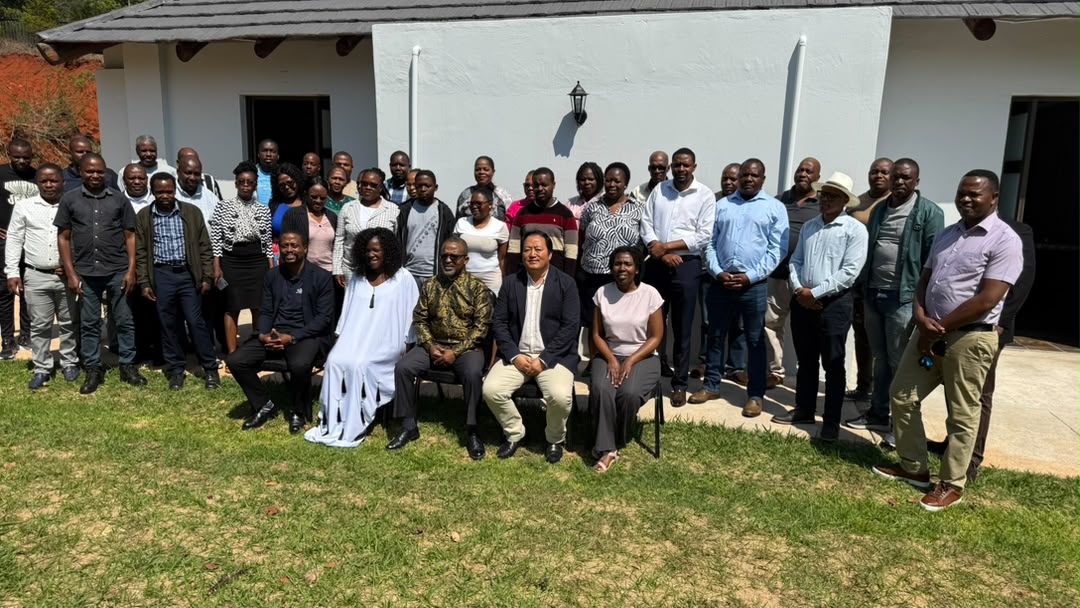
The workshop was organised by the Department of Veterinary and Livestock Services (DVLS) with technical and financial support from the World Organisation for Animal Health (WOAH). It brought together 50 veterinary professionals, public health officials, and representatives from key stakeholder institutions to assess the implementation of Eswatini’s National Rabies Strategic Plan, which was developed in 2019 with support from WOAH.
Mr Luyas Khumalo, Acting Director of the Department of Veterinary and Livestock Services, Eswatini and Dr Tenzin Tenzin, Programme Officer from WOAH made an opening remark and emphasised on importance of rabies control programme.
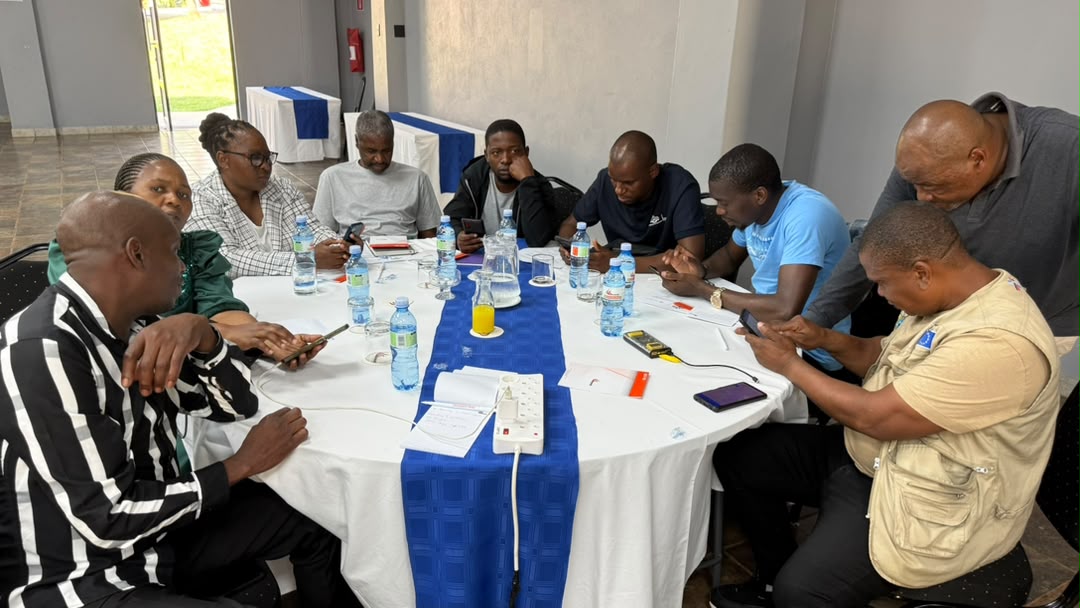
The first day of the workshop focused on training veterinary officials on rabies prevention and control, with particular emphasis on planning and implementing mass dog vaccination campaigns. Participants also received hands-on training in the use of mobile applications for vaccination data collection and management, aimed at improving real-time monitoring, reporting, and decision-making.
Eswatini Reviews Rabies Control Progress, Strengthens Capacity for Mass Dog Vaccination, and Receives 50,000 Vaccine Doses from WOAH - September 2026. Photo © T.Tanzin
On the second day, a broader multi-sectoral stakeholder forum brought together representatives from the Department of Veterinary and Livestock Services, Ministry of Health, and other relevant sectors to review achievements, discuss challenges, and identify priority actions for advancing rabies elimination efforts. Participants assessed progress made under the national strategic plan and developed recommendations to guide future activities.
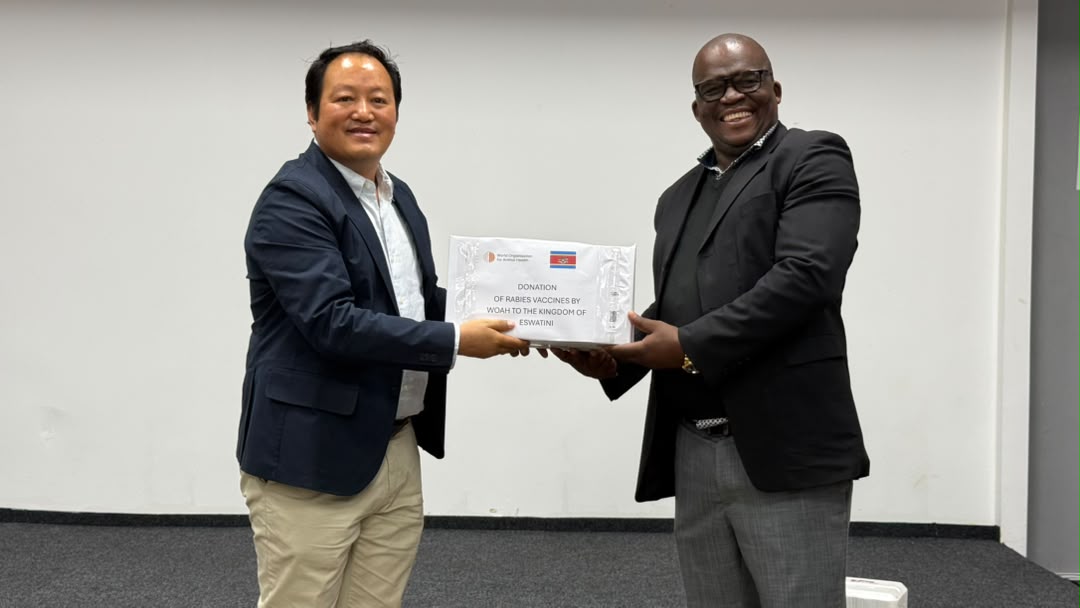
A key highlight of the workshop was the handover of 50,000 doses of rabies vaccine by Dr Tenzin Tenzin from WOAH to the Ministry of Agriculture to support upcoming mass dog vaccination campaigns across the country. The donation builds on WOAH’s previous contribution of 50,000 vaccine doses in 2022, demonstrating the WOAH’s continued commitment to supporting rabies control efforts in Eswatini.
Dr Tenzin Tenzin (WOAH) presenting 50,000 doses of rabies vaccine to Mr Vincent B. Dlamini, Under Secretary of the Ministry of Agriculture, to support Eswatini's national mass dog vaccination campaign. Picture @ T.Tenzin (woah)
Receiving the donation, Mr Vincent B Dlamini, Under Secretary of the Ministry of Agriculture expressed appreciation to WOAH for its longstanding technical and financial support toward rabies prevention and control. The Ministry and Veterinary Services noted that the partnership has played a significant role in strengthening national capacity and sustaining vaccination campaigns in Eswatini.
Eswatini has achieved remarkable progress in rabies control over recent years. Through sustained dog vaccination programmes, improved surveillance, public awareness initiatives, and strong collaboration between animal and human health sectors, the country has recorded zero human rabies deaths for several consecutive years and a substantial reduction in rabies cases in animals.
Speaking during the workshop, participants emphasised the importance of maintaining high vaccination coverage in dog populations, strengthening surveillance systems, improving data management, and fostering continued collaboration under the One Health framework to achieve and sustain rabies elimination.
to accelerate implementation of priority activities under the National Rabies Strategic Plan and safeguard the gains already achieved. Continued investment in vaccination, surveillance, community engagement, and cross-sectoral coordination will be critical to ensuring that Eswatini remains on track toward the long-term goal of eliminating dog-mediated rabies as a public health threat.
The workshop was facilitated by Dr. Tenzin Tenzin (WOAH) and Dr. Bavukile Kunene (Department of Veterinary and Livestock Services), with funding support from the World Organisation for Animal Health. The ministry of Agriculture and the participants acknowledged WOAH for technical and financial support.