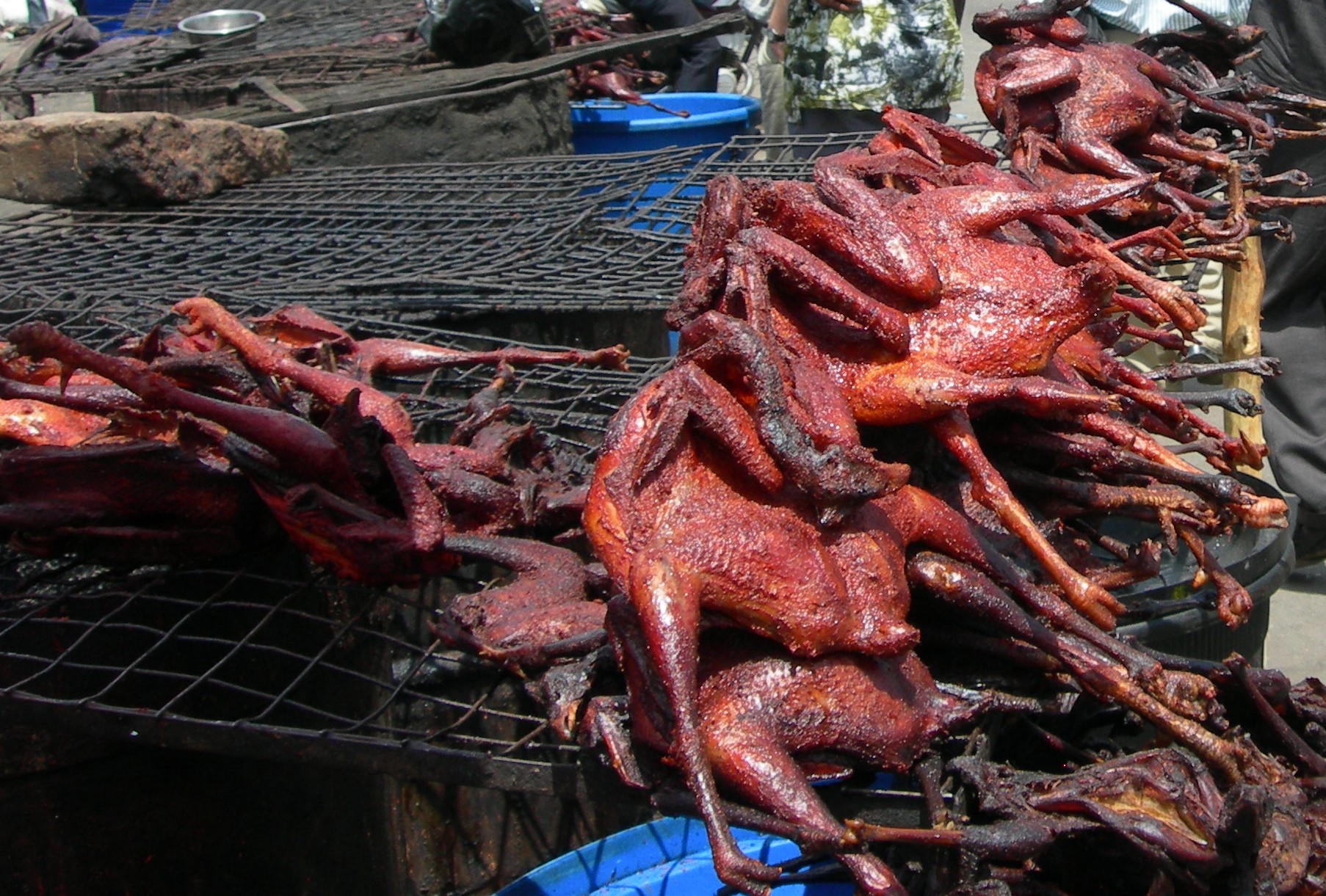
Lagos, Nigeria. Picture (c) P. Roeder (FAO) 2006.
The training aims to strengthen the capacity of Veterinary Services and relevant stakeholders to effectively apply the WOAH Terrestrial Animal Health Code (TAHC) in facilitating safe international trade. Using poultry meat as a practical case study, the training will provide participants with an opportunity to explore the application of WOAH standards in a more detailed and operational manner than would be possible through a generic approach.
While the training focuses on poultry commodities, the principles and methodologies explored throughout the programme are transferable and applicable to a broad range of animal commodities and trade contexts.
Poultry meat represents a highly relevant commodity for the study of safe trade due to its strong linkages with animal health, food safety, public health, antimicrobial resistance (AMR), animal welfare, and international market access.
Participants will examine how disease risks associated with poultry production and processing can be effectively managed through science-based import measures, risk analysis, certification systems, compartmentalisation approaches, and public-private collaboration across the value chain.
The training will also highlight how safe trade can be strengthened through effective public-private partnerships, particularly in areas such as biosecurity implementation, compartmentalisation systems, surveillance, certification processes, food safety management, and responsible antimicrobial use. Effective collaboration between Veterinary Authorities, poultry producers, processors, exporters, laboratories, and industry associations is essential. These collaborative approaches are increasingly important for supporting market access, improving compliance with international standards, and enhancing trust between trading partners.
For more information, please contact : Dr. P. Bastiaensen ([email protected])