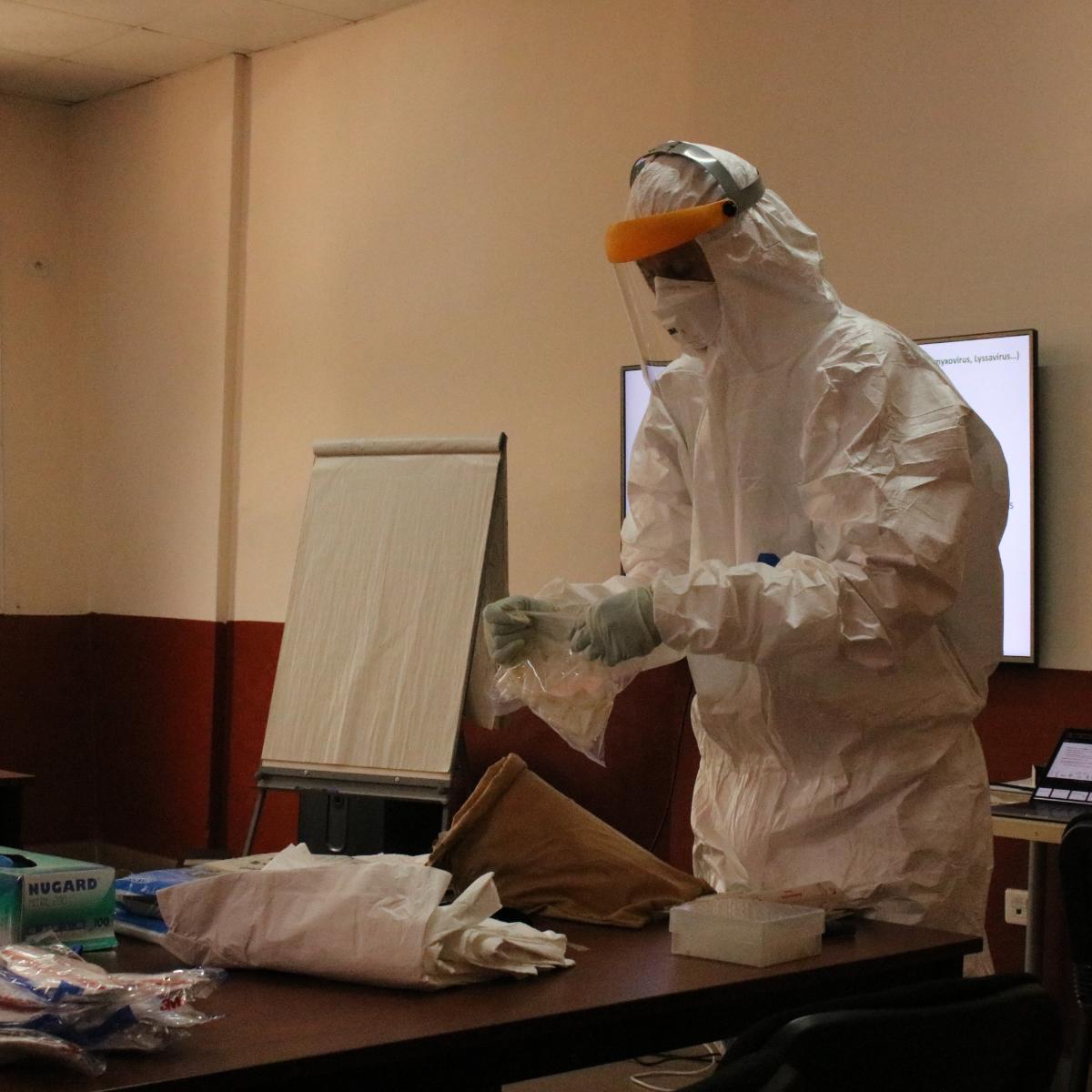
The World Organisation for Animal Health (WOAH), together with the West African Health Organization (WAHO), and in collaboration with the Quadripartite partners ; the Food and Agriculture Organization of the United Nations (FAO), the United Nations Environment Programme (UNEP), and the World Health Organization (WHO), will organize a Regional Technical Workshop to Strengthen One Health Implementation in West and Central Africa from 17th–19th of June 2026 in Conakry, Guinea.
This regional workshop is organised in the framework of the Health Security and Resilience in West and Central Africa (HeSP) project, with funding from the World Bank. It will convene technical experts and coordinators responsible for national One Health programmes across 22 countries in West and Central Africa. The workshop will also bring technical One Health specialists from regional institutions, development partners, and international organizations including the Africa Union, ECOWAS and CEMAC.
One Health promotes a collaborative and multisectoral approach, that recognizes the strong links between the health of animals, humans, and ecosystems. The increasing occurrence of zoonotic diseases, antimicrobial resistance (AMR), environmental degradation, biodiversity loss, and climate-related threats continues to demonstrate the need for coordinated responses across sectors and borders.
Through interactive sessions, technical discussions, and peer-learning exchanges, participants will explore approaches and tools that can help countries strengthen governance systems, improve coordination mechanisms, identify priorities, mobilize resources, and operationalize national One Health strategies in line with regional and global frameworks, including the Quadripartite One Health Joint Plan of Action (OHJPA). Attention will be given to strengthening preparedness and response capacities for zoonotic diseases, antimicrobial resistance, and other public health threats emerging at the human-animal-environment interface.
Key thematic areas, including strengthening One Health governance and institutional coordination mechanisms, enhancing stakeholder engagement and partnership mapping, improving resource mobilization and financing approaches, and supporting the development and costing of national action plans. Discussions will also address monitoring, evaluation, and learning frameworks, while promoting regional networking, peer collaboration, and approaches to strengthen implementation at community and sub-national levels.
For additional information, please contact: [email protected]