


PICTURES OF THE EVENT
Flickr photo album
Read more
Agricultural systems are essential to food security, livelihoods, public health, and national security, yet they remain increasingly vulnerable to both agro‑crime and agro‑terrorism. These threats—ranging from livestock theft and food fraud to the deliberate introduction or manipulation of animal pathogens—are driven by financial, criminal, and ideological motives. Their impact is amplified by the growing complexity of livestock production systems, cross‑border movement of animals and products, regulatory gaps, and evolving technologies that can be misused to manipulate biological agents. Given the potential for severe economic, health, and security consequences, strengthening collaboration between Veterinary Services and law enforcement—particularly in the investigation of suspicious biological events—is critical to detecting, preventing, and responding to these risks effectively.
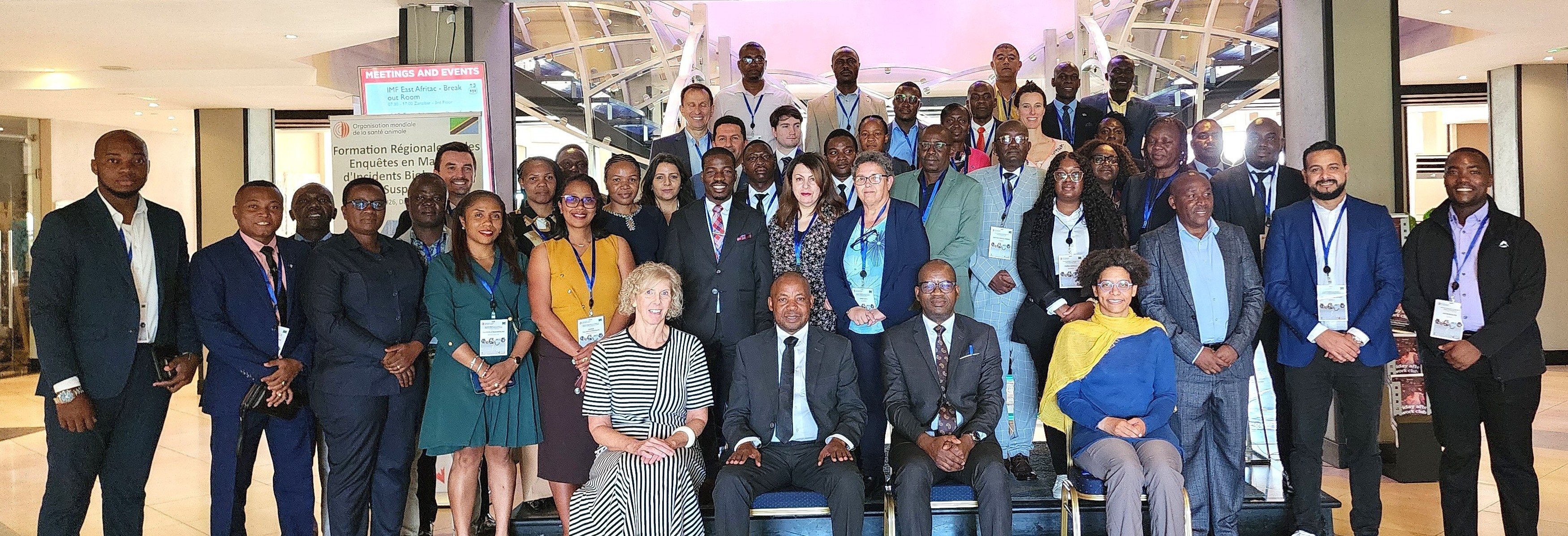
Following a policy and strategy‑focused regional agro-crime workshop held in November 2025, the World Organisation for Animal Health (WOAH), in collaboration with the International Criminal Police Organization (INTERPOL), organised a Regional Training for Investigation of Suspicious Biological Events for the nine Fortifying Institutional Resilience Against Biological Threats (FIRABioT) project beneficiary countries—Algeria, Congo (Rep), Kenya, Madagascar, Malawi, Morocco, Namibia, Tanzania, and Zimbabwe—from 21-24 April 2026 in Dar es Salaam, Tanzania.
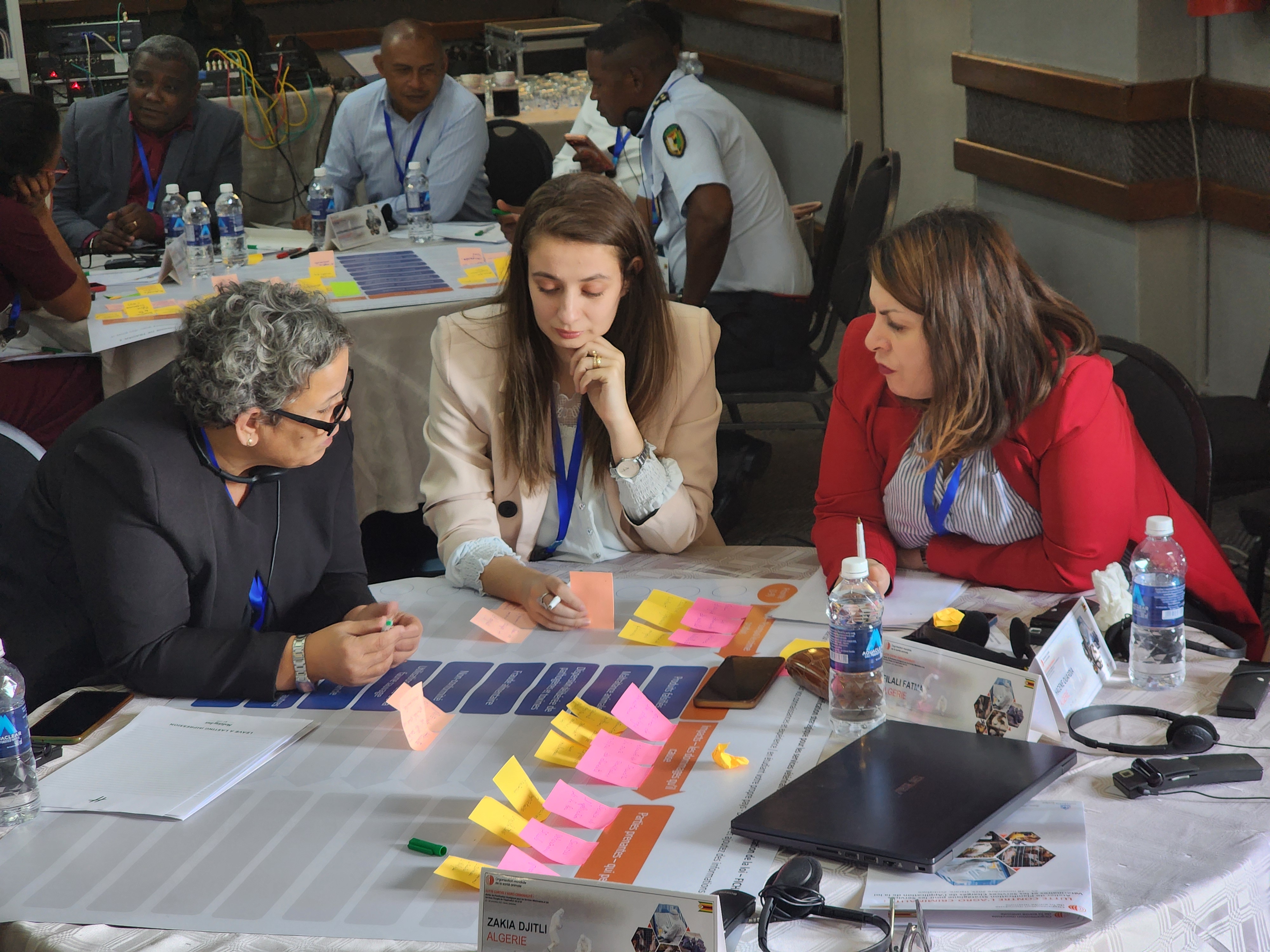
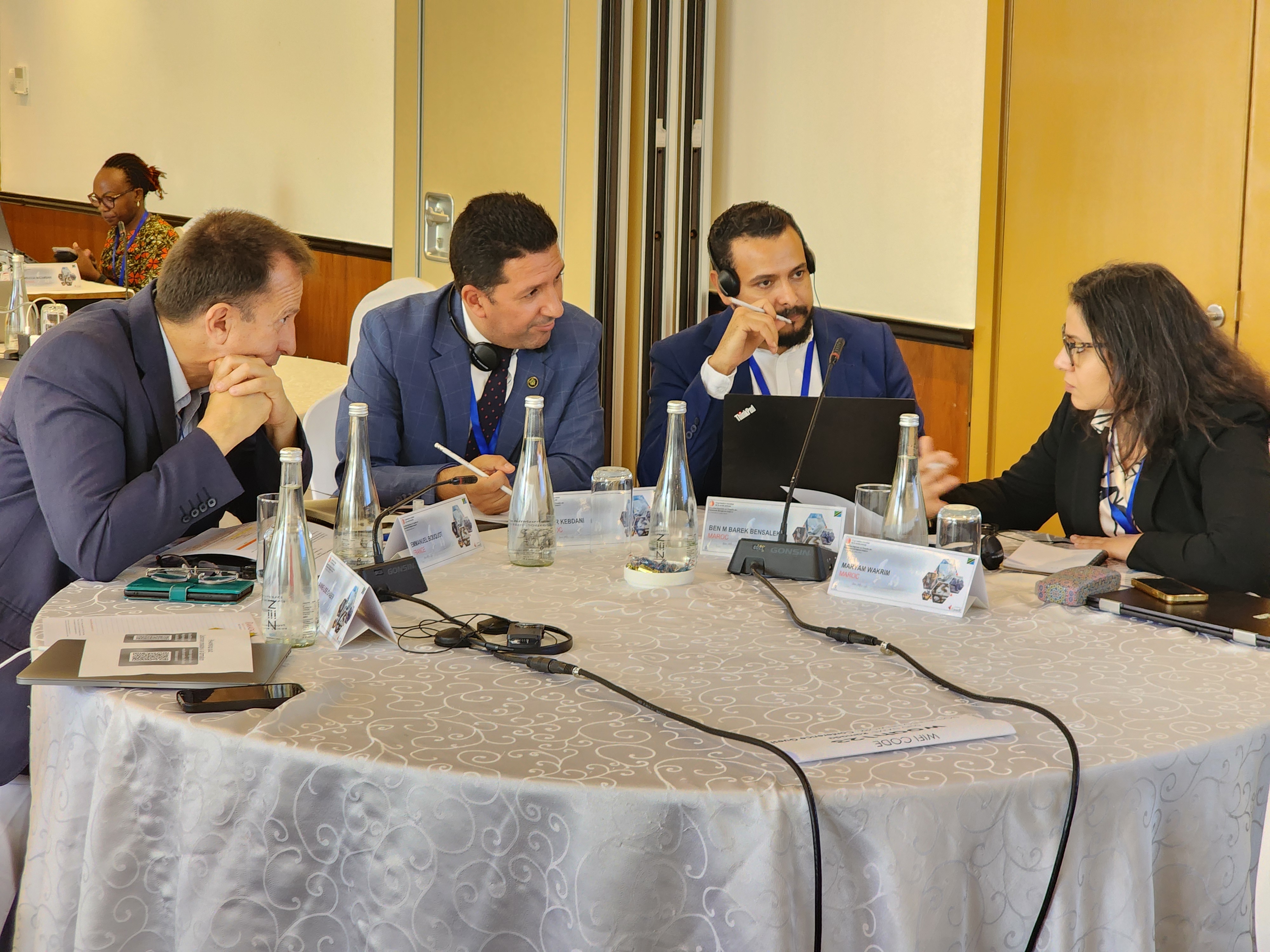
Participants engage in a group discussion during the training. Picture © J. Galiwango (woah) 2026
The opening session featured remarks from Dr Neo Mapitse (Sub-Regional Representative for Eastern Africa, WOAH), Mr Adrien Sivignon (Coordinator, Bioterrorism Prevention Unit, INTERPOL), Ms Carol Mundle (Head of Cooperation, High Commission of Canada to Tanzania), and Dr Fabian Madele (Deputy Permanent Secretary, Ministry of Livestock and Fisheries, Tanzania). The speakers underscored the growing threat of agro‑crimes and highlighted the urgent need for strengthened collaboration across sectors.
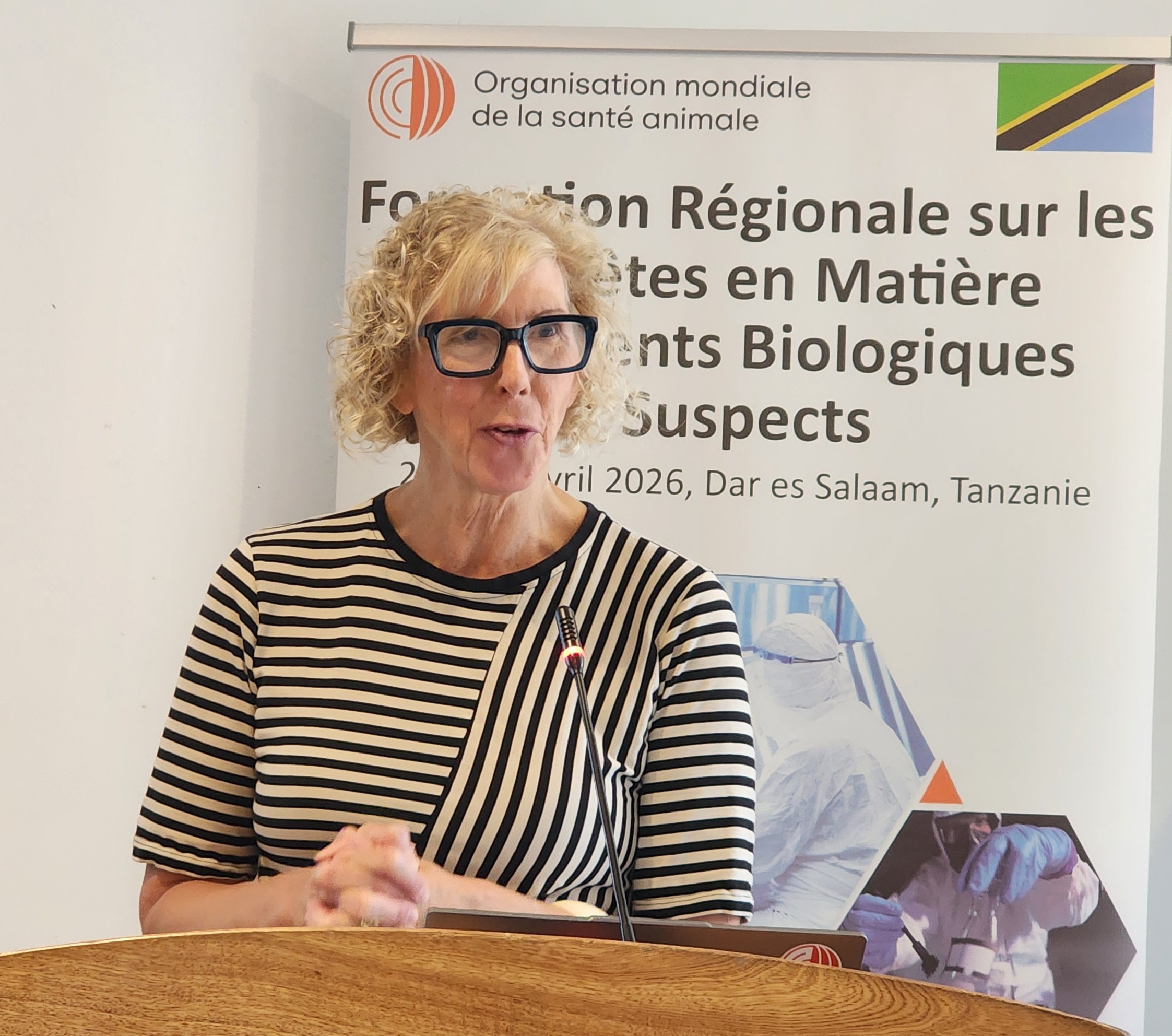
Ms Carol Mundle (Head of Cooperation, High Commission of Canada to Tanzania) delivering her opening remarks. Picture © I. Busuulwa (woah) 2026
In her remarks, Ms Carol Mundle emphasised that Canada’s investment in the Global Partnership’s Signature Initiative to Mitigate Biological Threats in Africa reflects the understanding that biological threats affect all countries—directly or indirectly—and that collective action is essential to effectively mitigate these risks.
‘In today’s interconnected world, animal health, public health and security are inseparable.’ – Ms Carol Mundle, Head of Cooperation, High Commission of Canada to Tanzania
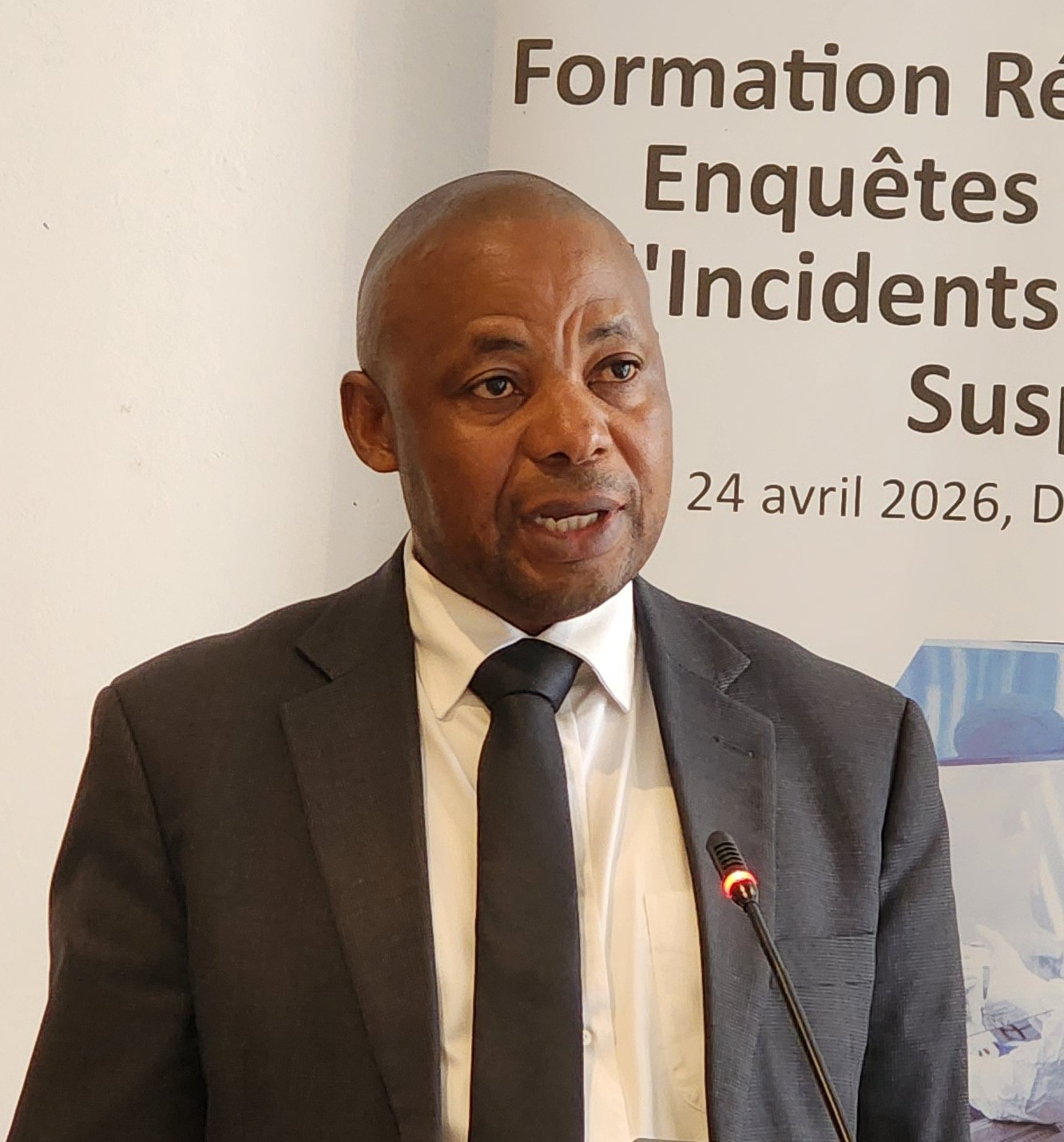
Dr Fabian Madele (Deputy Permanent Secretary, Ministry of Livestock and Fisheries, Tanzania) delivers his opening remarks. Picture © I. Busuulwa (woah) 2026
The training was officially opened by Dr Fabian Madele, Deputy Permanent Secretary at the Ministry of Livestock and Fisheries, Tanzania. In his opening remarks, he emphasised that mitigating cross-border biological threats requires the establishment of strong networks and development of practical strategies that can be implemented across different countries. He encouraged participants to share knowledge gained from the training and serve as ambassadors in the fight against agro-crime and agroterrorism.
Dr Néo Mapitse, WOAH Sub-Regional Representative for Eastern Africa
Throughout the training, participants explored real-world agro-crime case studies and examined the complementary roles of Veterinary Services and Law Enforcement in investigating suspicious biological events. Key topics covered included agro-crime and agroterrorism, transboundary animal diseases as potential bioweapons, triggers and indicators of biological incidents, joint threat credibility assessments, logistics of animal disease investigations, biological crime scene management, investigative interview techniques, principles of chain of custody, and mapping national coordination systems and gaps for joint investigations. Participants also developed action plans aimed at strengthening intersectoral collaboration and improving implementation of national agro-crime response mechanisms.
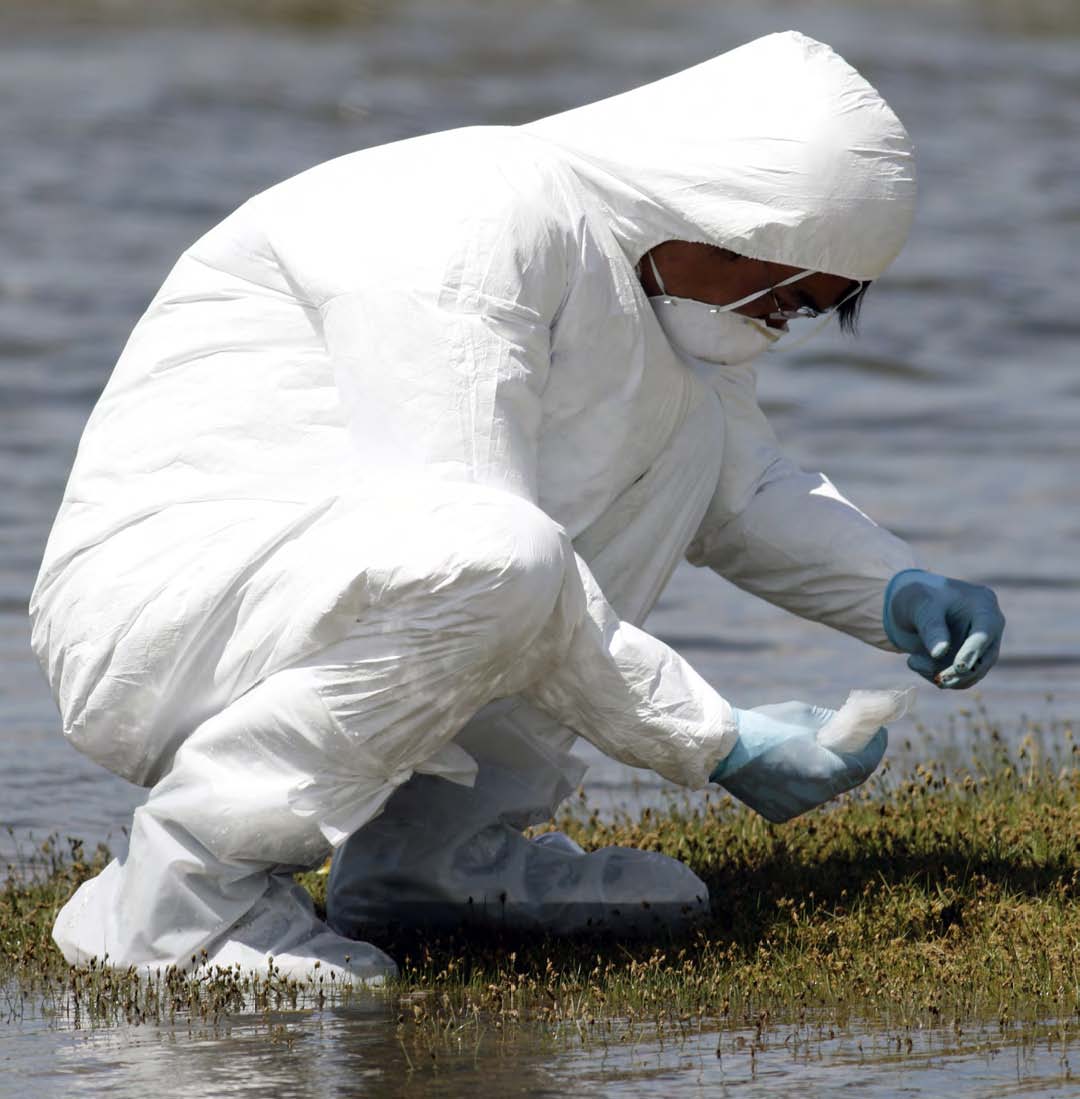
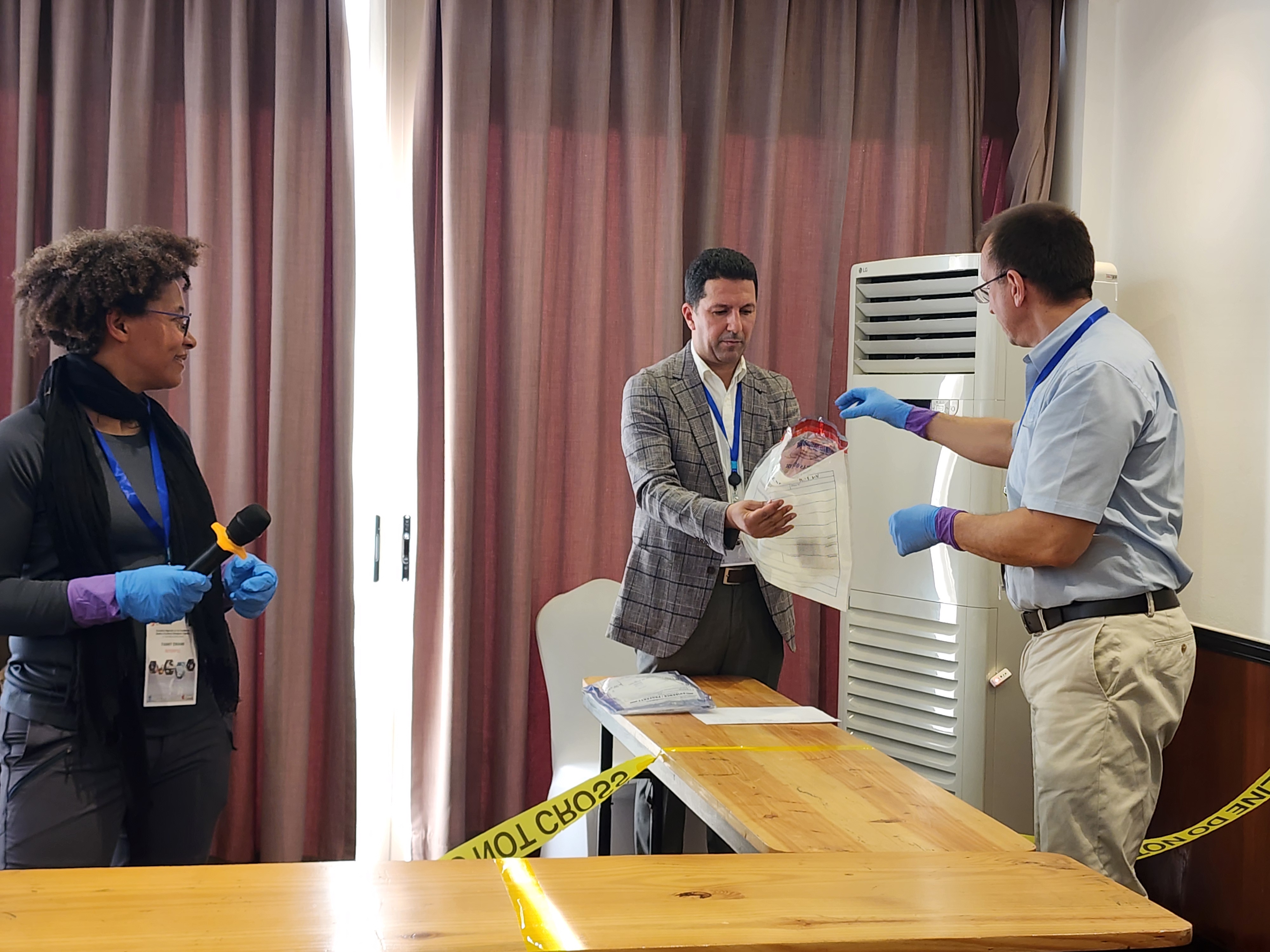
L – R: Fanny Ewann (INTERPOL), Samir Kebdani (Morocco) and Emmanuel Bouquot demonstrating biological crime scene management. Picture © J. Galiwango (woah) 2026
Following the training, participating countries will continue advancing their national agro-crime roadmaps, prioritising actions to address gaps identified in joint investigation capabilities. Looking ahead, WOAH and INTERPOL, with technical support from the European Commission for the Control of Foot-and-Mouth Disease (EuFMD), will organise a regional agro-crime simulation exercise, bringing together Veterinary Services and Law Enforcement from all nine project beneficiary countries.
This regional training was part of WOAH’s Fortifying Institutional Resilience against Biological Threats (FIRABioT) Project, funded by Global Affairs Canada’s Weapons Threat Reduction Programme in support of the Global Partnership Signature Initiative to Mitigate Biological Threats in Africa.