
World Wildlife Day 2025
Investment in Wildlife Health Management is critical for Wildlife Conservation.
March 03, 2025
Read more
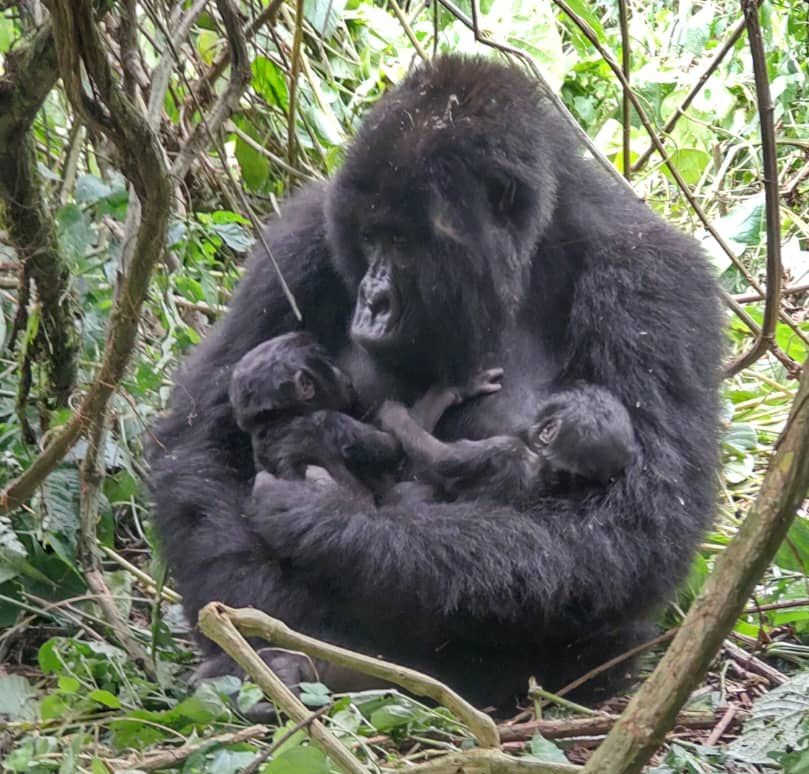
Twin baby mountain gorilla- VINP. Picture (c) D. Nenwa (Amani Safaris) 2026
Twin baby mountain gorilla- VINP. Picture (c) D. Nenwa (Amani Safaris) 2026
World Wildlife Day (WWD) is an annual United Nations observance dedicated to celebrating wild animals and plants and recognizing their contributions to people and the planet. The date, 3 March, marks the signing of the Convention on International Trade in Endangered Species of Wild Fauna and Flora (CITES) in 1973, and the day was officially declared by the UN General Assembly in 2013.
Guided by the mission of WOAH and the One Health principle that links the wellbeing of animals, people, and the environment, medicinal plants emerge as important pillars of shared health.
They offer natural therapeutic benefits to wildlife. The importance of medicinal and aromatic plants (MAPs) reminds us that protecting plant diversity is fundamental to sustaining life across species.
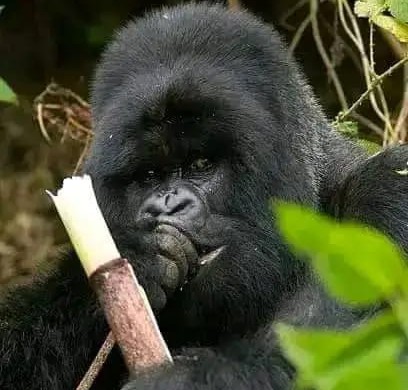
Silverback mountain gorilla eating bambou shoots. Picture (c) J. Ndayambaje (ADEK) 2023
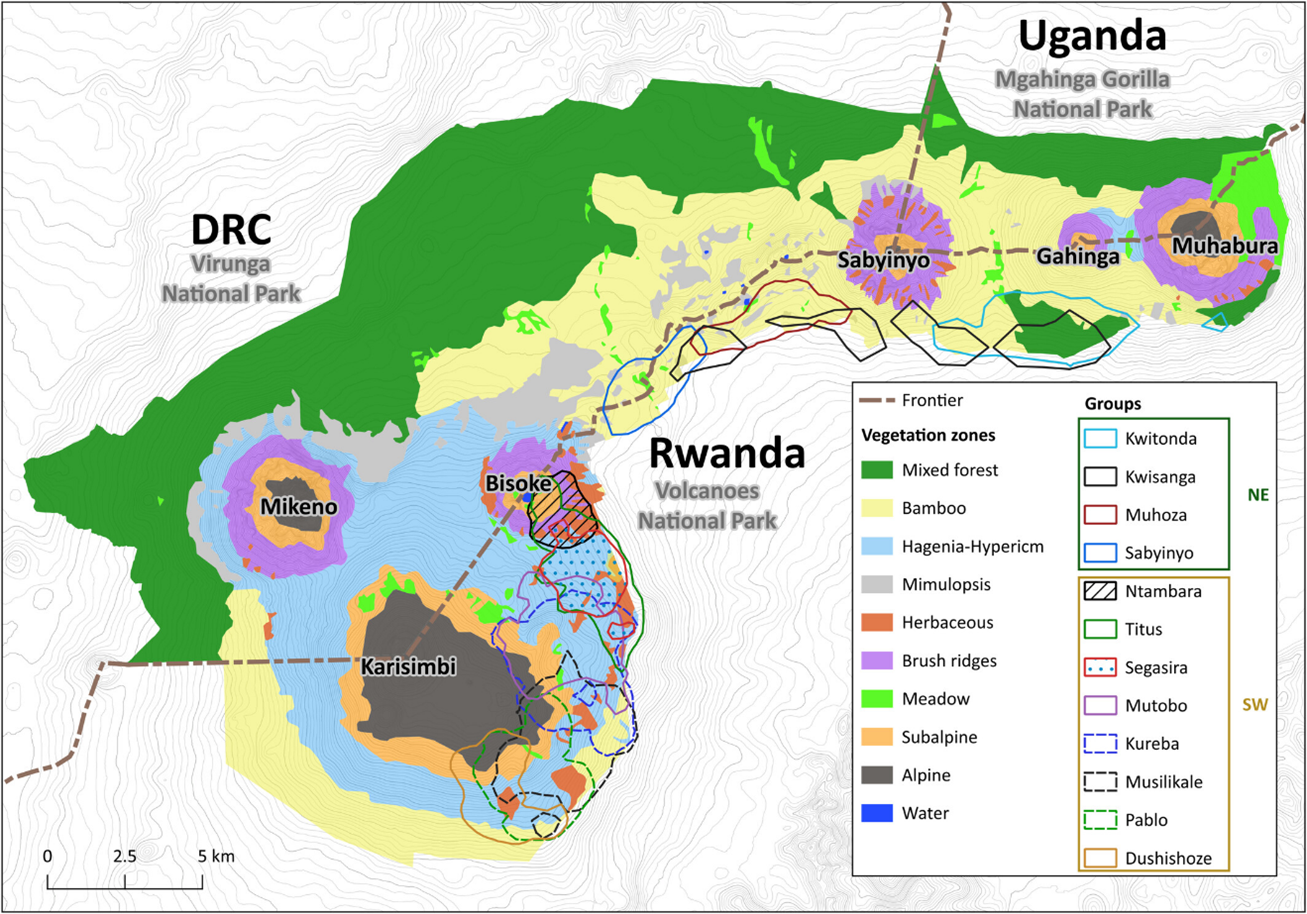
Vegetation types in Volcanoes National Park are primarily determined by altitudinal range. Although other local factors such as soil conditions, slope steepness, microclimate, sun exposure, and the effects of past illegal grazing also influence plant communities, altitude remains the dominant factor shaping vegetation patterns within the park.
Silverback mountain gorilla eating bambou shoots. Picture (c) J. Ndayambaje (ADEK) 2023
Map : Vegetation zones in the Virunga Massif (McNeilage 1995) and home range locations of study groups in the northeast (NE) groups and the southwest (SW) group of the Volcanoes National Park in Rwanda (Karisoke/ RDB data) Dietary Variability Among Mountain Gorilla Groups Across Volcanoes National Park, Rwanda - Ihimbazwe - 2025 - Ecology and Evolution - Wiley Online Library.
The groundbreaking observation that chimps, another Great Apes species, were using plants for medicinal purposes first came to scientific light in the 1970s through the pioneering work of primatologist Dr. Richard Wrangham. While studying chimpanzees in Gombe Stream National Park, Tanzania, he noticed something peculiar: a sick female chimpanzee named Melissa was carefully selecting and chewing the bitter pith of a plant not typically part of the chimps’ diet. This plant, later identified as Vernonia amygdalina (bitter leaf), has long been used in traditional African medicine.
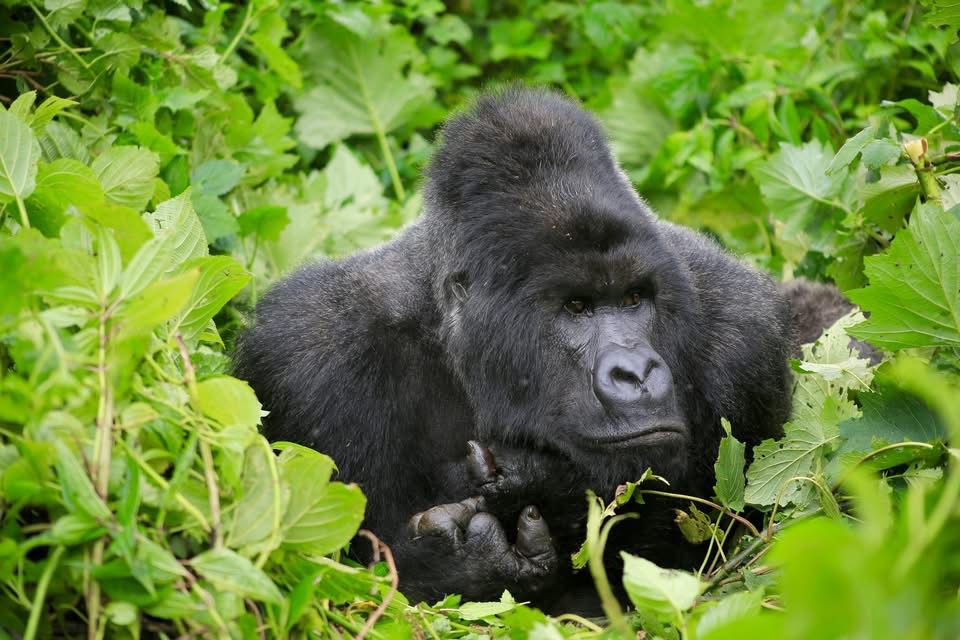
Kimanuka silverback lowland gorilla KBNP. Picture (c) D. Nenwa (Amani Safaris) 2025
Kimanuka silverback lowland gorilla KBNP. Picture (c) D. Nenwa (Amani Safaris) 2025
Additional studies have shown that some of the plants consumed by lowland gorillas (Gorilla beringei graeuri) are used for the same therapeutic purposes in humans. Indeed, plants used in traditional medicine by Gabonese traditional healers, exhibit antioxidant and antibacterial activity : Ceiba pentandra, Myrianthus arboreous, Ficus subspecies (ssp.) and Milicia excelsa bark crude extracts.
These same plants are also consumed by western lowland gorillas (Gorilla gorilla gorilla) in Moukalaba-Doudou National Park (MDNP) in Gabon.
This stands at the centre of the WOAH ZOOSURSY Project
Cognizant of these new insights, scientists have developed novel non-invasive techniques that allow for the collection of viral material from plants chewed or discarded by gorillas. Such methods enable the detection of orally shed viruses directly from bitten vegetation, providing a safe and effective tool for wildlife disease surveillance. In doing so, herpesviruses and simian foamy virus have been recovered from chewed plants.
This year’s WWD celebration highlights the urgent need to conserve the medicinal and aromatic plants that support wildlife survival, traditional knowledge, and community livelihoods. As demonstrated in the Volcanoes National Park, these plants are indispensable for the health and behaviour of great apes and many other species.