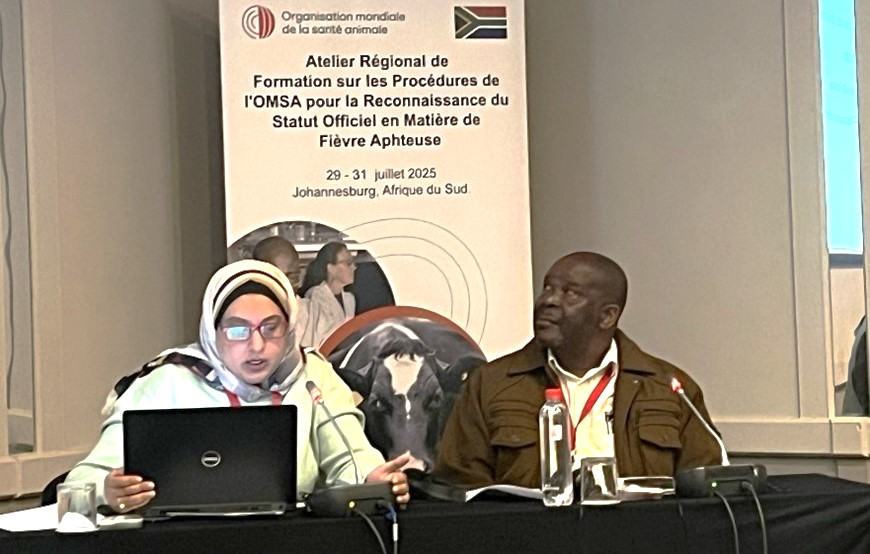
Regional training workshop strengthens capacity for FMD status recognition in the COMESA region
July 31, 2025
Read more
Picture (c) TheConversation.com (Lucas Ninno/Getty Images) 2022.
Picture (c) TheConversation.com (Lucas Ninno/Getty Images) 2022.
A five-day training programme on diagnostic methods for Foot-and-mouth disease virus (FMDV), using both serological and molecular assays, was successfully conducted from 9–13 March 2026 at the Agricultural Research Council (ARC) laboratory in Pretoria, South Africa. The training was attended by four officials from Namibia’s Central Veterinary Laboratory (CVL). The programme aimed at strengthening the technical capacity of laboratory personnel to enhance confirmatory diagnostic capabilities, particularly in support of sero-surveillance programmes and routine sample testing for FMDV.
It also aimed to align diagnostic procedures of CVL with WAOH recommended tests as per WOAH Terrestrial Manual and improve preparedness for FMD detection and control.
The five-day programme combines theoretical instruction with hands-on practical training. Participants were introduced to the high-containment laboratory facilities and learned Solid Phase Competition ELISA (SPCE) techniques for antibody detection. They also learned molecular diagnostics methods, including RT-PCR-based techniques for Foot-and-mouth disease virus detection and analysis. In addition, the programme covered the Virus Neutralization Test (VNT), recognized as the gold standard serological assay, with participants reviewing and interpreting results to strengthen their diagnostic skills.
The training offered valuable insights into standardized protocols at ARC, enabling Namibia’s Central Veterinary Laboratory (CVL) to refine, optimize, and harmonize its current testing methods. This training programme provided an important opportunity for Namibia’s laboratory personnel to enhance their knowledge and practical skills in FMD diagnostics.
The expertise gained is expected to contribute to improved disease surveillance, early detection, and a strengthened national response to Foot-and-mouth disease.
The training was funded by the German Federal Ministry for Economic Cooperation and Development through the “One Health Approach towards Control of Rabies and Transboundary Animal Diseases” (OHRT) Project implemented by the World Organisation for Animal Health (WOAH).