
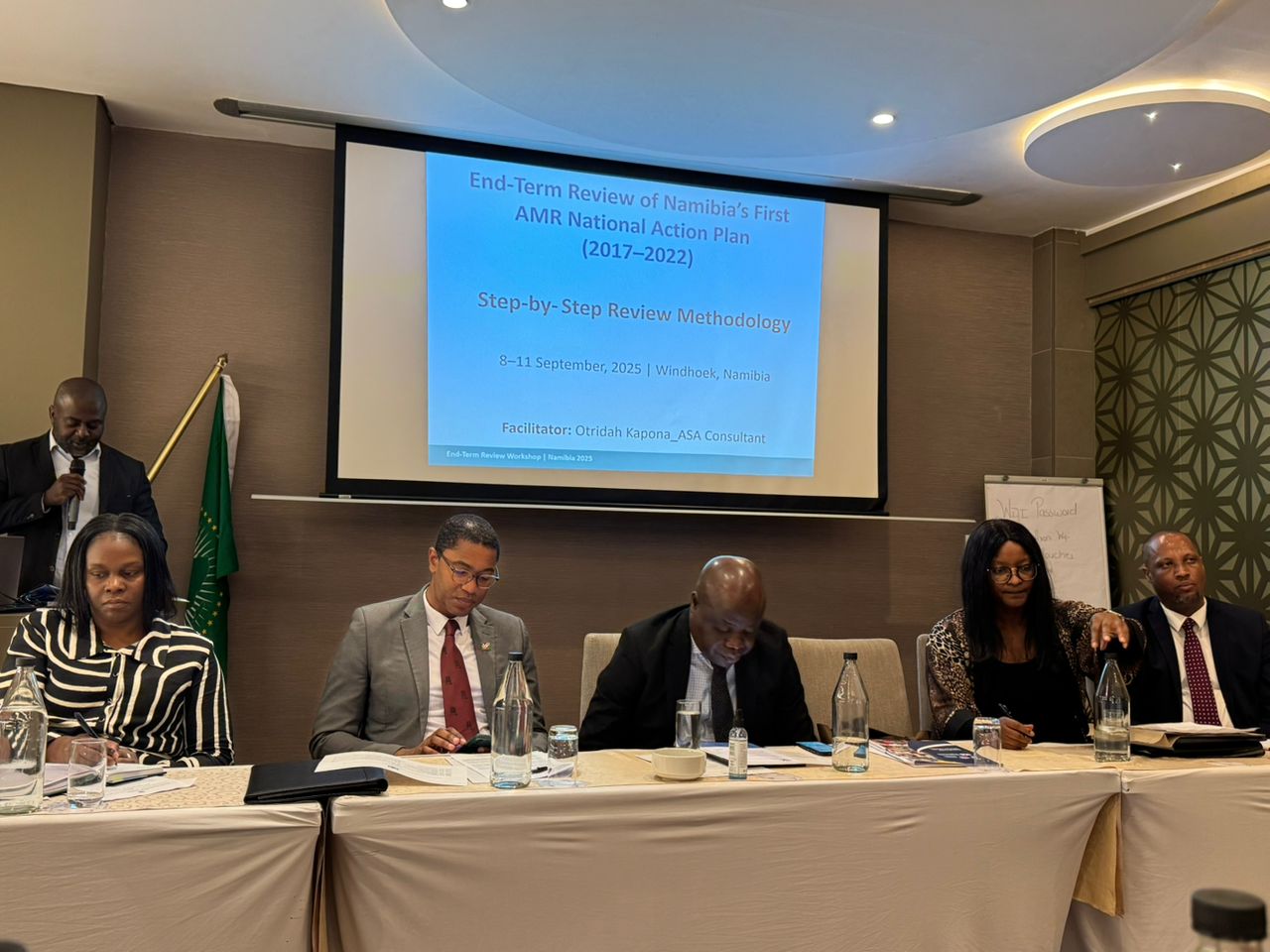



Windhoek, Namibia

Driving AMR action: Namibia conducts AMR NAP 1 end term review and develops a roadmap for NAP 2.

Header

From 8 to 11 September 2025, WOAH facilitated Namibia’s End-Term Review (ETR) of the first Antimicrobial Resistance (AMR) National Action Plan (NAP 1.0, 2017-2022) implementation by organising a multi-sectoral capacity-building workshop in Windhoek, Namibia’s capital. This review assessed the progress of policy implementation, identified institutional strengths and systemic challenges, and extracted valuable lessons to guide evidence-based governance reforms and inform the development of the subsequent AMR National Action Plan (NAP 2.0). The workshop was attended by twenty-three participants engaged in One Health and AMR activities, representing the tripartite Ministries of Health, Agriculture, and Environment. The primary objective of the review was to derive lessons learned that would support evidence-based governance reforms and ensure that NAP 2.0 is fully grounded in evidence, results-driven, aligned with national priorities, and capable of delivering measurable impact and sustained progress.

Review methodology: 

  • Sectoral Data Synthesis & Gap Analysis: Sector-specific reports reviewed to assess progress, bottlenecks, and lessons.
  • Tripartite review tools, TrACSS indicators, and step-by-step review methodology.
  • Conducted a structured review of the NAP’s pillars (Awareness and Education, Surveillance and Research, Infection Prevention and Control (IPC), Optimized Antimicrobial Use (Stewardship), Research & Development, Governance and Coordination, and Sustainable Investment) guided by key performance indicators (KPIs).
  • SWOT Analysis: Groups identified the Strengths, Weaknesses, Opportunities, and Threats of NAP 1.0

Key challenges at a glance: 

  • Financing: There is no designated domestic budget allocation, resulting in a significant dependence on external donor funding.
  • Coordination: Ministries and sectors frequently operate in isolation, hindering the implementation of integrated One Health approaches.
  • Data Integration: Surveillance systems for human, animal, and environmental health remain fragmented.
  • Stewardship: Antimicrobial stewardship initiatives are largely confined to pilot phases, with inadequate enforcement of prescribing and dispensing regulations.
  • IPC Coverage: Implementation is inconsistent, and coverage is limited, particularly in rural healthcare facilities and veterinary services.
  • Mainstreaming: Antimicrobial resistance has not been fully incorporated into broader health security, agricultural, and development frameworks, which restricts its long-term sustainability.

Top recommendations from the review include:

  1. Strengthen coordination mechanisms and embed AMR governance within high-level multisectoral platforms.
  2. Secure sustainable domestic and partner financing for AMR activities, linked to clear results frameworks.
  3. Scale up antimicrobial stewardship in human, animal, and environmental sectors with standardized tools.
  4. Strengthen infection prevention and control (IPC) across all sectors, incorporating biosecurity measures and promoting the use of effective vaccines as a preventive strategy.
  5. Expand surveillance systems and create an interoperable national AMR/AMU platform.
  6. Address One Health gaps by systematically incorporating environment and food safety domains into surveillance and interventions.
  7. Enhance capacity building for laboratories, prescribers, veterinarians, and environmental health officers.
  8. Mainstream AMR into national health security and development frameworks to sustain political will.

Policy impact insight from the end term review for AMR NAP implementation

The key insight from the ETR underscores that effective governance of any AMR policy, i.e. rooted in strong leadership and enduring political commitment, reinforced by robust institutions, efficient coordination mechanisms, and well-designed policies and regulations characterized by clear accountability and transparency, is essential for successfully tackling the challenge of antimicrobial resistance.

The implementation of the AMR National Action Plan (NAP) is not without systemic challenges. Weak coordination among ministries and limited multisectoral engagement hinder effective governance, while the One Health approach remains difficult to operationalise in practice. The exclusion of the Ministry of Finance from the earlier NAP development further undermines financial planning and sustainability.

AMR represents an invisible silent pandemic, and policymakers tend to prioritise more visible public health concerns, making sustained advocacy difficult. In addition, competing national priorities and persistent funding gaps continue to stall progress, threatening the overall effectiveness of AMR response efforts. Addressing these bottlenecks is critical to ensuring that the NAP delivers meaningful, sustainable impact.

More Information

Maseru, Lesotho

Lesotho develops a national action plan on AMR

June 28, 2019
Read more
Forme
Share this post