

OIE-WAHIS
New OIE World Animal Health Information System (OIE-WAHIS) now online
March 18, 2021
Read more
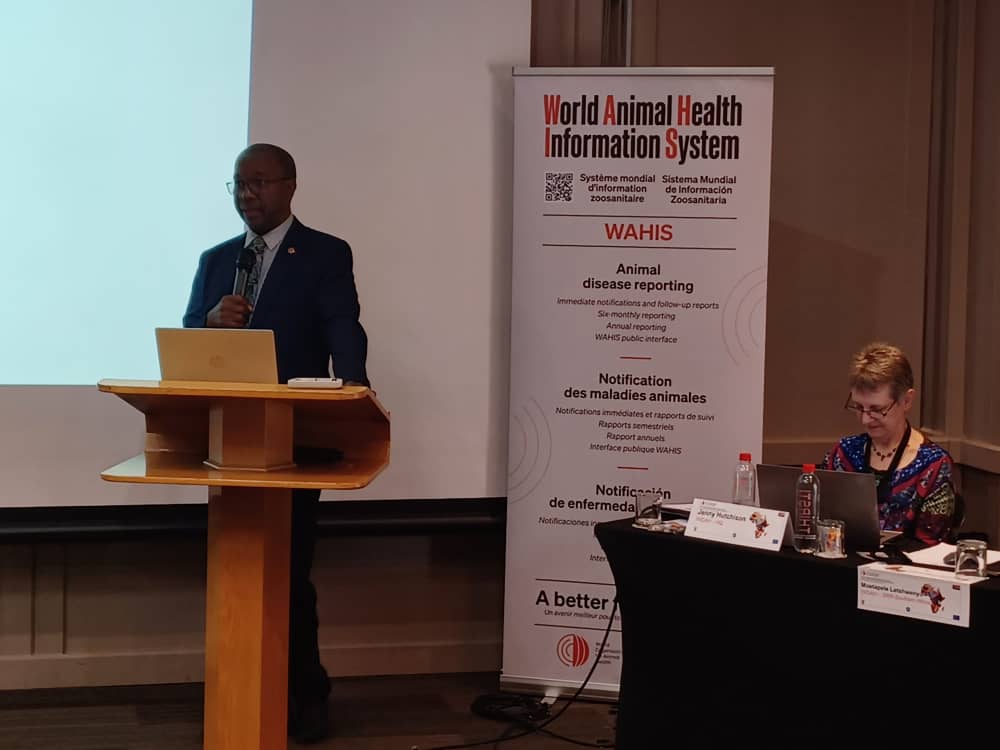
Dr. Moetapele Letshwenyo, WOAH Sub-Regional Representative for Southern Africa, giving opening remarks at the training. Photo(c) T. Tenzin (woah) 2025
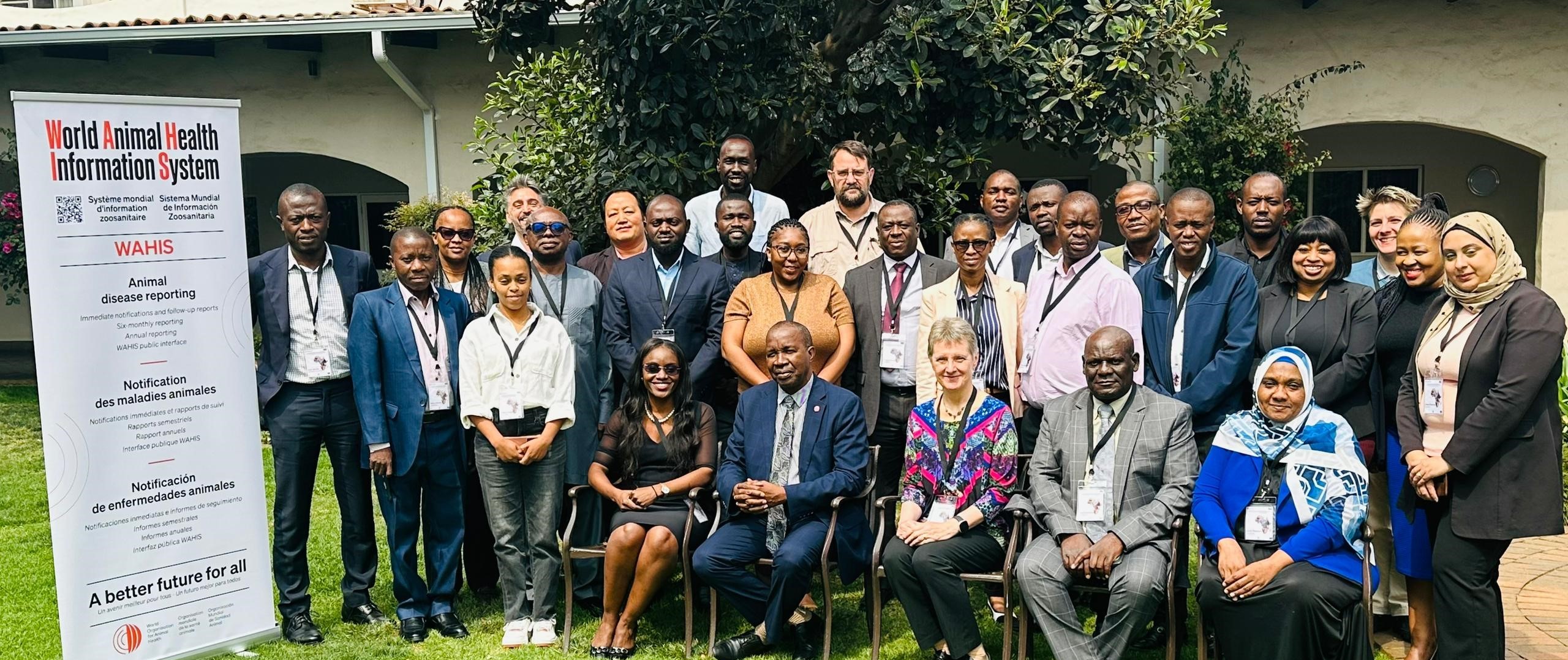
From 9 to 11 September 2025, the World Organisation for Animal Health (WOAH) conducted a regional training for National Focal Points for animal disease notification from English-speaking African countries. Held in Johannesburg, South Africa, the event was organised by the World Animal Health Information and Analysis Department (WAHIAD) and the WOAH Sub-Regional Representation for Southern Africa, Gaborone, Botswana, and generously funded by the European Union SPS African Continental Free-Trade Agreement (AfCFTA) Project.
A total of 23 National Focal points from 23 countries – Angola, Botswana, Egypt, Eritrea, Eswatini, Gambia, Ghana, Kenya, Lesotho, Liberia, Malawi, Mozambique, Namibia, Nigeria, Seychelles, Sierra Leone, South Africa, South Sudan, Sudan, Tanzania, Uganda, Zambia and Zimbabwe attended the training. A similar training for the French-speaking African countries is planned to be conducted in Abidjan, Cote d’Ivoire, in a few days.
Since its establishment in 1924, WOAH has served as the global authority on animal health, collecting, verifying, and disseminating official data on animal diseases to support transparency and informed decision-making in international trade. To enhance this mission, WOAH developed the World Animal Health Information System (WAHIS)—now the leading platform for reporting animal diseases and veterinary capacities worldwide.
The three-day training aimed to:
Dr. Moetapele Letshwenyo, WOAH Sub-Regional Representative for Southern Africa, began by highlighting the evolution of WOAH’s animal health reporting—from the early Handistatus system to the current WAHIS platform, which is now the most advanced tool for reporting animal diseases and veterinary capacities. He emphasised that prompt and correct disease notification is critical for early detection, outbreak prevention, public health protection, and safe trade. He emphasised that reliable data is essential for focused interventions, efficient resource allocation, and evidence-based policymaking at both the national and regional levels.
Other speakers at the opening session, including Dr. Mpho Maja, Director of Animal Health, Department of Agriculture, Republic of South Africa, and Dr. Jenny Hutchison, Head of WAHIAD, emphasised the importance of transparent animal disease reporting in allowing for timely interventions and protecting public and animal health.
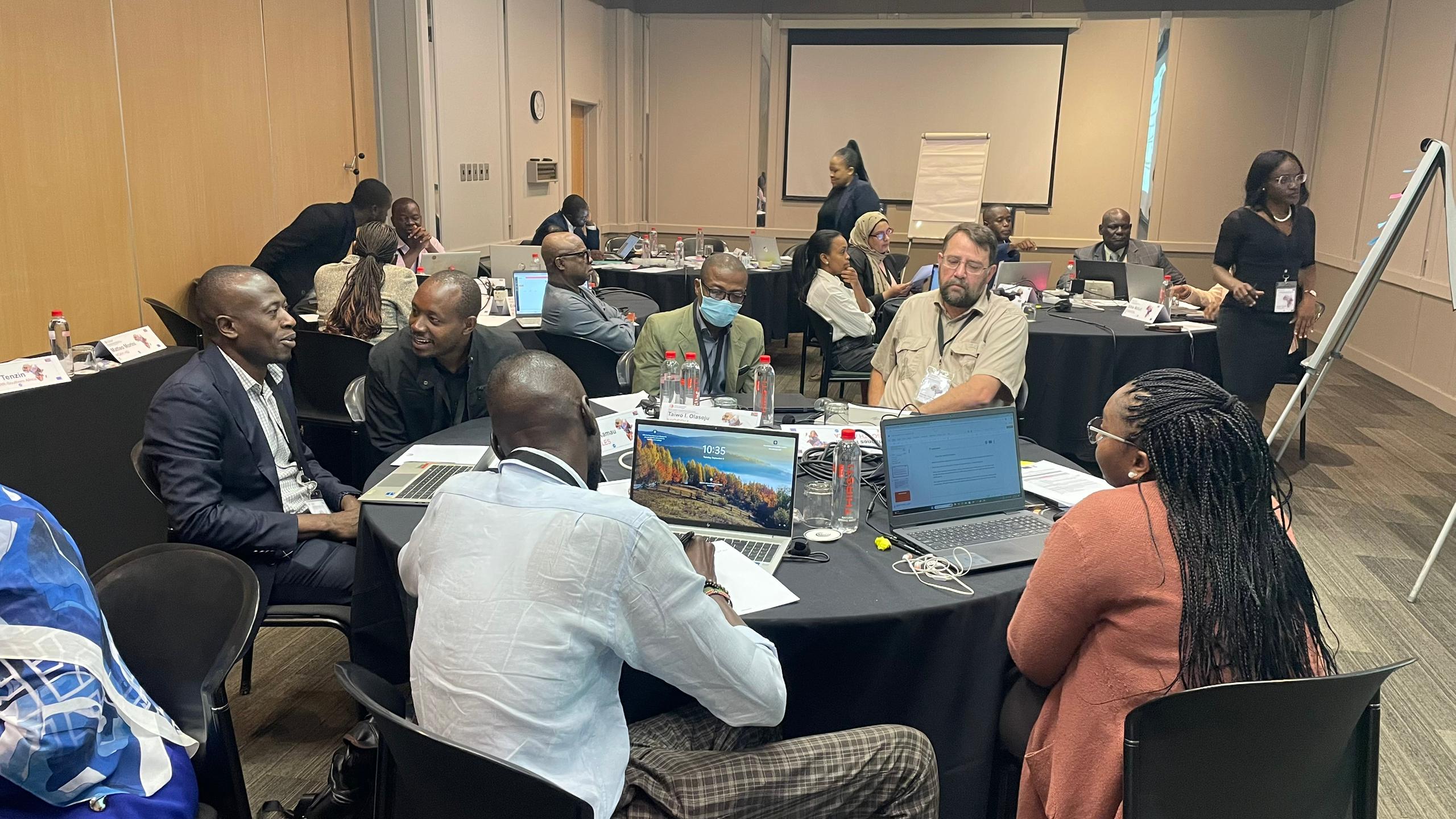
The training was facilitated by the World Animal Health Information and Analysis Department (WAHIAD) of WOAH, based in Paris. It covered key aspects of animal disease reporting, including WOAH’s mandate, an introduction to the WAHIS platform, and use of the WAHIS public interface to access data on terrestrial and aquatic animal diseases. Participants were trained in mandatory reporting procedures—such as Immediate Notifications, Follow-up Reports, Six-monthly Reports, and Annual Reports—as well as on rumour tracking and wildlife disease reporting.
Participants engaged in interactive sessions through hands on exercise on data entry, scenario-based case studies on reporting, and system navigation. The training reinforced WOAH’s commitment to harmonized, high-quality animal health data and empowered focal points to serve as key stewards of disease surveillance in their respective countries.