
Dakar, Senegal
Summary of the P3V webinar (4/5): capitalising on approaches and lessons learned as a lever for sustainability and transferability
November 29, 2025
Read more
On 26 November 2025, the World Organisation for Animal Health (WOAH), with the support of the French Development Agency (AFD), organised a webinar on the impact and capitalisation of the ‘Professionalisation of Veterinary Para-professionals’ Project (P3V). This event aimed to highlight the Project’s results, the lessons learned from its implementation, and the prospects for consolidating and sustaining its achievements.
This article is part of a series of five contributions from this webinar, each corresponding to a presentation. After a first article devoted to a general presentation of the P3V Project, a second dedicated to analysing its impacts and the lessons learned from its implementation, a third focusing on analysing the real needs of livestock farmers, and a fourth devoted to capitalising on approaches, tools and lessons learned, this fifth article focuses on the transferability of the approaches and tools developed as part of the P3V Project.
This fifth article is based on the presentation given by Dr Holly Hufnagel, who led the WOAH study on the impact of the P3V Project, as well as on the conditions for transferability and the prospects for extending its approaches to other national contexts.
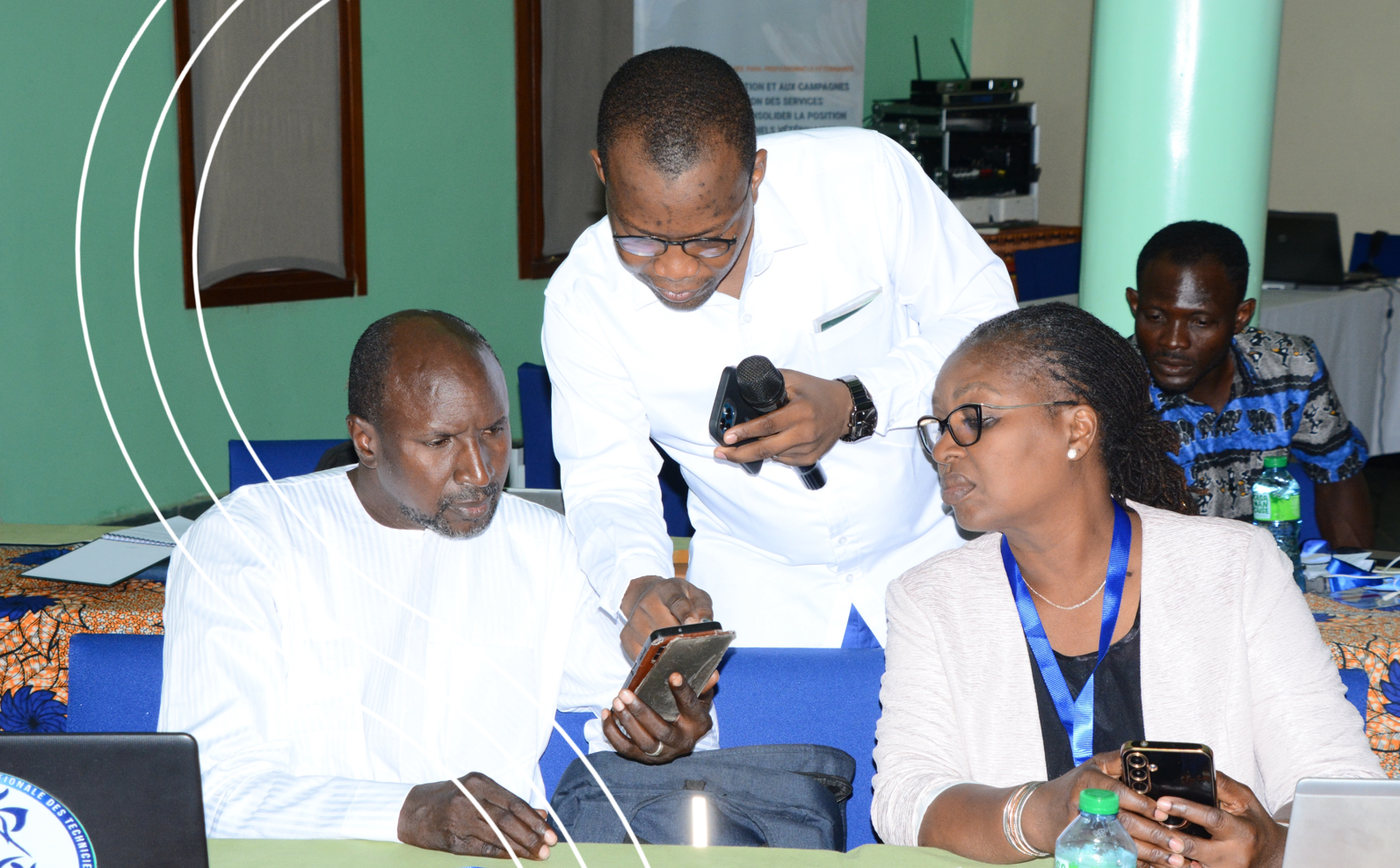
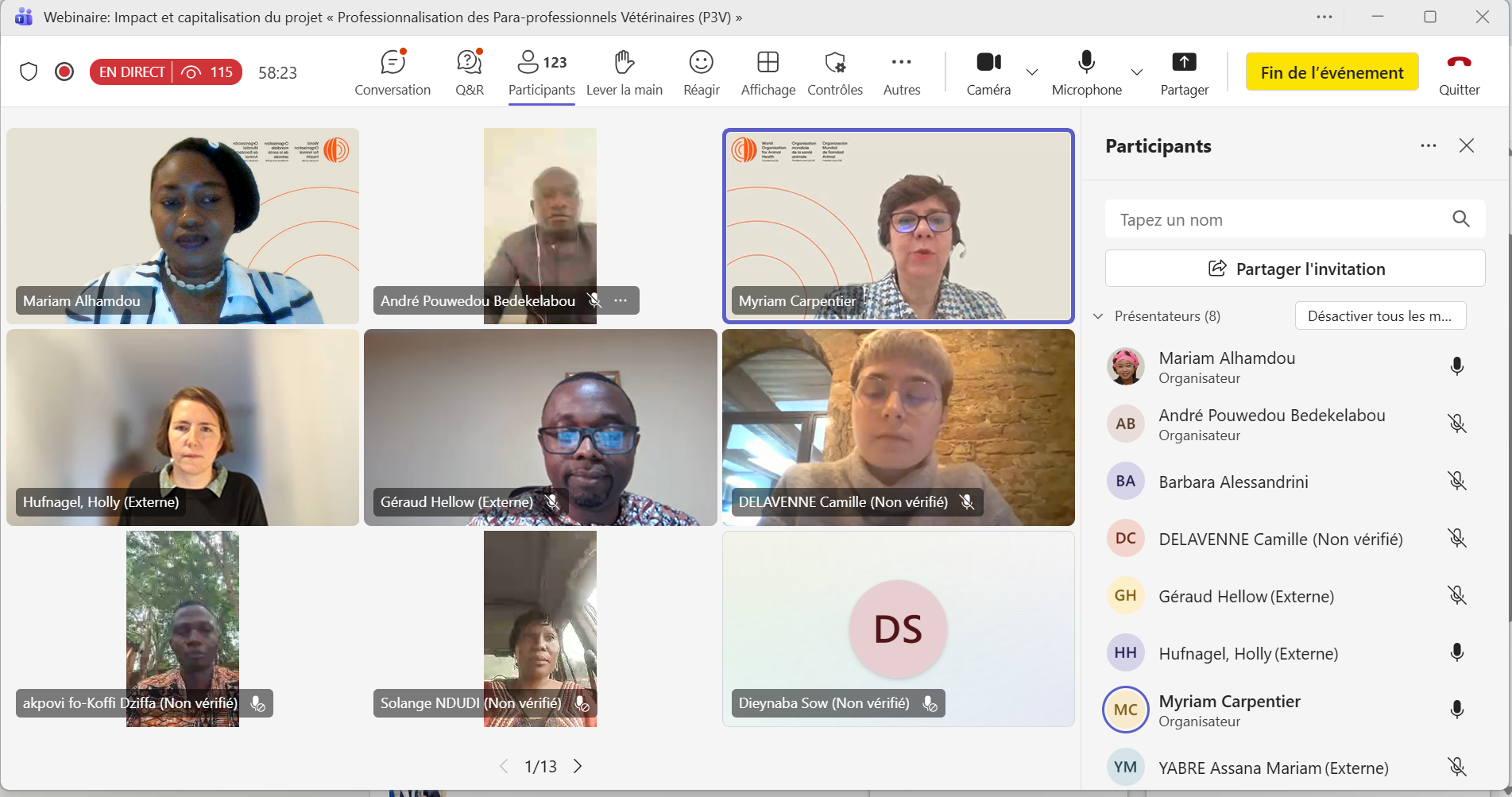
Capture d'écran Teams IIIIIIIIIII Teams screen capture
Reflections on the transferability of P3V are based on a shared observation at the regional level: the challenges encountered in the project’s pilot countries are not specific to these contexts alone. In many sub-Saharan African countries, livestock farmers’ access to quality Veterinary Services remains limited, particularly in rural areas, even though veterinary paraprofessionals (VPPs) play a central role in providing these services.
The data presented during the webinar illustrate this reality. At the regional level, there are approximately 29,315 veterinarians for more than 132,000 veterinary paraprofessionals, highlighting the importance of the latter in animal health systems.
However, this presence in the field is not always accompanied by an appropriate institutional and regulatory framework.
A study conducted by the OMSA in 2022 highlights several persistent limitations:
This gap between the reality on the ground and existing institutional frameworks explains the interest in the transferability of the approaches developed by the P3V project.
A key message of this presentation concerns how to approach transferability. It is not a question of replicating the P3V Project identically, nor of rolling out a new WOAH-led Project in other countries.
Transferability primarily concerns:
These elements constitute a toolkit, resulting from the capitalisation of the P3V, intended to be mobilised and adapted according to the institutional, regulatory and operational realities specific to each country.
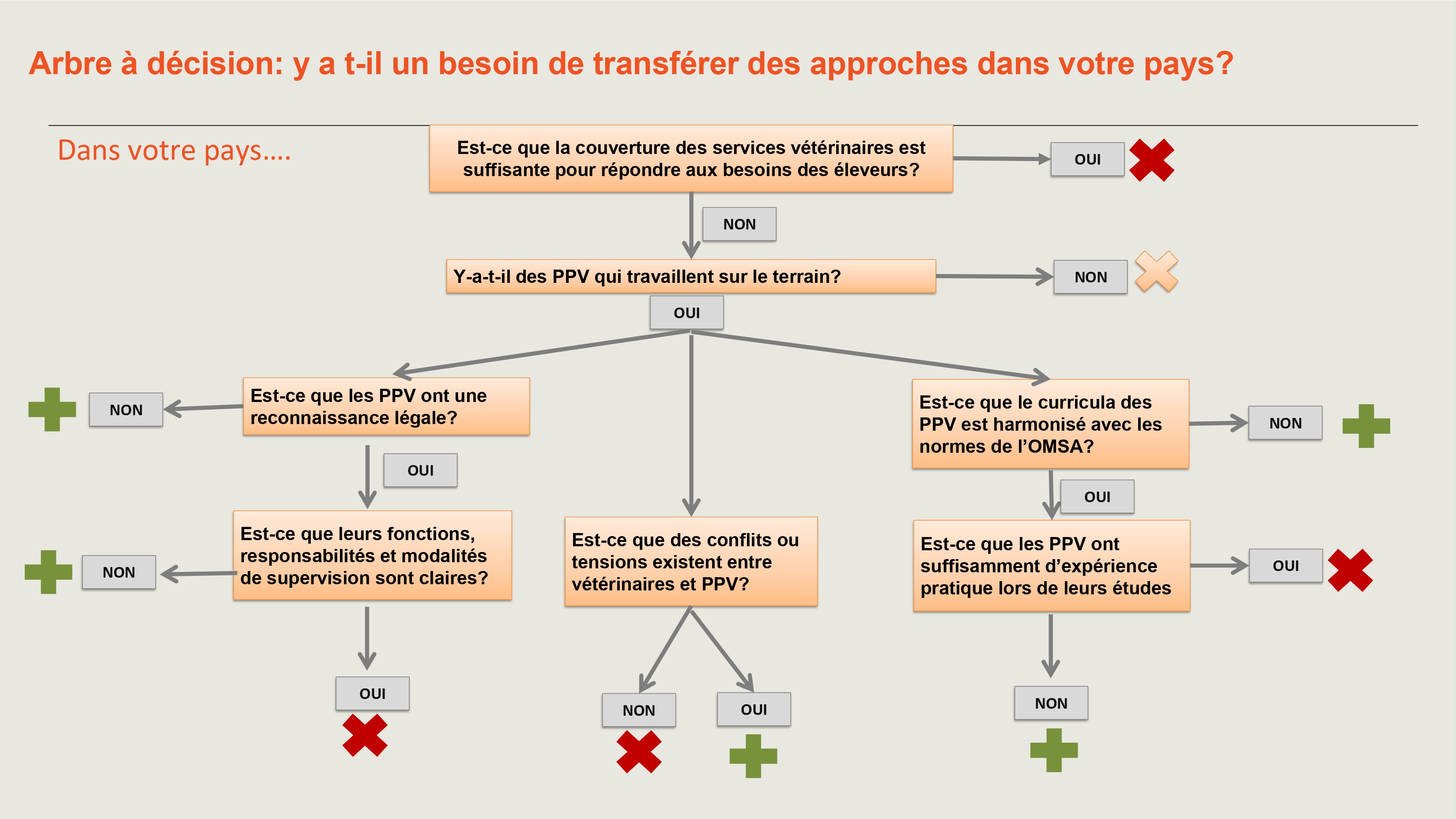
To support this reflection, the presentation introduced a decision tree enabling countries and interested stakeholders to assess the advisability of transferring certain components of P3V. This tool is based on a series of key questions, including:
Les réponses à ces questions permettent d’identifier les domaines prioritaires d’intervention, tout en évitant des transferts inadaptés ou déconnectés des réalités nationales IIIIIIIIIIII The answers to these questions enable priority areas for action to be identified, while avoiding inappropriate transfers or those that are disconnected from national realities.
The presentation highlighted several key principles that should guide any transferability initiative.
Firstly, each country has its own specific context. It is therefore essential to carry out an in-depth assessment, identify the available levers and prioritise actions according to institutional capacities and identified needs. Secondly, transferability must be part of a gradual and pragmatic approach. Not all aspects of P3V need to be implemented simultaneously; some actions can be carried out in parallel, while others can be implemented sequentially.
Finally, the success of the transfer depends on an inclusive and collaborative approach involving all stakeholders in animal health. As the speaker pointed out, the transformation of systems cannot be driven by a single actor but is the result of a collective and concerted effort.
The transferability of P3V is part of a systemic vision of animal health. The ecosystem involved includes:
In this configuration, change can be initiated at different levels, depending on the levers available, and progress in successive stages.
The presentation identified several possible entry points, depending on the actors involved:
These initiatives may be carried out in a complementary manner, depending on national priorities and contexts.
This fifth webinar contribution highlights that the transferability of the P3V project depends above all on the adoption of approaches, the mobilisation of stakeholders and a detailed understanding of local contexts.
Rather than a fixed model, P3V offers a reference framework and a toolkit to support animal health system reforms in a gradual, inclusive and tailored manner.
Concluding this series of articles, this reflection opens up concrete prospects for the future of Veterinary Services and the professionalisation of veterinary paraprofessionals at the regional level and beyond.
How to facilitate the transferability of P3V to other countries, Dr Holly Hufnagel (GOPA - AFC)