


PICTURES OF THE EVENT
Flickr photo album
Read more
Zimbabwe remains highly vulnerable to emerging, re‑emerging, and transboundary animal diseases that pose serious risks to animal and public health, food security, and the national economy, underscoring the need for strong and timely surveillance systems. Veterinary Extension Officers (VEOs), as frontline responders working directly with farming communities, play a critical role in early disease detection, reporting, and response.
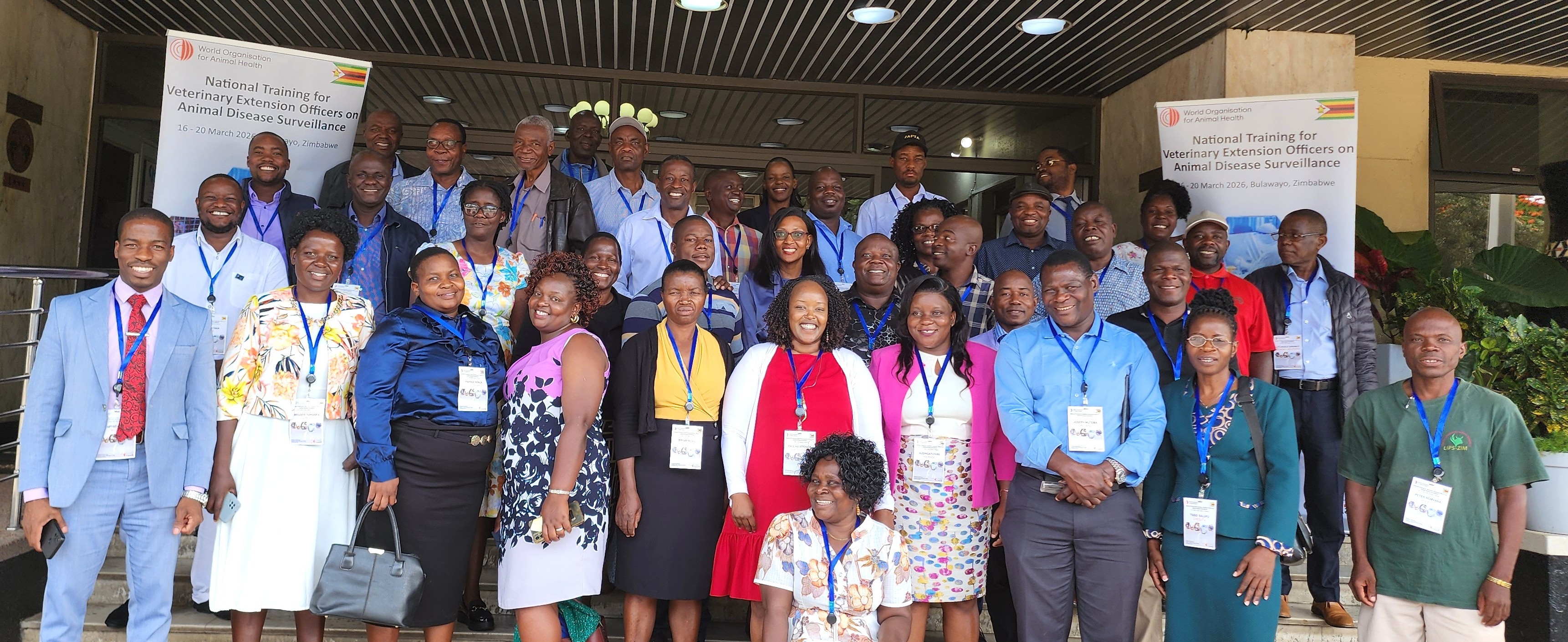
In a significant step toward enhancing national preparedness, Zimbabwe conducted a five‑day national Training of Trainers (ToT) workshop on animal disease surveillance for veterinary extension staff from 16–20 March 2026 in Bulawayo. Organised by the World Organisation for Animal Health (WOAH), under the Fortifying Institutional Resilience Against Biological Threats (FIRABioT) project, the training aimed to strengthen the technical and facilitation capacity of VEOs, reinforcing the country’s ability to prevent, detect, and respond effectively to biological threats.
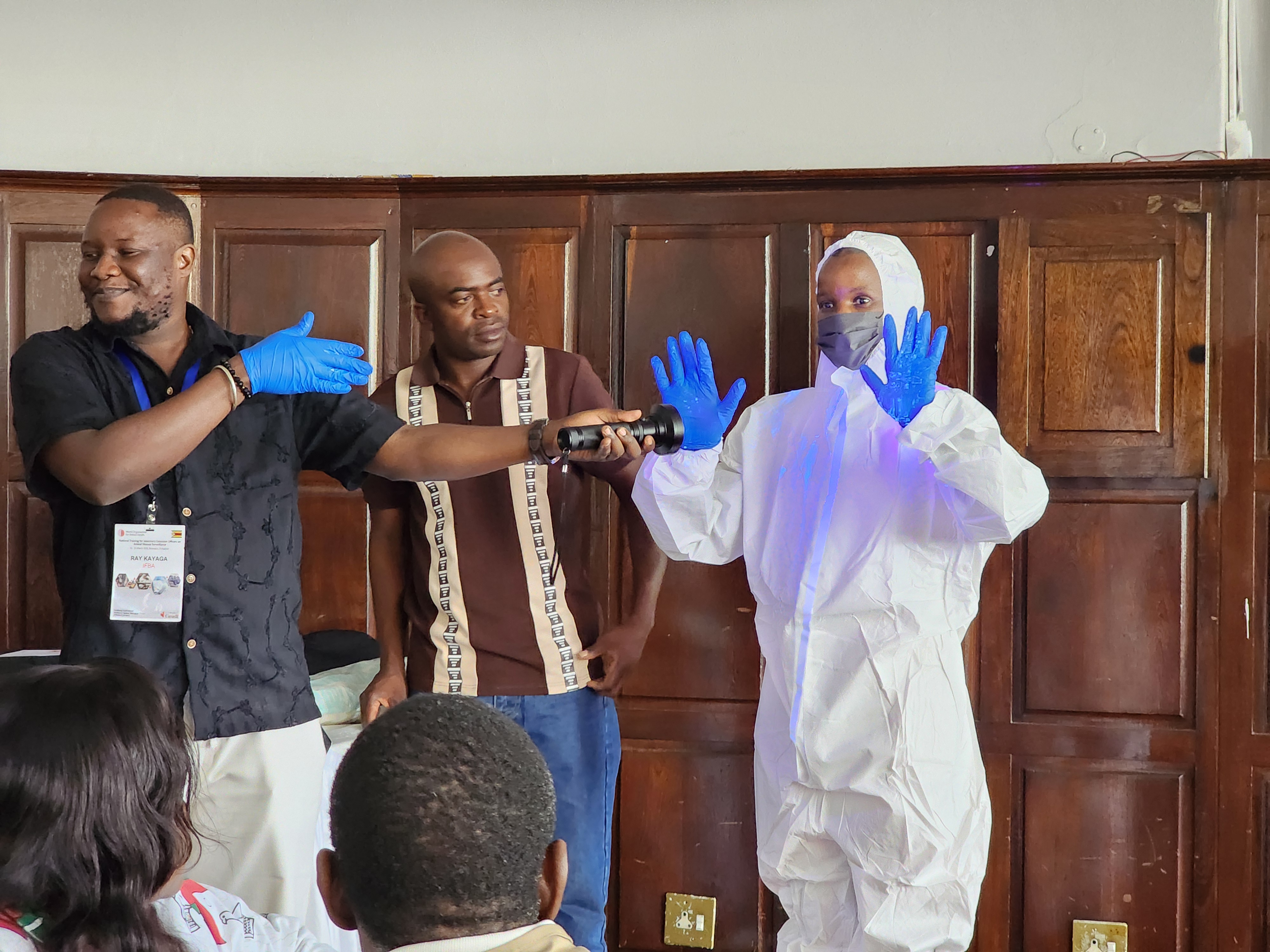
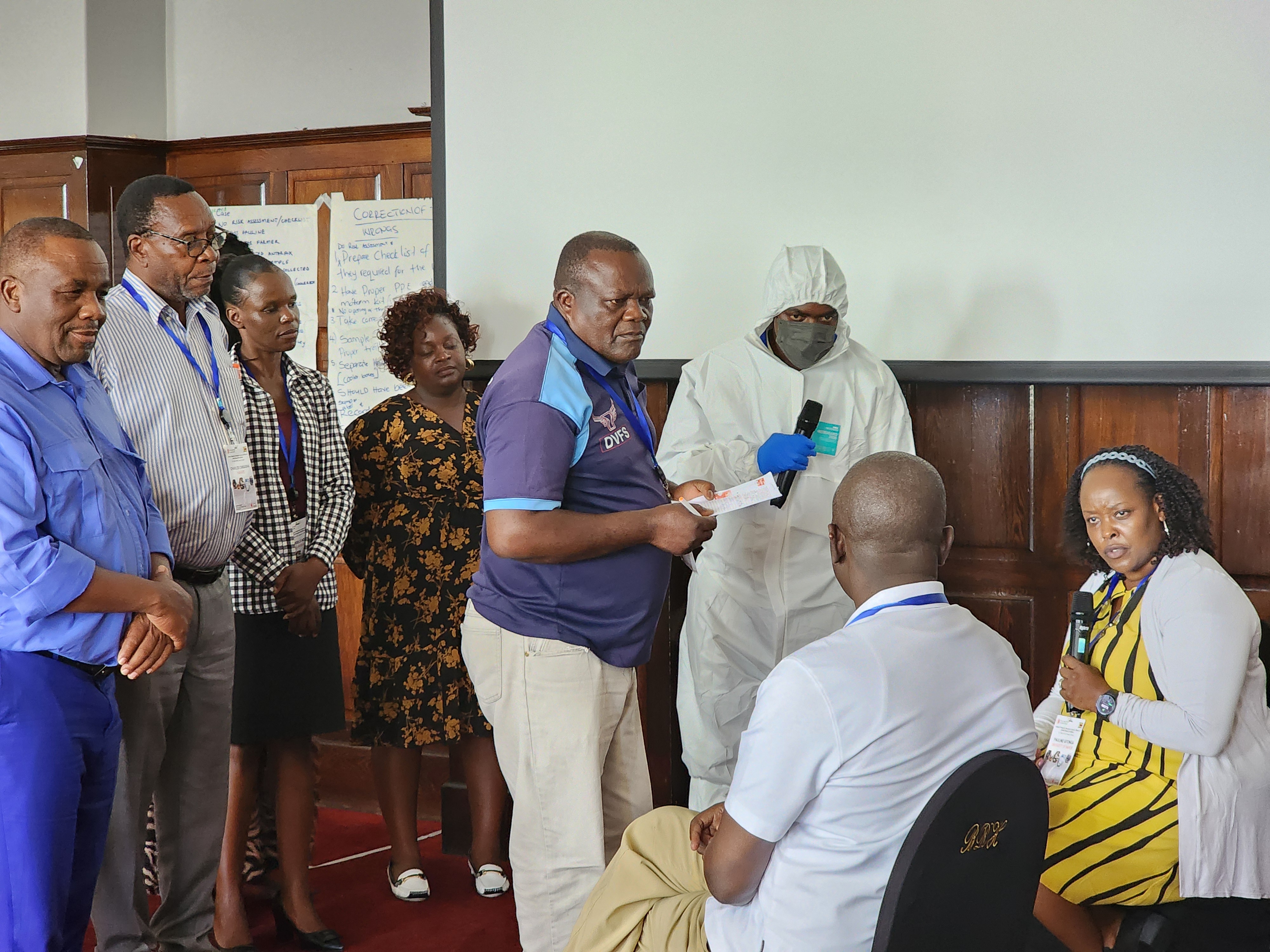
Dr Ray Kayaga (left), IFBA Regional Coordinator for Africa, leads a demonstration on the use of personal protective equipment (PPE). Picture © I. Busuulwa (woah) 2026
The training brought together Veterinary Extension Supervisors and Chief Animal Health Inspectors from across the country. The objective was to equip them with the knowledge and practical skills needed to train and mentor colleagues in disease surveillance and response, including events involving deliberate or accidental release, and to strengthen their ability to differentiate natural outbreaks from those of non-natural origin.
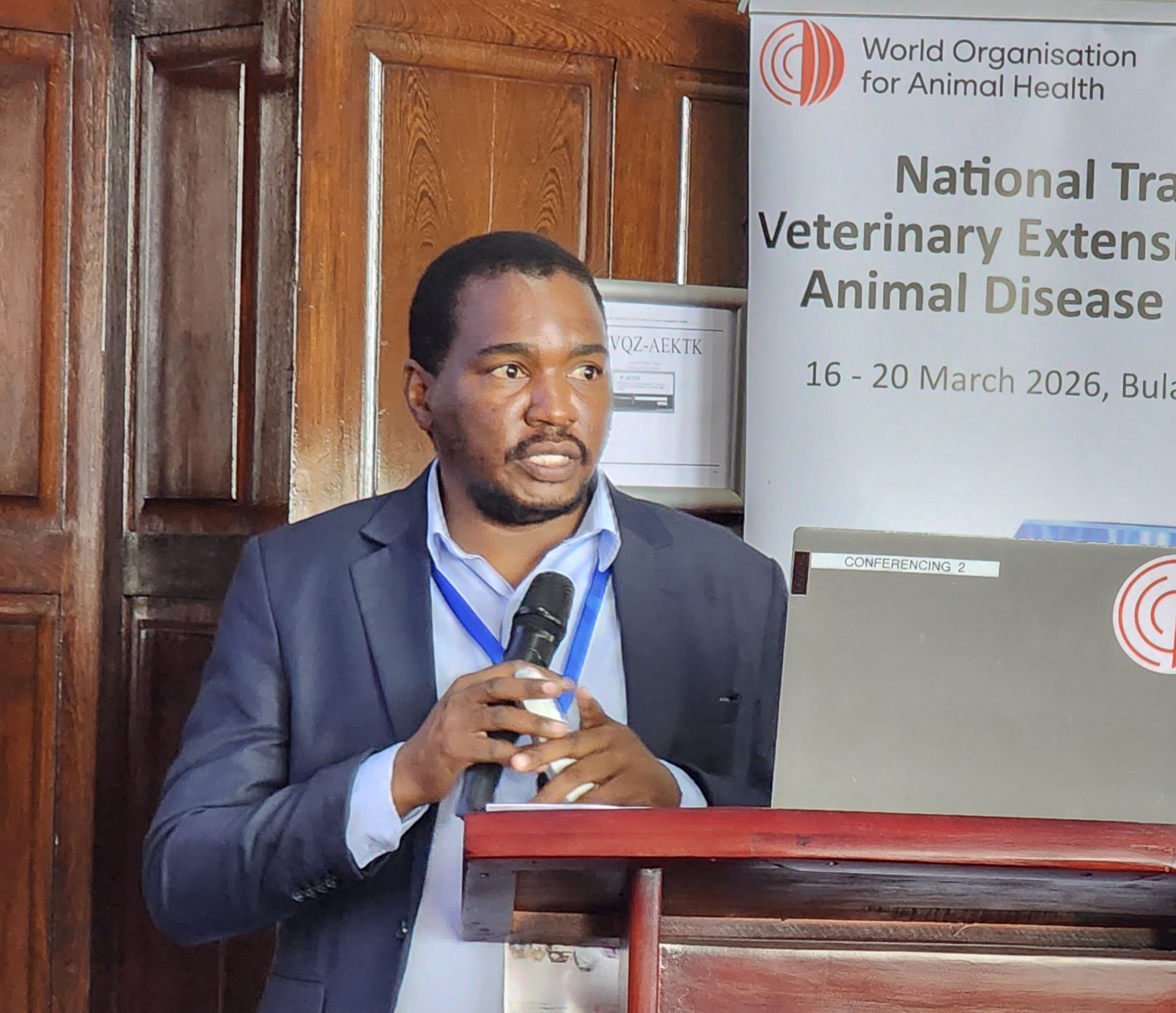
Dr Mooregood Spargo (Provincial Director and FIRABioT Project Focal Point for Zimbabwe) delivering opening remarks. Picture © I. Busuulwa (woah) 2026
The opening remarks were delivered by Dr. Mooregood Spargo on behalf of Dr Pious Makaya, the Chief Director of Veterinary Services in Zimbabwe. He expressed appreciation to WOAH and its partners for supporting efforts to strengthen Zimbabwe’s capacity to prevent, detect and respond to biological threats through effective animal disease surveillance. He emphasised that improving surveillance is critical, given the significant threat animal diseases pose to the national economy, which heavily depends on the livestock sector.
Dr. Spargo further underscored the importance of the Training of Trainers (ToT) approach, noting that equipping Veterinary Extension Supervisors rather than individual VEOs enables broader impact through a cascade training model. He called on participants to actively pass on the knowledge and skills gained during the training to VEOs across the country, thereby strengthening Zimbabwe’s animal disease surveillance system at all levels.
Dr Mooregood Spargo, Provincial Director and FIRABioT Project Focal Point for Zimbabwe
During the subsequent days, facilitators delivered the workshop through a highly interactive, learner‑centred approach that combined technical presentations, group discussions, peer learning, practical exercises, simulations, and field‑based activities. Dynamic presentations and immersive scenarios enabled participants to apply new knowledge to real‑world contexts, covering core areas such as Training of Trainers (ToT) principles, disease surveillance and early warning, detection of suspicious biological events, field biological risk management, outbreak investigation and response, risk communication, and investigative interview techniques.
Collectively, these interactive approaches equipped participants with both strong technical competencies in animal disease surveillance and the facilitation skills required to effectively transfer knowledge through a cascade training model, thereby strengthening surveillance and response systems at both national and subnational levels.
Participants engage in a simulation of an investigative interview. Picture © J. Galiwango (woah) 2026
Following the training, the participants developed cascading plans by province that will be implemented over the following six months. Additionally, at the regional level WOAH and INTERPOL are organising a regional training on the investigation of suspicious biological events scheduled for April 2026.
The national training of trainers on animal disease surveillance was part of Zimbabwe’s activities as a beneficiary of the Fortifying Institutional Resilience Against Biological Threats (FIRABioT) project. This project is funded by Global Affairs Canada’s Weapons Threat Reduction Programme in support of the Global Partnership Signature Initiative to Mitigate Biological Threats in Africa.